Dental Implants · Tustin, California

Dental Implantsin Tustin, CA

Get your smile (and your bite) back.

A missing tooth changes more than a photo. It changes how you chew on one side, how you say certain words, and whether you cover your mouth when you laugh. Dental implants put all of that back, with a replacement tooth that's anchored in your jaw and built to last.

495+five-star reviews
15+ yearsin Tustin
Loma Lindatrained · AACD member

Quick answer

Dental implants are permanent titanium tooth roots placed in the jawbone to replace missing teeth, topped with a custom crown, bridge, or denture that looks and works like a natural tooth. At Marta Rudat, DDS in Tustin, CA, implants are planned digitally for precise placement and restored by a Loma Linda–trained, AACD-member dentist with 15+ years of experience serving Tustin and Orange County. Single implants in Orange County generally start around $3,000–$6,000 for the complete tooth, with financing available.

Consultation request

Thinking about implants?
Tell us about your smile.

Dr. Marta reviews every consultation request personally.

Prefer to call? (714) 665-4200

By submitting, you agree to be contacted about your consultation.

You're not alone

You're not just
dealing with a gap.

If you've lost a tooth, you already know the part nobody warns you about:

Food gets stuck

You favor the other side until your jaw aches

A denture clicks at the worst moment

You stop ordering the steak because chewing it feels like a gamble

Some patients tell us they've turned down photos for years over one front tooth.

What we want you to know before anything else is that this is fixable, and it's more comfortable than you're probably imagining. Dr. Marta Rudat placed and restored implants for people in their 30s who lost a tooth to an accident and for people in their 70s who've worn dentures for decades and are done with the glue. Both walk out with teeth that stay put.

If a tooth came out recently or you're in pain right now, start with emergency care so we can stabilize things first, then plan the implant properly.

Educational

What is a dental implant.

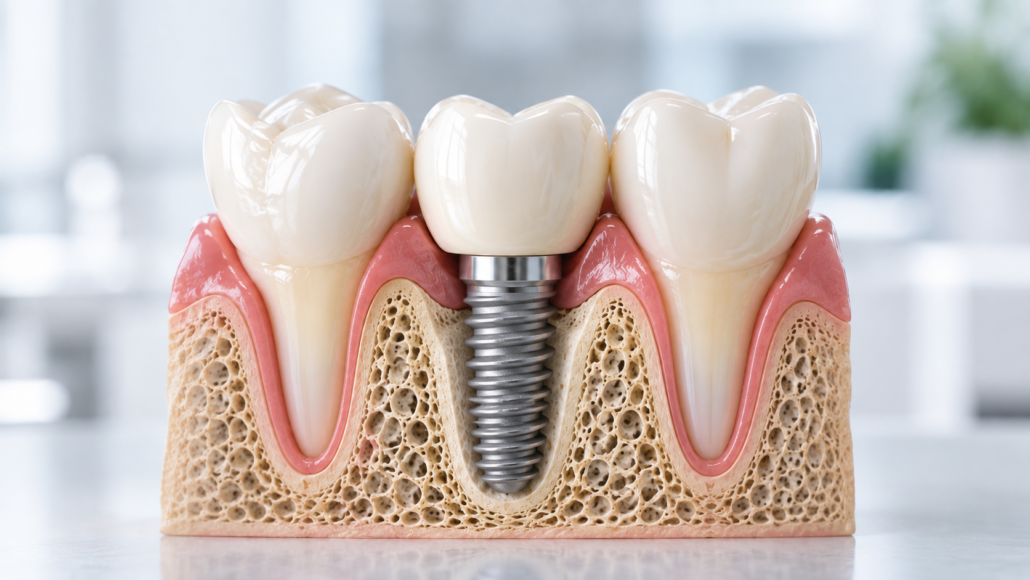
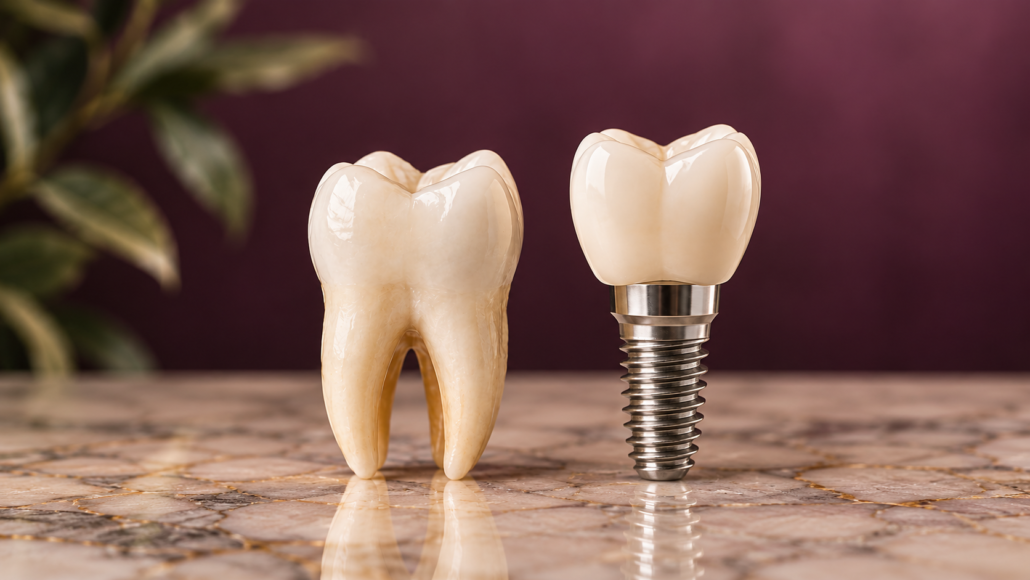
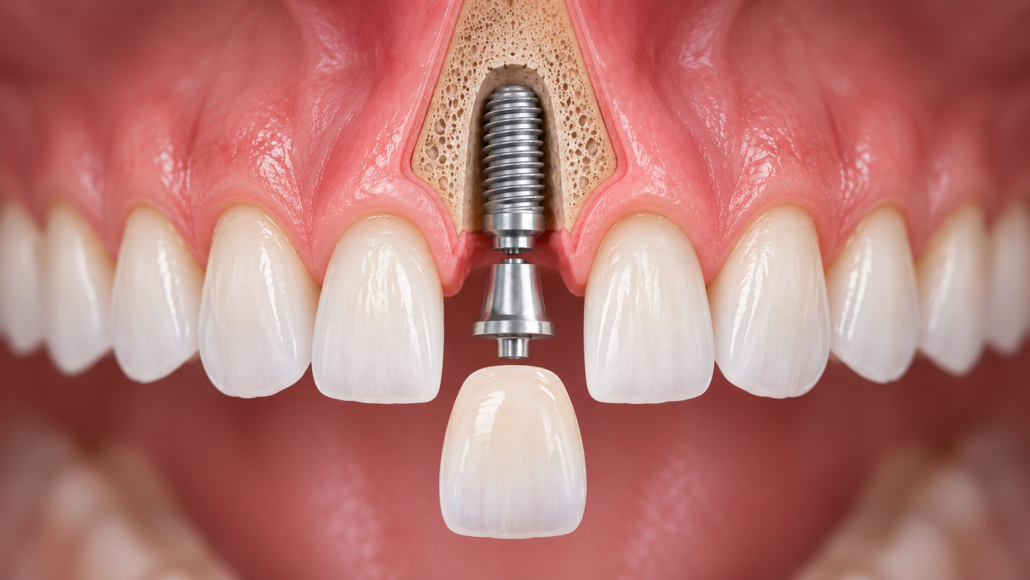
A dental implant is a small titanium post that takes the place of a natural tooth root. We place it into the jawbone, and over a few months, the bone grows around it and locks it in. That fusing process has a name, osseointegration, and it's the reason an implant feels solid instead of like something sitting on top of your gums. Once it's fused, we attach a custom crown (or a bridge, or a denture) that's color-matched to your other teeth.

Together they replace the whole tooth, root and all, which is the part that makes implants different from older options.

That root matters more than people expect. When a tooth is gone, the jawbone underneath it slowly shrinks because nothing is stimulating it anymore. Over time, that's what gives people a sunken, aged look around the mouth. An implant keeps that bone working, so it holds the shape of your face the way your real tooth used to.

An implant has three parts

  • The post in the bone
  • A small connector called an abutment
  • The visible tooth on top

Why patients choose implants

Why patients choose implants
over a bridge or denture.

A traditional bridge replaces the visible tooth but leans on the two healthy teeth beside the gap, which usually means grinding those teeth down to anchor it.

An implant stands on its own and leaves your neighboring teeth untouched. That alone is a big reason Dr. Rudat steers a lot of patients toward implants when they're candidates.

If you're weighing implants against removable options, dentures cover the modern snap-in route, and for patients missing most or all of their teeth, full-mouth reconstruction brings it all together in one plan.

Considering a full transformation?

Full-mouth reconstruction

They stay put.

No adhesive, no slipping, no taking anything out at night. They become a permanent part of you.

You eat normally again.

Apples, steak, corn on the cob. The things dentures make complicated.

They protect your bone and facial shape.

By keeping the jaw stimulated, implants preserve your natural facial structure and prevent the bone loss that follows missing teeth.

They're easy to live with.

You brush and floss them like real teeth. No specialized routines, no soaking cups.

They last.

With good care, the implant post can last decades, often a lifetime. The crown on top may need replacing eventually, same as any tooth restoration.

Swipe →

What you can replace with implants

From one tooth to a full arch.

01

One tooth.

A single implant with a crown. The most common case, and often the most life-changing for something like a front tooth.

02

Several teeth.

An implant-supported bridge fills a longer gap using two implants instead of one per tooth.

03

A full arch.

For a whole upper or lower set, a fixed full-arch restoration (you may have heard it called All-on-4) anchors a complete set of teeth on as few as four implants. It's the closest thing to getting your natural teeth back.

04

A loose denture, stabilized.

If you already wear a denture and hate the movement, a snap-in (implant-supported) denture clips onto two or more implants, so it stays where it should. Removable for cleaning, stable for eating.

Not sure which one fits you? That's the whole point of the consultation,
and you won't be sold an arch when a single tooth is all you need.

The proof · in patients
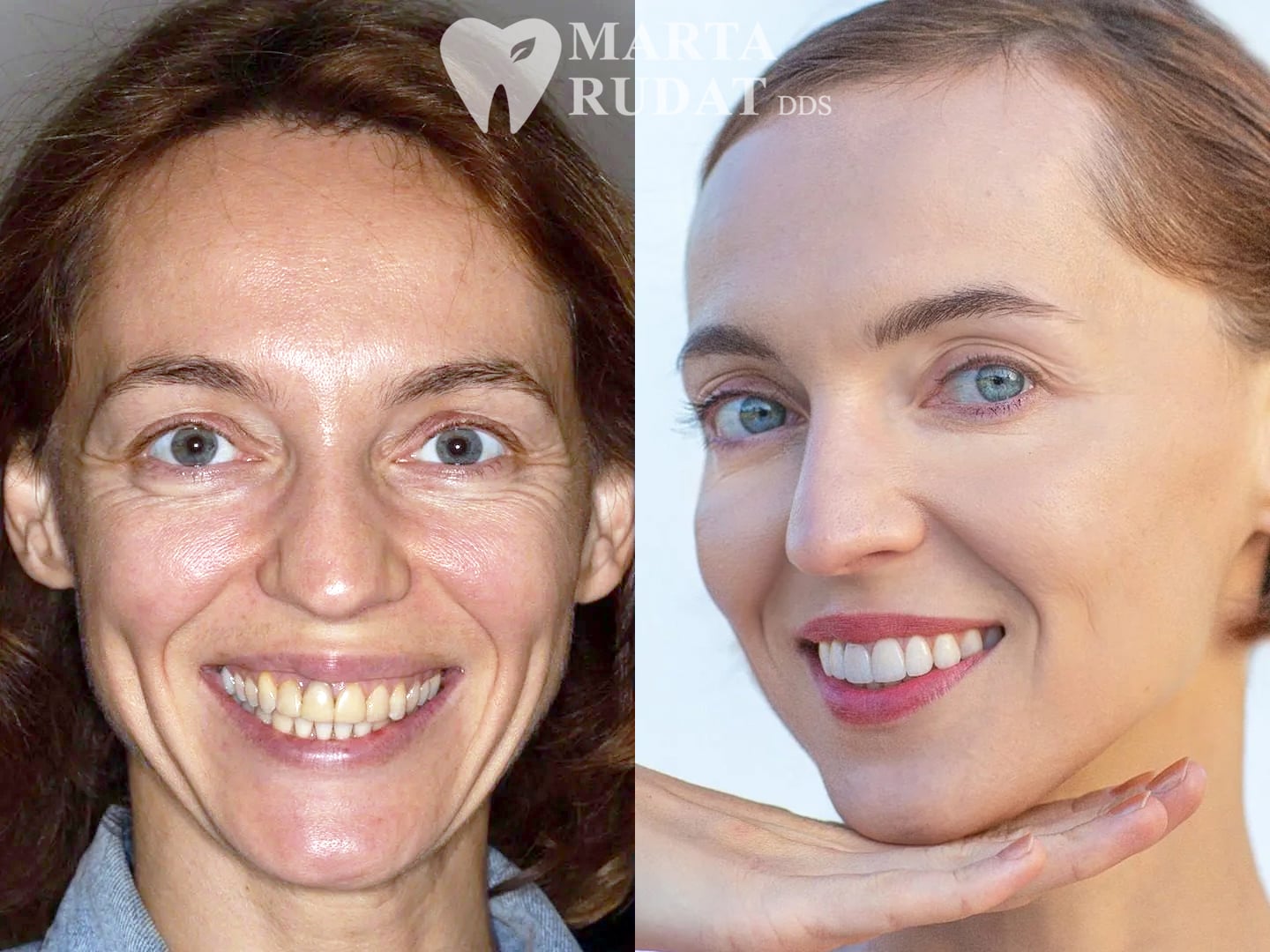
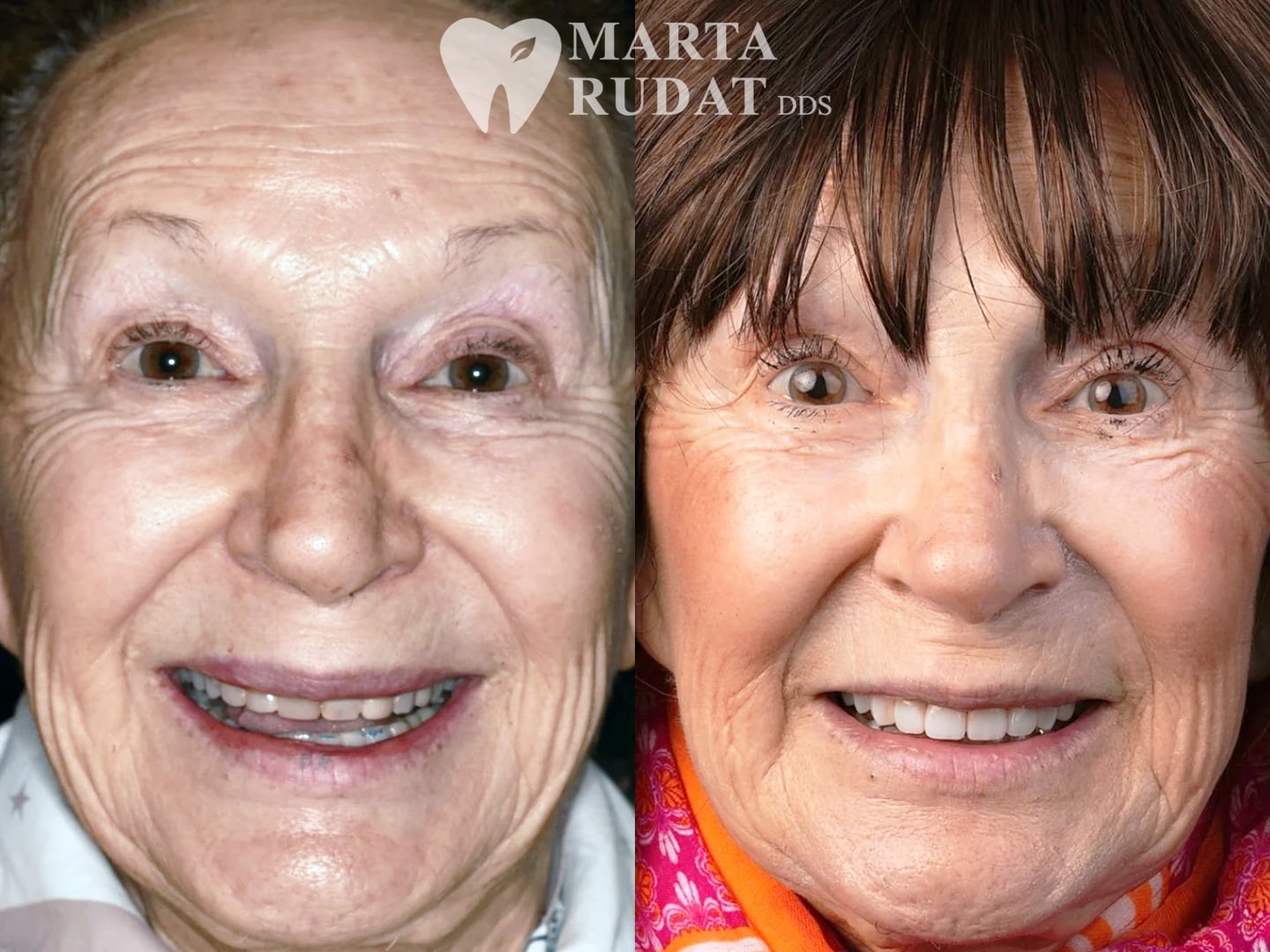
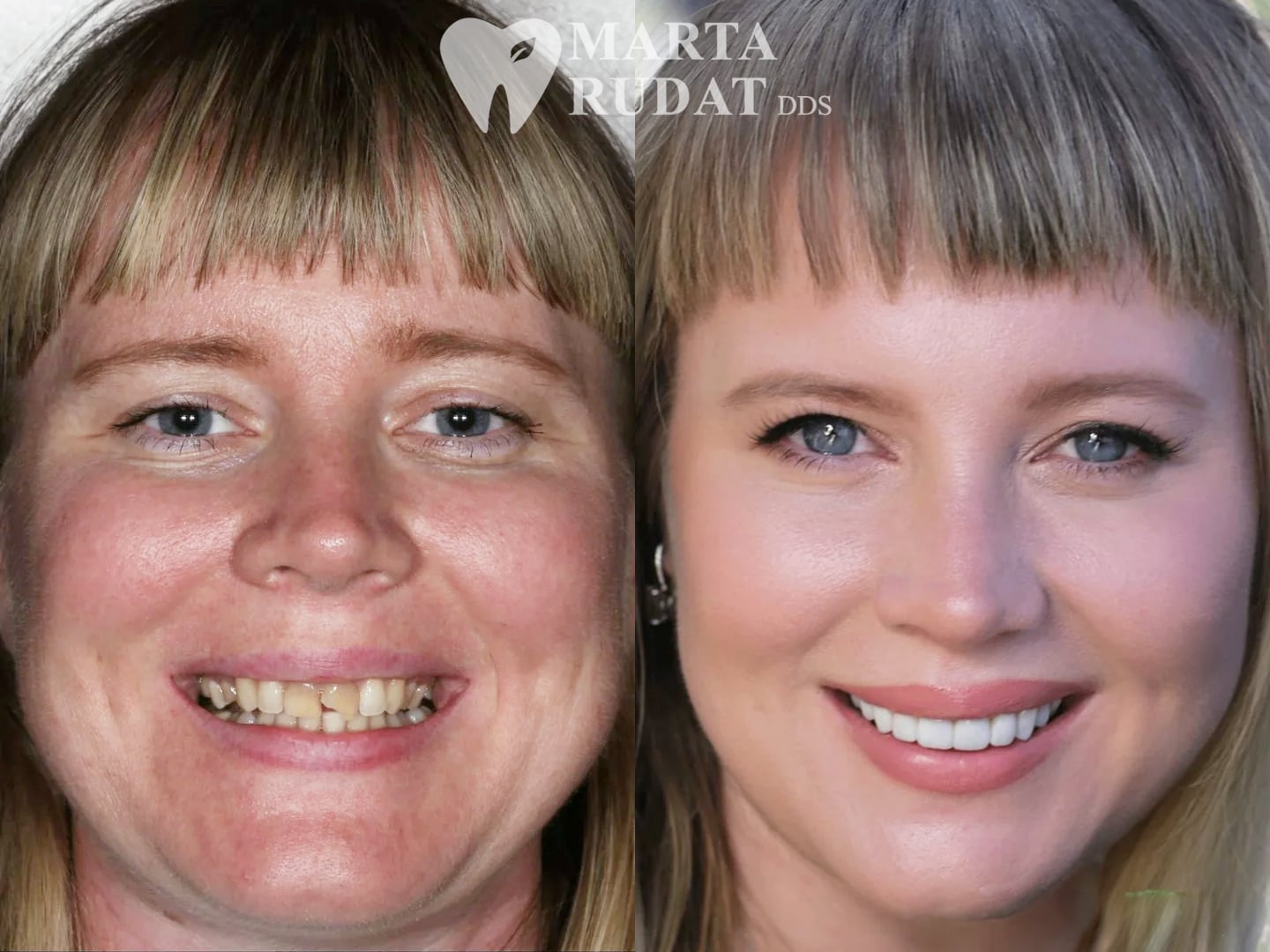
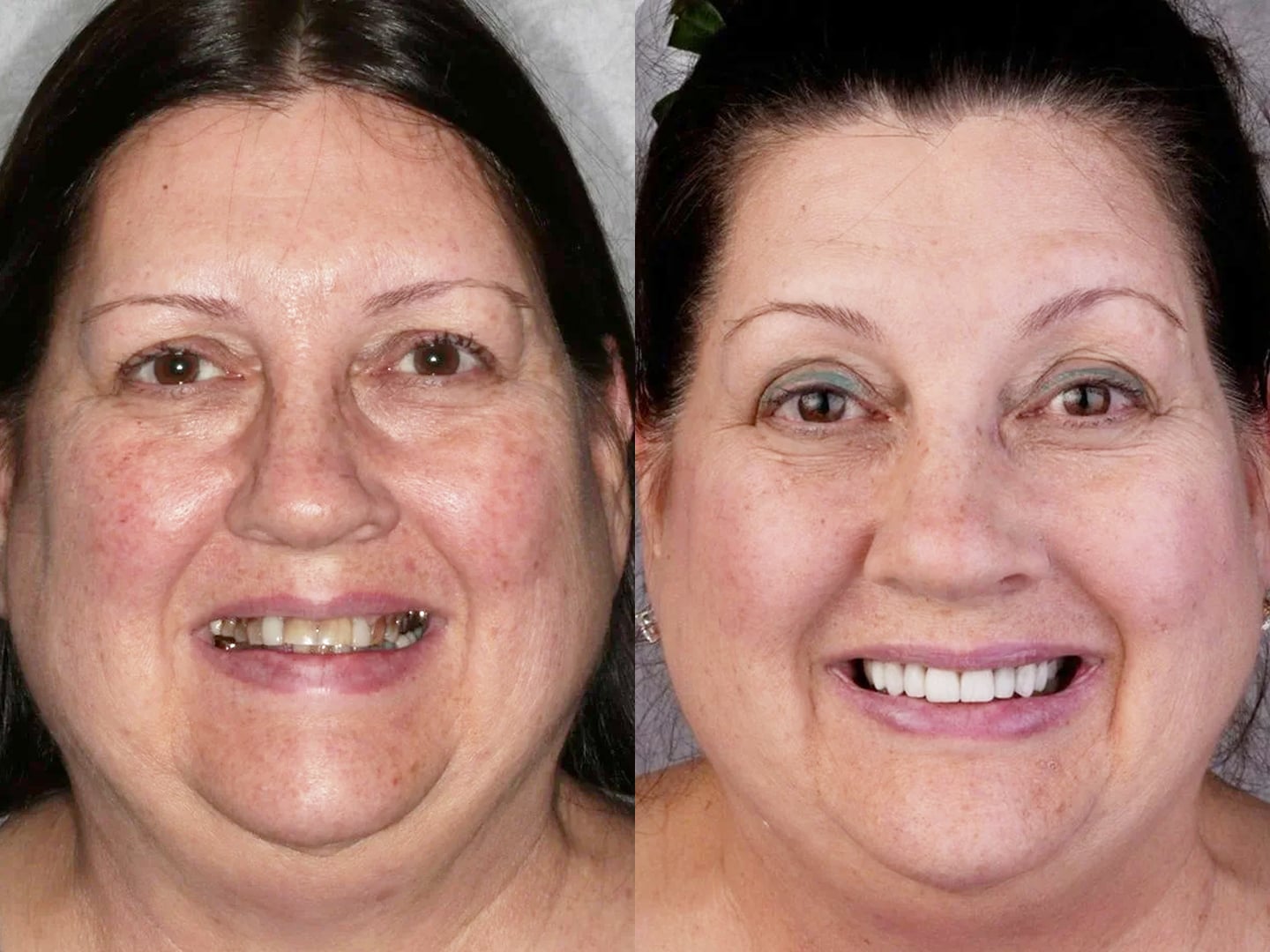
Porcelain veneers in Tustin, CA — before and after, upper arch case by Dr. Marta RudatFull smile makeover in Tustin, CA — before and after by Dr. Marta RudatFull-mouth restoration in Tustin, CA — before and after by Dr. Marta RudatFull smile reconstruction in Tustin, CA — before and after by Dr. Marta Rudat
Case 01 / 04

Porcelain veneers - upper arch

4 Crowns and whitening to replace stained misshapen composite on front teeth through digital design.

Request Your Veneer Consultation

Training that shows

Why your dentist's training matters.

Implants are equal parts surgery and artistry. Placing the post in exactly the right spot is one skill. Designing a tooth on top that looks like it grew there is another. Dr. Rudat has trained in both.

Beyond her dental degree from Loma Linda University and her ongoing implant continuing education, Dr. Rudat completed The Protocol with Ritter & Ramsey, an advanced restorative and digital-dentistry program run by two dentists with a combined decades of experience and continuums from Dawson, Pankey, Spear, and Kois behind them. The training is built around digital treatment planning, chairside scanning, precise tooth design with the lab, and the fine details of color and fit that decide whether a restoration looks real.

That's the difference between a tooth that does the job and a tooth nobody can pick out of your smile.

Loma Linda UniversityOmicron Kappa Upsilon — National Dental Honor SocietyAmerican Academy of Cosmetic DentistryThe Protocol with Ritter & Ramsey

The process

How the process works,
step by step.

Most implant journeys run through four stages. Your exact timeline depends on your bone, your healing, and whether you need any prep work first.

01Step

Consultation and 3D planning

We talk through what's missing and what you want, then take a 3D scan of your jaw. That scan lets us see the bone, map the nerves, and plan the implant position before we ever start. No guesswork.

02Step

Implant placement

We place the titanium post during a focused appointment. Most patients are surprised by how manageable this is. We keep you numb and comfortable, and many people compare the recovery to a tooth extraction, not the ordeal they had pictured.

03Step

Healing (osseointegration)

Over roughly three to six months, the bone fuses to the implant. You'll usually wear a temporary tooth in the meantime, so you're never walking around with a gap. This stage is mostly waiting.

04Step

Your final tooth

Once it's fused, we attach the abutment and your custom crown, bridge, or denture. This is the visit where you see the result in the mirror. We match shape and shade to the rest of your smile, the same eye Dr. Rudat brings to cosmetic cases.

Some patients need a bone graft or extraction first, which adds time. We'll tell you that up front, with a real timeline, so nothing catches you off guard halfway through.

Candidacy

Am I a candidate
for dental implants?

Most healthy adults with one or more missing teeth are candidates. The honest answer, though, is that candidacy comes down to a few specific things we check at your consult:

01

Enough healthy jawbone to hold the implant (and if you're short on bone, grafting often solves it).

02

Healthy gums. Active gum disease gets treated first.

03

General health that supports healing. Conditions like diabetes or autoimmune disease don't automatically rule you out; they just mean we plan more carefully (more on that in the FAQs).

04

Not a heavy smoker, or willing to pause around surgery, since smoking lowers success rates.

If you've been told elsewhere that you "don't have enough bone" or "aren't a candidate," it's worth a second opinion. Bone grafting and modern planning have moved that line a lot in the last few years.

Investment

What dental implants cost
in Tustin and Orange County.

We don't believe in hiding the number until you're in the chair. Here's how it tends to break down so you can plan:

Single implant, complete~$3,000–$6,000
Implant-supported bridge (several teeth)Varies by span
Full arch (All-on-4 style), per arch~$15,000–$30,000
Snap-in denture (2+ implants)Typically less than a fixed full arch
Dr. Marta Rudat
Dr. Marta Rudat, DDS

Trust, technology, and the dentist behind your implant

Planned in 3D.
Placed by hand.

Dr. Marta Rudat has cared for Orange County patients for more than 15 years. She earned her dental degree through the International Dentist Program at Loma Linda University School of Dentistry, graduating with the Omicron Kappa Upsilon honor for academic excellence, and she's a member of the American Academy of Cosmetic Dentistry (AACD), currently documenting cases toward AACD Accreditation. Her implant work is backed by the Implant Mastercourse and The Protocol with Ritter & Ramsey.

Every implant here is planned digitally in 3D before placement, so the position is mapped around your bone and nerves instead of being estimated by hand. That precision is what protects the result and your comfort.

In their words

See what our patients say.

More than 200 patients have left five-star reviews across Dr. Marta's 15+ years in Tustin.

I'd been thinking about veneers for ten years. Dr. Marta is the only dentist who actually listened to what I wanted my smile to look like - and then delivered it. People keep asking what I changed.

Mia S.Tustin

I came in for Invisalign and stayed for the experience. It's the only dental office I've ever walked into that feels like a private studio. Dr. Marta is meticulous.

Rachel B.Invisalign

Full smile makeover after years of avoidance. She handled my case with so much care. I cried looking in the mirror - happy crying. It looks like me, just younger.

Karen W.Smile makeover

Swipe →

Frequently asked

Questions,
honestly answered.

Most patients feel pressure rather than pain during placement, because the area is fully numbed, and many compare the recovery to a routine tooth extraction. Soreness for a few days is normal and usually managed with over-the-counter pain relievers. We'll go over comfort and sedation options at your consult so you know exactly what to expect.

The implant post itself can last decades, often a lifetime, when it's well cared for, because it fuses permanently to your jawbone. The crown or restoration on top may need replacement after many years of normal wear, similar to any dental restoration. Daily brushing, flossing, and regular checkups are what keep them lasting.

The implant typically takes about three to six months to fully fuse with the bone before the final tooth is attached, though the soreness from surgery usually settles within a few days to a week. You'll generally wear a temporary tooth during healing, so you're not left with a gap. Timelines stretch a bit if you need a bone graft or extraction first.

Many dental plans now cover part of an implant, often the crown or a portion of the procedure, though coverage varies widely by plan. We'll review your benefits with you before treatment and lay out what insurance handles versus what financing can cover. The goal is no surprises.

A complete single dental implant in Orange County generally costs about $3,000 to $6,000, including the post, abutment, and crown. Full-arch restorations run higher, typically $15,000 to $30,000 per arch, and your final cost depends on bone health, the number of implants, and whether any prep work is needed. We provide an exact quote at your consultation and offer financing.

A single-tooth implant in California typically falls in the $3,000 to $6,000 range for the finished tooth (implant, abutment, and crown), with Orange County prices usually sitting in that band. The spread reflects materials, your specific bone situation, and whether an extraction or graft is part of the plan. You'll get a precise number, not a guess, after your 3D scan.

Yes, having an autoimmune condition does not automatically disqualify you from dental implants, and studies report high implant survival rates in these patients. Conditions like rheumatoid arthritis or lupus can affect healing and bone, and some medications lower bone density, so Dr. Rudat reviews your full medical history and may adjust timing, use antibiotic coverage, or coordinate with your physician. The key is careful, individualized planning rather than a blanket no.

Many patients with osteopenia can still get dental implants successfully, since osteopenia is milder than osteoporosis and is evaluated case by case. Lower bone density may call for techniques like bone grafting or guided bone regeneration to build a strong foundation first. Dr. Rudat assesses your bone quality with a 3D scan and builds the plan around it, and certain bone medications are worth mentioning at your consult.

The newest and most stable option is the snap-in, implant-supported denture (also called a snap-on or overdenture), which clips securely onto two or more dental implants instead of resting on the gums. It stops the slipping and clicking of traditional dentures, lets you eat more comfortably, and helps preserve jawbone by keeping it stimulated. For a fully fixed set that never comes out, an All-on-4 style full-arch restoration is the next step up.

Vitamin D (specifically D3) is the most important vitamin for bone density, because it lets your body absorb the calcium that bone is built from. It works best paired with vitamin K2, which directs that calcium into your bones rather than your arteries, and adequate calcium and magnesium support the process. If you're preparing for an implant or bone graft, ask Dr. Rudat or your physician whether supplementing makes sense for you, since this is general guidance rather than a personal medical prescription.

There's no upper age limit for dental implants, and many of our most satisfied implant patients are in their 60s, 70s, and beyond. What matters is your bone and your general health, not the number on your birthday. A consultation and 3D scan tell us far more than age ever could.

Ready to fix it
for good?

You've read this far, which usually means you're tired of working around a missing tooth. The next step is simple and low-pressure: a consultation where we look at your specific situation, take a 3D scan, and give you a straight answer on your options and your cost.

Implant consultation

Talk to Dr. Marta about your smile.

Or call (714) 665-4200

The implant post itself can last decades, often a lifetime, when it's well cared for, because it fuses permanently to your jawbone. The crown or restoration on top may need replacement after many years of normal wear, similar to any dental restoration. Daily brushing, flossing, and regular checkups are what keep them lasting.

Dr. Marta Rudat, DDS
CallBook a Consultation
Dr. Marta Rudat DDS

The implant typically takes about three to six months to fully fuse with the bone before the final tooth is attached, though the soreness from surgery usually settles within a few days to a week. You'll generally wear a temporary tooth during healing, so you're not left with a gap. Timelines stretch a bit if you need a bone graft or extraction first.