
Veneers · Volume 01
How Much Are Porcelain Veneers?

Written by
Dr. Marta Rudat
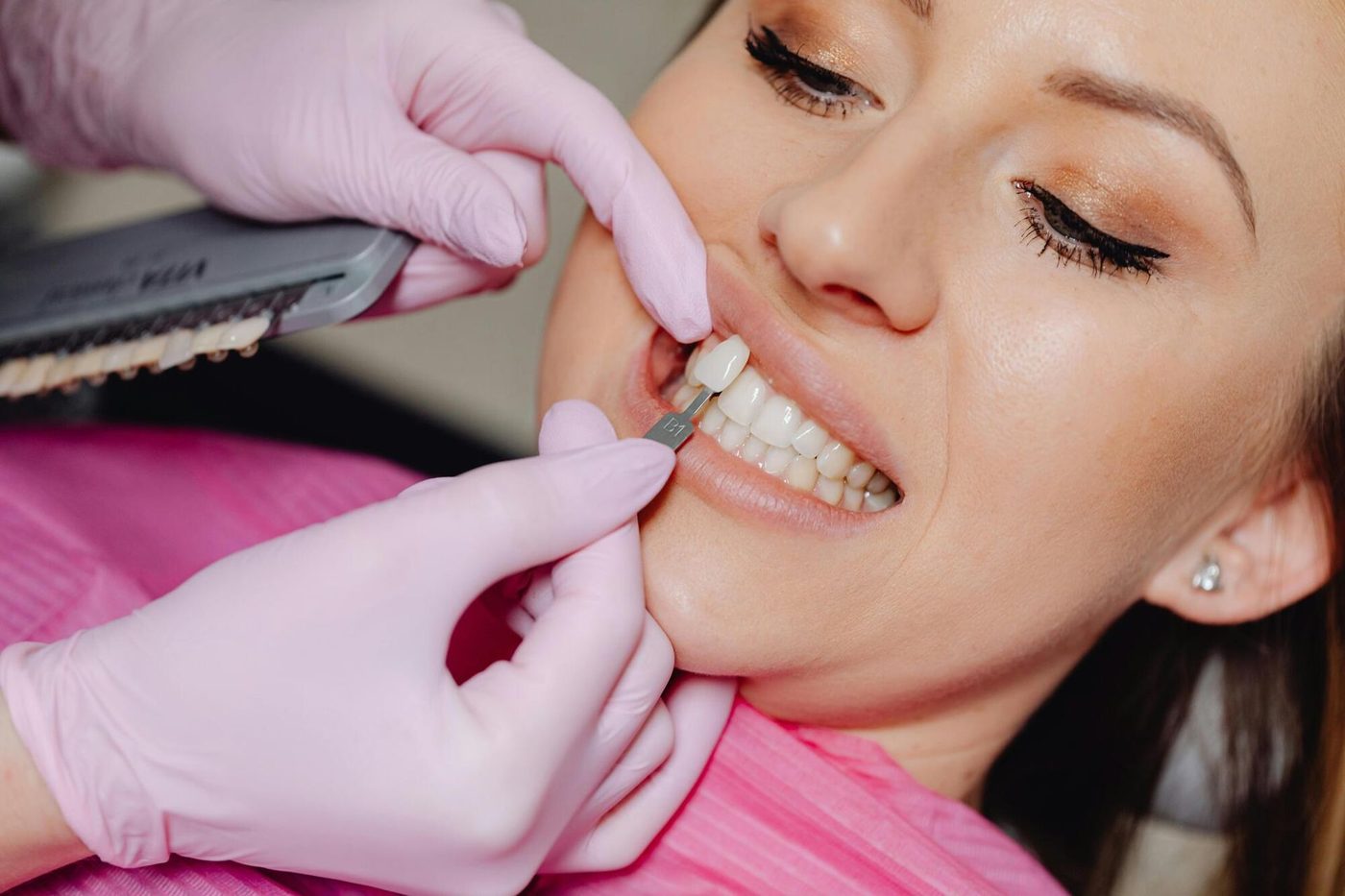
Porcelain veneers cost, on average, $900 to $2,500 per tooth in the United States, with a full set of six to eight front teeth typically landing between $9,000 and $24,000. Price depends on the number of teeth treated, the materials and lab used, your dentist's experience, and where you live. Porcelain veneers are thin, custom ceramic shells bonded to teeth to change their color, shape, and proportion.
That range is wide enough to feel useless, so the rest of this guide breaks it down the way you would actually think through the decision: per tooth, per full set, what drives the number up or down, and whether the investment holds up over time.
How much do porcelain veneers cost per tooth?
Nationally, a single porcelain veneer typically runs $900 to $2,500, with CareCredit's dental cost data putting the national average closer to $1,765 per tooth. That average has real spread built into it. A single veneer to fix one chipped front tooth can land near the bottom of the range. A veneer that requires matching a translucent, hand-layered shade to the teeth around it, on a patient who already has crowns to blend with, sits closer to the top.
In the Tustin and Orange County area, that math holds up. Porcelain veneers here generally run $925 to $2,500 per tooth, which tracks almost exactly with the national picture. That is worth knowing before you get a quote, because it means a fair local price is not a discount from some inflated national number. It is the same number, delivered by someone who can also show you the work.
Per-tooth pricing is the right way to think about veneers, not "per smile." A smile makeover quote that feels shockingly high is often just the per-tooth price multiplied honestly across six or eight teeth, not a markup.
If you want the specific number for your own teeth, Dr. Marta Rudat's porcelain veneers page walks through what an itemized estimate built around your case actually includes before you commit to anything.
How much does a full set of porcelain veneers cost?
Most patients pursuing a real smile change are not treating one tooth. They are treating the six to eight teeth that show when they smile, sometimes more. Nationally, that full-set investment runs roughly $9,000 to $24,000, with CareCredit reporting a national average of about $15,486 for a complete smile-line set.
Here is the simple math behind that range:
| Teeth treated | At $925/tooth | At $2,500/tooth |
|---|---|---|
| 4 | $3,700 | $10,000 |
| 6 | $5,550 | $15,000 |
| 8 | $7,400 | $20,000 |
The gap between the low and high end of that table is not arbitrary. It usually comes down to whether the case needs anything beyond veneers alone: whitening the surrounding teeth first, a diagnostic wax-up to preview the design, or alignment work so less enamel has to come off each tooth.
That last point matters more than most patients expect walking in. When a case involves color, shape, and alignment together, it stops being "just veneers" and becomes what most cosmetic dentists call a smile makeover: a coordinated plan rather than treatment on isolated teeth. The price reflects the plan, not just the porcelain.
If your case might fall into that broader category, it is worth finding out before you anchor on a per-veneer number that will not match what you actually need.
Why does one dentist quote $1,200 and another quote $3,000?
This is the question that frustrates people the most, and it has a real answer. A handful of factors drive the spread between two quotes for what sounds like the same procedure.
Dentist training and credentials. Cosmetic dentistry has no government-recognized specialty board. Any licensed dentist can legally offer veneers, and many do, with wildly different levels of formal training behind them. The American Academy of Cosmetic Dentistry runs a voluntary Accreditation process built on documented, peer-reviewed patient cases, and fewer than 500 dentists worldwide have completed it. Dr. Marta Rudat is currently working through that process herself, which is one reason her fee reflects a level of case planning that a quicker, template-driven approach does not.
Lab and material choice. Hand-layered porcelain, built up shade by shade to match natural translucency, takes longer and costs more than a same-day milled veneer. Both are technically "porcelain veneers." They do not look the same up close.
Prep work before the veneer. A case that needs whitening first, or a round of Invisalign to reduce how much enamel has to be removed, costs more overall but often produces a more conservative, longer-lasting result per tooth.
Geography. Coastal metro areas generally run higher than the national average, while smaller markets run lower. Tustin and the wider Orange County area sit close to the national midpoint rather than at either extreme.
None of these factors are hidden. A dentist who explains why their number looks the way it does, before you have signed anything, is telling you something useful about how they practice.
Are porcelain veneers worth the cost compared to other options?
Veneers are one tool in a larger toolbox, and they are not always the right one. Here is how the main cosmetic options compare on cost and how long they typically last.
| Treatment | Typical cost | Typical lifespan |
|---|---|---|
| Professional whitening | $200–$700 | Months to a couple of years, with touch-ups |
| Composite bonding | $250–$1,500 per tooth | 5–7 years |
| Composite veneers | $250–$1,500 per tooth | 5–7 years |
| Porcelain veneers | $900–$2,500 per tooth | 10–20 years |
If your concern is purely color on otherwise healthy, well-shaped teeth, professional whitening may get you most of the way there for a fraction of the cost. A single chipped tooth often calls for bonding rather than a veneer. Veneers earn their price tag when the concern is shape, proportion, or staining that whitening genuinely cannot lift, spread across teeth that need to look consistent with each other.
It is also worth ruling out the wrong problem entirely. Patients occasionally arrive assuming they need veneers when a missing or badly damaged tooth is actually the issue, which is a different repair job. Veneers vs. implants breaks down that distinction if you are not sure which one describes your situation.
Does insurance cover porcelain veneers?
Usually, no. The American Dental Association's own patient education resource classifies veneers as cosmetic dentistry, which means insurance typically will not cover them unless a specific case is deemed medically necessary, such as restoring a tooth broken by trauma. That same ADA guidance also makes a point worth repeating here: only a licensed dentist should place a veneer, since unlicensed providers carry real risk of infection, nerve damage, and veneers placed over teeth that were never actually healthy to begin with.
That warning is not abstract. Budget "veneer tech" services and overseas dental tourism packages have grown alongside social media interest in cosmetic smiles, and the savings on paper can look tempting. The corrective work that sometimes follows a poorly executed case, redone properly by a licensed dentist, frequently costs more than paying a fair price once.
If part of your treatment plan also addresses a genuine structural problem, ask your front desk to check whether any portion qualifies for partial coverage. It happens more often than patients expect, and it costs nothing to ask before you assume the whole plan is out of pocket.
How do you pay for porcelain veneers without insurance?
Most patients paying out of pocket use one or a combination of a few options.
- Third-party healthcare financing (CareCredit, Cherry, Sunbit, and similar) splits the total into fixed monthly payments, often with a promotional low-interest window.
- In-house payment plans through your dental practice, which some offices offer directly.
- An in-house membership plan, if your dentist has one. At Marta Rudat DDS, a membership plan covers routine preventive care for a flat monthly fee and includes a member discount on other treatment, veneers included, which can meaningfully soften the final number for patients without dental insurance.
- HSA or FSA funds, which sometimes apply depending on how a portion of the case is classified.
Whichever route you choose, ask to see the discount applied before financing spreads out the remainder. Doing it in that order, discount first, then financing, gives you the real number to finance rather than the sticker price.
How long do porcelain veneers last, and does that change the math?
A well-made porcelain veneer typically lasts 10 to 20 years with normal care. That single fact changes how the upfront number should feel.
Take a mid-range full set at $15,000. Spread across 15 years, that works out to $1,000 a year, or less than $3 a day, for a smile you are wearing through every photo, meeting, first date, and dinner across a decade and a half. Composite veneers cost less upfront but typically need replacing every 5 to 7 years, so the total cost over the same 15-year window can end up close to or higher than porcelain once you account for redoing the work two or three times.
That framing does not make the upfront decision smaller. It is still a real number and, as porcelain veneers involve removing a thin layer of enamel, a permanent one for the treated teeth. What actually happens to a tooth once it is prepared for a veneer is worth reading before you commit, precisely because this is not a decision you get to casually undo later.
What should a veneer cost estimate actually include?
A trustworthy estimate is built after an exam, not before one. It should walk through the number of teeth involved, the lab and material being used, any prep work like whitening or alignment, and what happens at the follow-up visit once the veneers are bonded.
A price quoted before anyone has looked at your teeth is a guess, not an estimate. That is true whether the number sounds low or high. The honest version of this conversation happens in the chair, after an exam, with a written breakdown you can actually read before you agree to anything.
Porcelain veneer cost questions, answered
How much are porcelain veneers per tooth on average?
Porcelain veneers average $900 to $2,500 per tooth in the United States, with a national average closer to $1,765 per tooth according to CareCredit's dental cost data. Local pricing in markets like Orange County tends to track close to that national range rather than deviate sharply from it.
How much does a full set of porcelain veneers cost?
A full set, typically six to eight front teeth, runs about $9,000 to $24,000, with a national average around $15,486 for a complete smile-line case. The exact number depends on how many teeth are treated and whether whitening or alignment is part of the plan first.
Why are porcelain veneers so expensive?
The price reflects lab-crafted, hand-layered ceramic work, the dentist's training and experience, and the number of visits involved in planning, previewing, and bonding a case correctly. Cosmetic dentistry has no recognized specialty board, so a dentist's voluntary credentials, like AACD Accreditation, are one of the clearest signals of the training behind the price.
Does dental insurance ever cover porcelain veneers?
Rarely. Insurance classifies veneers as cosmetic dentistry, so coverage is uncommon unless a specific tooth needs a veneer to repair genuine trauma or decay rather than to change its appearance. It is worth asking your front desk to check, since partial coverage occasionally applies to part of a larger plan.
Are cheaper veneers from overseas trips or unlicensed "veneer techs" worth the savings?
Generally, no. Only a licensed dentist should place a veneer, since unlicensed providers carry real risk of infection, nerve damage, and veneers placed over teeth that were never properly evaluated. Correcting a poorly executed case often costs more in the end than paying a fair price for licensed care the first time.
How long do porcelain veneers last?
With normal care, porcelain veneers typically last 10 to 20 years, compared to 5 to 7 years for composite veneers. Spread across that lifespan, the per-year cost of porcelain is often lower than it first appears, even though the upfront number is higher than composite alternatives.
TL;DR
Porcelain veneers cost $900 to $2,500 per tooth nationally, and roughly $925 to $2,500 per tooth in the Tustin and Orange County area, which is right in line with the national picture. A full set of six to eight teeth typically runs $9,000 to $24,000. The spread comes down to the number of teeth treated, the lab and materials used, your dentist's training, and whether prep work like whitening or alignment happens first. Insurance rarely covers the cost, but financing and membership discounts can soften it. With a 10- to 20-year lifespan, the honest way to weigh the number is per year worn, not just as a single upfront figure. The only way to get a real number for your own case is an exam, not a guess over the phone.
A consultation with Dr. Marta Rudat gives you that real number, along with her honest read on whether veneers are even the right tool for what you want to change.
See what your case would actually cost.
Get an itemized estimate from Dr. Marta before you decide anything.
About the author
Dr. Marta Rudat
Boutique cosmetic, general & restorative dentistry in Tustin, CA.
Dr. Marta Rudat, DDS is a cosmetic and general dentist in Tustin, California, and a member of the American Academy of Cosmetic Dentistry. She designs and places porcelain veneers, and every veneer case starts with an exam and an itemized estimate before any treatment begins. Marta Rudat DDS is located at 1076 E First Street, Suite D, Tustin, CA 92780. To book a visit, call (714) 665-4200.
- AACD member · Accreditation track
- Loma Linda University, DDS
- 15+ years in practice
- Cosmetic & full-mouth restoration
Continue reading
More from the Journal.

By private consultation only
Tell me what you've
been thinking about.
A consultation is a conversation.
Thirty minutes with Dr. Marta without a treatment plan pushed across the desk before you're ready.
Mon – Thu · Tustin, California