
Veneers & Implants · Volume 01
Veneers vs. Implants: Which One Do You Need?

Written by
Dr. Marta Rudat
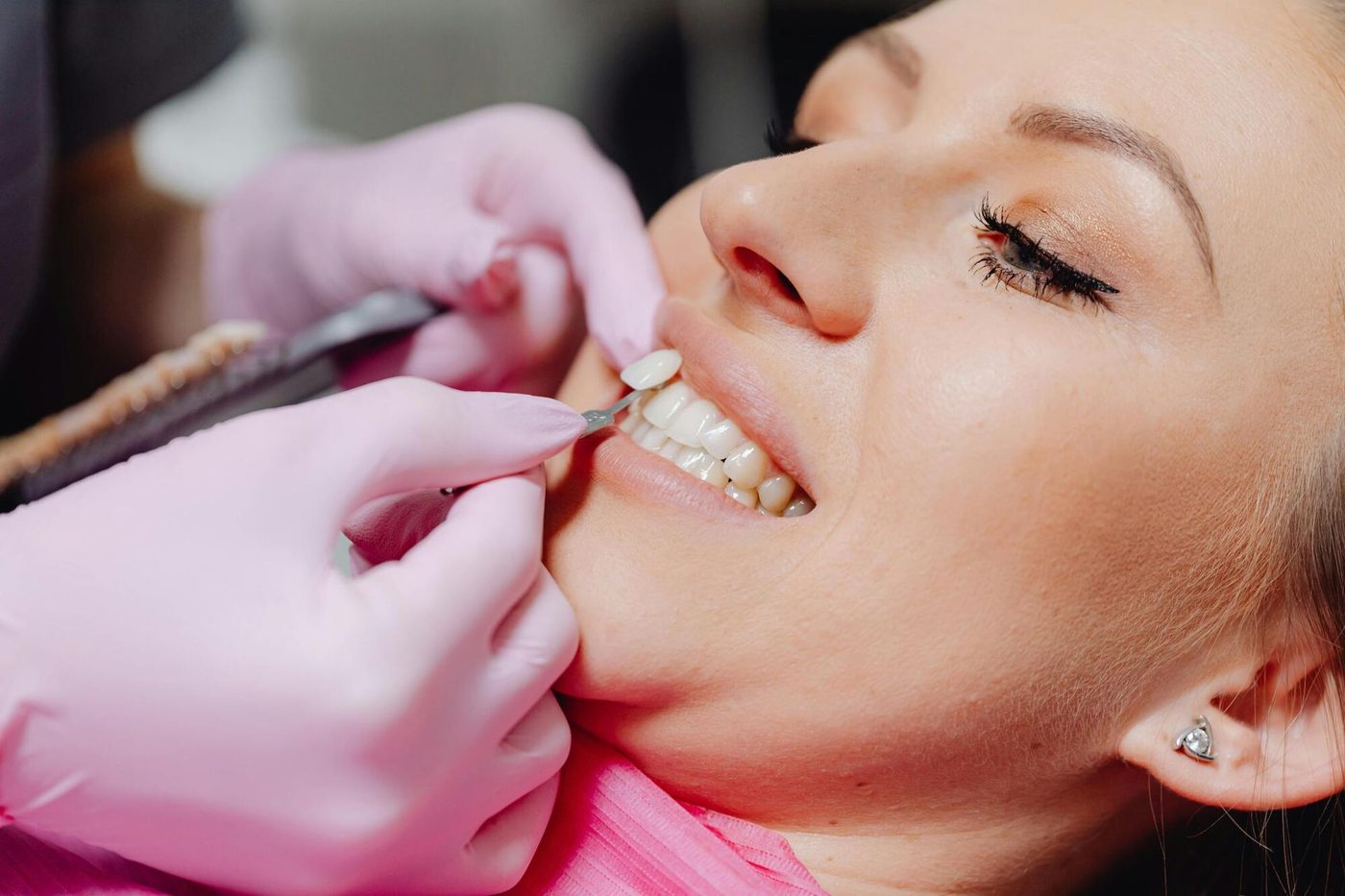
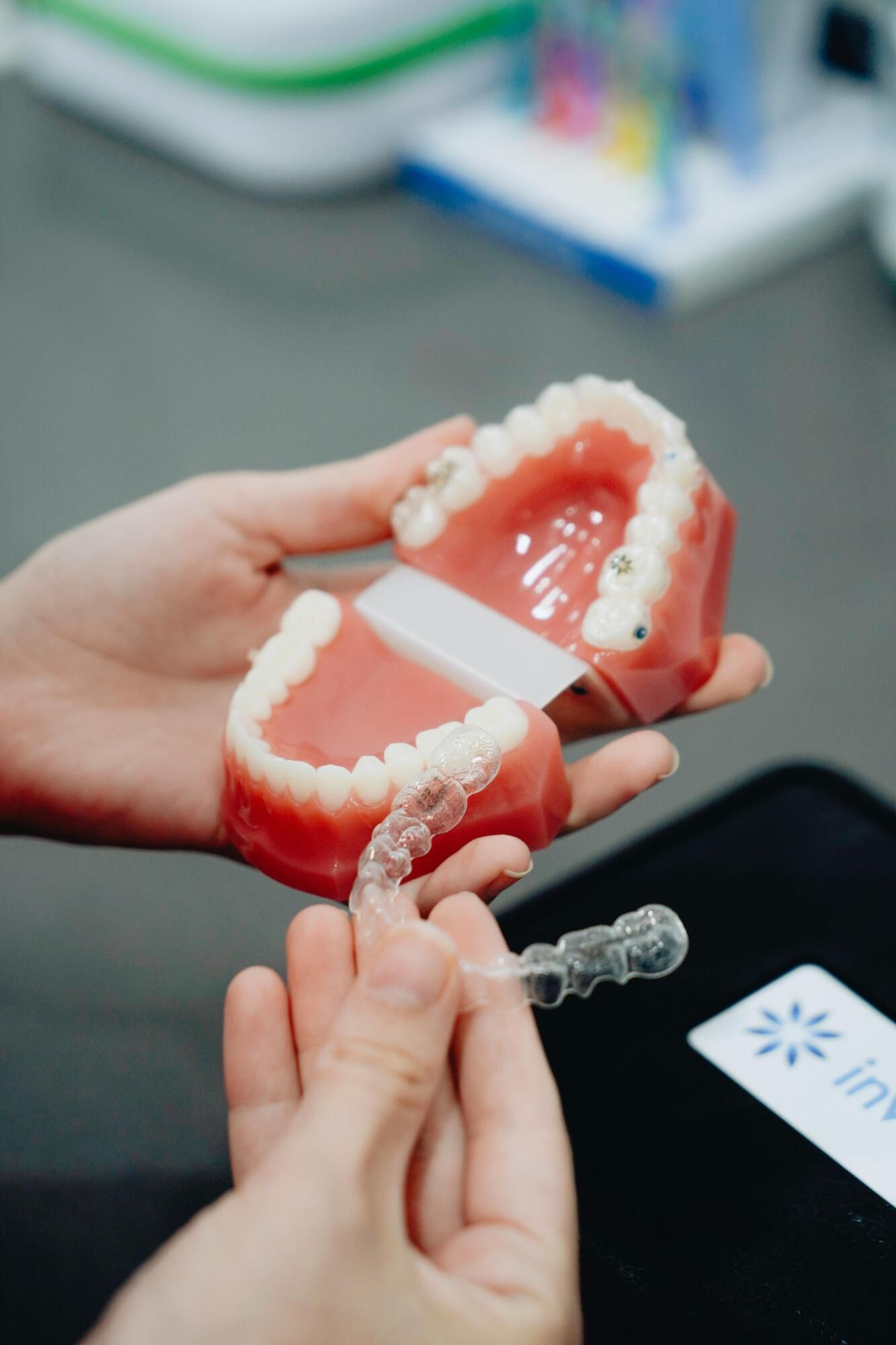
A veneer is a thin porcelain shell bonded to the front of a healthy tooth to improve its color, shape, or size. A dental implant replaces a missing tooth entirely: a titanium post in the jawbone supports a brand-new crown. The deciding factor is the tooth itself. A tooth worth keeping points to a veneer, while a missing or unsalvageable tooth calls for an implant.
In this guide:
- The real difference between the two, in one table
- When each one is the right call, and the gray zone in between
- What "veneer implants" means (and why it's two different things)
- Costs in Tustin, lifespans backed by research, and the questions patients ask me most
What's the Difference Between a Veneer and an Implant?
A veneer upgrades a tooth you still have. An implant rebuilds one you've lost, from the root up.
That single sentence settles most cases. Here's the full comparison:
| Porcelain veneer | Dental implant | |
|---|---|---|
| What it does | Covers the front of a natural tooth to change color, shape, or size | Replaces a missing tooth with an artificial root and crown |
| Requires | A healthy tooth with enough enamel | Enough jawbone to anchor the post |
| Procedure | A thin layer of enamel is reshaped, then the shell is bonded on | Minor oral surgery places the post; a crown attaches after healing |
| Timeline | 2–3 visits over a few weeks | 3–6 months, mostly waiting for bone to fuse with the post |
| Lifespan | 10–15+ years | Decades, often a lifetime |
| Cost in Tustin | $925–$2,500 per tooth | $3,000–$6,000+ per tooth, all stages included |
One thing the table can't show: these treatments are not interchangeable. You can't put a veneer on a missing tooth, and placing an implant means removing whatever tooth is there. That's why "which is better" is the wrong question. The right question is what your tooth needs.
When Is a Veneer the Right Choice?
A veneer fits when the tooth underneath is structurally sound, and the problem is what you see. That covers:
- Deep staining that whitening can't fix, including tetracycline and fluorosis discoloration
- Chips and worn edges on otherwise healthy front teeth
- Small gaps you'd like closed without orthodontics
- Shape and size concerns, like short, uneven, or slightly rotated front teeth
Two honest caveats before you fall in love with the idea.
Veneers need enamel to bond to. A tooth with large fillings, heavy wear, or previous root canal treatment often does better with a crown, which wraps the whole tooth instead of facing it.
The enamel reshaping is permanent. It's a thin layer, far less than most patients imagine, but a veneered tooth will always need a veneer. I tell every patient this before we start, because a decision this durable deserves full information.
When Is an Implant the Right Choice?
An implant is the answer when there's no tooth left to work with:
- The tooth is already missing
- It's broken at or below the gumline, leaving nothing to rebuild on
- Decay or infection has destroyed too much structure to save
- A root canal has failed and retreatment isn't viable
There's also a reason to act rather than wait. After a tooth is lost, the jawbone in that spot starts shrinking within months, and neighboring teeth drift toward the gap.
A dental implant is the only replacement that preserves the bone, because the post stimulates it the way a natural root does.
What If the Tooth Is Damaged but Still There?
This is the gray zone, and it's where I see the most confusion. A cracked, heavily filled, or root-canaled tooth often needs neither a veneer nor an implant. It needs a crown, sometimes with root canal treatment first.
I'd rather save a tooth than replace one. A well-restored natural tooth keeps its own root, its own ligament, and its own bone stimulation, and no implant fully replicates that.
Research comparing the two supports the view that the decision should weigh the condition of the tooth, according to a critical review in the Journal of Functional Biomaterials, rather than defaulting to extraction simply because implants are available.
So if a dentist recommends pulling a tooth that another dentist says is savable, get the second opinion. The answer depends on how much healthy structure remains, and that takes an exam, an X-ray, and a conversation.
Is a "Veneer Implant" a Real Thing?
No. There's no procedure called a veneer implant. The term usually means one of two things:
- Comparing the two options, which is what this article covers
- An implant crown designed to match existing veneers, which is a real and common combination in smile makeovers
If you've seen "veneer implants" advertised somewhere, what's being sold is almost certainly one of those two, and it's worth asking which.
How Do the Costs Compare in Tustin?
Porcelain veneers run $925 to $2,500 per tooth in our area. Most veneer cases involve six to ten front teeth, so complete smile designs typically land between $7,000 and $20,000+. Because veneers are cosmetic, dental insurance rarely contributes.
A single implant runs $3,000 to $6,000+ once you include the post, the connector, and the crown. Some insurance plans cover a portion of implant treatment since it's restorative, and it's worth checking your specific benefits.
The per-tooth gap looks large, but the comparison is misleading in both directions. Veneers are usually a multi-tooth plan while implants are usually a single-tooth plan, and an implant that lasts 30 years can cost less over time than a veneer replaced twice.
How Long Does Each One Last?
Both hold up well, and the research is specific.
Veneers: 95.5% of porcelain veneers were still in place at 10 years in a systematic review covering more than 6,500 veneers across 25 clinical studies. In practice, plan on 10 to 15 years, longer with good hygiene and a nightguard if you grind.
Implants: 96.4% of implants survived to the 10-year mark in a systematic review published in the Journal of Dentistry. Many go decades. The implant itself doesn't decay; the maintenance job is protecting the gum and bone around it, which regular cleanings handle.
The pattern to notice: neither treatment fails often, and both fail faster without maintenance. Whichever you choose, the hygiene visits afterward are part of the investment.
Can One Smile Plan Include Both?
Often, yes. A common full smile design pairs an implant for a missing tooth with veneers across the neighboring teeth, all planned together so the shade, shape, and gumline match seamlessly. Planning them together is important because an implant crown made in isolation rarely matches veneers made later.
In my practice, I design the full plan and restore every tooth myself, while a trusted surgical specialist places the implant post. One plan, one set of eyes on the final result.
Frequently Asked Questions
What happens to dental implants after 20 years?
Most keep working. Roughly 4 out of 5 implants are still in place at the 20-year mark, according to a 2024 meta-analysis in Clinical Oral Investigations. Failures at that stage usually trace to gum disease around the implant or mechanical wear on the crown, both of which regular checkups catch early.
Do celebrities get veneers or implants?
Mostly veneers. The dramatic "new smile" transformations you see are typically full sets of porcelain veneers across the visible front teeth. Implants come into play when a celebrity has lost a tooth, and a well-made implant crown is designed to be indistinguishable from the veneers around it.
What happens to veneers after 10 years?
For most patients, nothing dramatic. The large majority of porcelain veneers pass the 10-year mark intact. When one does need attention, the common reasons are a chip, a loosened bond, or gum recession exposing the veneer's edge, and the fix is usually replacing that single veneer rather than the whole set.
Can I bite into an apple with veneers?
Yes. Bonded porcelain veneers are strong enough for normal eating, apples included. The habits to avoid are the ones that break natural teeth too: chewing ice, cracking shells with your front teeth, and opening packages with your mouth. If you grind at night, a nightguard protects the investment.
What do people wish they knew before getting veneers?
Three things come up again and again in my chair. The enamel reshaping is permanent, so the decision is a long-term commitment. There's a temporary phase of a week or two between preparation and bonding, and the temporaries feel different from the final result. And shade selection deserves real thought, because whitening won't change porcelain later; if you want brighter natural teeth, whiten first.
Key Takeaways
- Veneers improve teeth you have. Implants replace teeth you've lost. The state of the tooth makes the decision, and the two aren't interchangeable.
- A damaged-but-present tooth often needs a crown, and a savable tooth is usually worth saving.
- "Veneer implants" isn't a procedure; the term mixes two separate treatments.
- In Tustin, veneers run $925–$2,500 per tooth and implants $3,000–$6,000+ all-in.
- Both are proven long-term: about 95% of veneers and 96% of implants make it past 10 years in published research.
- Missing teeth cost bone over time, so the implant conversation is best had early.