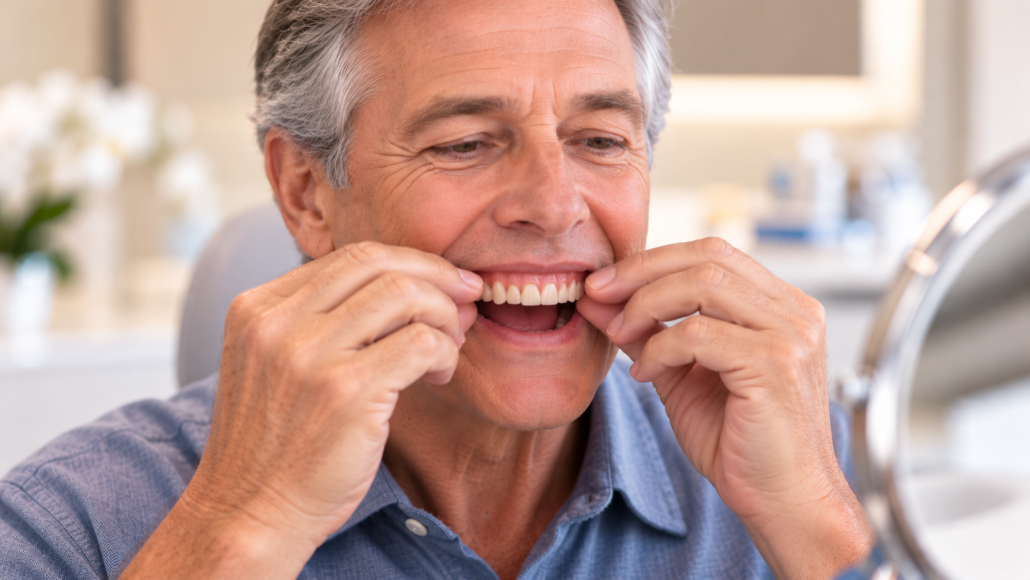
Restorative Dentistry
Custom Dentures that Look and Feel Natural
Custom full and partial dentures designed around your smile, your bite, and the way you naturally look.


Restorative Dentistry
Custom full and partial dentures designed around your smile, your bite, and the way you naturally look.
What are dentures?
Dentures are custom replacements for missing teeth that restore your ability to chew, speak, and smile comfortably.
Options include full dentures for a complete arch, partial dentures when some natural teeth remain, and implant-supported dentures that attach securely for greater stability.
Is this you?
Today's dentures are a long way from the bulky ones you might picture. Custom full and partial dentures can look remarkably natural, while implant-supported dentures can provide greater stability when you eat, speak, and smile.
Dentures may be worth considering if you:
Are missing several teeth or a full row and want to restore your smile and bite
Wear an older denture that slips, rubs, or no longer fits comfortably
Avoid foods you enjoy because missing teeth make chewing difficult
Feel self-conscious about missing teeth when you smile, speak, or take photos
Have several failing teeth and want to understand your options for replacing them
Your Options
The right denture depends on how many teeth you're replacing, which natural teeth remain, and how much stability you want. Here's how the three main options differ.
Full denture
Replacing a complete upper or lower arch
Partial denture
Replacing several teeth when some healthy ones remain
Implant-supported denture
Greater stability and support
Not sure which option fits? That's normal. Dr. Rudat will walk you through the differences in plain language and help you understand which options make sense for you.
The Process
Dr. Rudat looks at your gums, any remaining teeth, and your bite, then recommends the option that fits your mouth and budget.
Measurements, shade, and shape are chosen so the result suits your face and looks natural, not generic.
You try the denture, and small adjustments dial in the comfort. There's a short adjustment period as your mouth gets used to it, which is completely normal.
Eating and speaking feel more natural within a few weeks for most people, and we're here for any tweaks along the way.


Honest Expectations
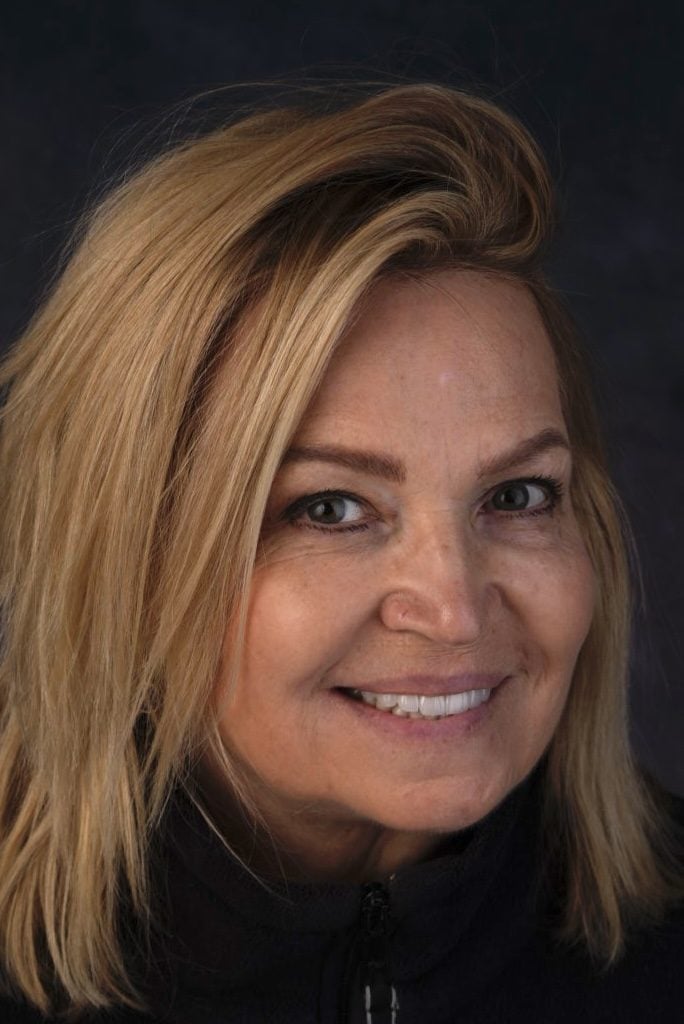
Here's the part some offices skip: a new denture takes a little getting used to. Eating softer foods at first, practicing a few words, and coming back for minor adjustments are all part of the process, not signs that something's wrong.
Most people settle in faster than they expect, and a secure fit makes a big difference. If anything feels off, call us and we'll adjust it.
Why Dr. Marta
You're not just choosing a procedure. You're choosing the person who will do it. Here's a little about Dr. Rudat:
What that adds up to for you: careful planning, restorations that fit your bite, and a result that looks natural instead of obvious.

In their words
For over 15 years, Dr. Marta has been grateful to earn the trust of her patients, reflected in hundreds of five-star reviews.
A very pleasant experience, was looking for a new dentist to fix or replace a broken denture. Dr Rudat took her time and made sure I got a quality replacement with a good fit. Thank You.
I was searching for a dentist. I’m so glad to find Dr. Marta. I wanted veneers and Dr. Marta went above and beyond my expectations. She brought back my confidence and smile. I highly recommend Dr. Marta for your dental needs.
Dr. Marta Rudath and her staff are the best. Dr Rudat made me feel very comfortable. When I came in I was embarrassed to smile, but now with my new teeth I have more confidence. I would highly recommend her to anyone.
Cost
Partial Denture
$1,000 – $3,500
Replacing several teeth when some natural teeth remain
Full Denture
$1,500 – $5,000
Per arch · replacing a complete upper or lower row
Implant-Supported Overdenture
$7,000 – $15,000
Per arch · removable snap-in denture secured by implants
Fixed Full-Arch
$18,000 – $30,000
Per arch · fixed, non-removable All-on-4-style restoration
Cost depends on the type of denture, the materials, and whether implants are part of the plan. A standard partial sits at a very different price than a full implant-supported restoration.
These are general Southern California ranges, not quotes. Flexible partials tend to sit at the lower end, while cast-metal frameworks are typically higher.
Dental insurance may cover part of a standard denture as a major service, subject to your plan's percentage, deductible, and annual maximum. Implant-supported options may have different or more limited coverage.
After an exam, our team gives you a clear estimate, checks your insurance benefits, and lays out financing options so you can understand the cost before deciding how you'd like to proceed.
No Judgment
A lot of people wait years before doing something about missing teeth, often because they feel self-conscious about how things look right now. That feeling is exactly what Dr. Rudat helps people move past, gently and without a single raised eyebrow.
You come in, we look, we tell you what's possible, and we start wherever you're comfortable.


Frequently Asked
How long do dentures last?
Complete dentures often last around 6 to 10 years, but there is no single replacement schedule. Changes in your gums, jawbone, bite, and the denture itself can affect when it should be relined or replaced. A systematic review found an average longevity of about 10 years for complete dentures.
How long does it take to get used to new dentures?
It takes time for your mouth to adapt. Eating, speaking, swallowing, and overall comfort generally improve as you wear them. One clinical study found an average adaptation time of about 2.6 months for lower complete dentures, although individual experiences varied considerably.
Are implant-supported dentures better than regular dentures?
They can provide significantly greater stability, chewing ability, and patient satisfaction, particularly for people who struggle with conventional dentures. Recent evidence also shows improved oral-health-related quality of life with implant-supported options.
What are snap-in dentures?
Snap-in dentures are removable dentures that attach to dental implants rather than relying only on the gums for support. Research on implant overdentures shows improvements in stability, chewing function, satisfaction, and quality of life compared with conventional complete dentures.
Can I get dentures the same day my teeth are removed?
Sometimes. Immediate dentures can be placed after teeth are extracted so you do not have to go without teeth while the tissues heal. They generally require more follow-up and adjustments than conventional dentures as the mouth changes during healing.
Will dentures look like real teeth?
They can look very natural when tooth shape, color, position, and the overall smile are designed for the individual patient. Research on complete denture quality identifies aesthetics alongside retention, stability, bite, and function as important clinical and patient-centered considerations.
Do I need denture adhesive?
Not everyone does. A properly fitting denture should be evaluated on its own, but adhesive can improve retention and function for some patients. A systematic review found that cream and powder adhesives can improve retention and biting function in complete denture wearers.
How should I clean my dentures?
Dentures need regular cleaning to control plaque and microorganisms. Research supports combining mechanical and chemical cleaning approaches, and newer studies suggest ultrasonic cleaning may provide additional biofilm reduction for some patients.
Should I sleep with my dentures in?
Generally, dentures should be removed overnight unless your dentist gives you a specific reason not to. Overnight removal gives the tissues beneath the denture a rest and is commonly recommended as part of reducing the risk of denture-related inflammation.
What if my dentures become loose or uncomfortable?
Have the fit checked rather than simply living with it. Changes in the tissues supporting a denture can affect stability over time, and a reline or adjustment may improve fit and extend the useful life of the denture.
Continue reading
Personalized treatment planning
One visit can clarify which denture option fits you best and what comes next.