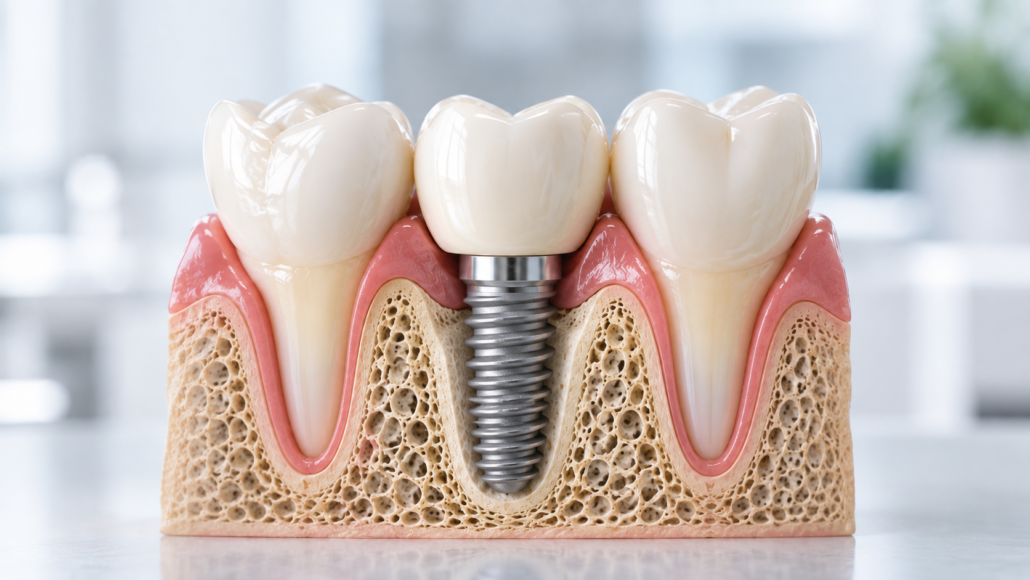
One of the more frustrating things about dentures is that something can fit well for years and then gradually stop feeling as secure.
It may begin with a little movement while chewing. Food starts finding its way underneath. You notice yourself using more adhesive. The lower denture lifts when you speak, or one side rocks when you bite on the other.
It's easy to assume that the denture has somehow stretched or changed shape.
Sometimes there is a problem with the denture itself. But there is another explanation that is especially important with dentures: the mouth supporting the denture doesn't stay exactly the same over time.
Your denture may not have changed very much. Your mouth underneath it may have.
Why do dentures become loose?
Natural teeth aren't simply sitting on top of the jawbone. Their roots are surrounded and supported by bone. Once teeth are removed, that relationship changes.
The extraction sites heal, and the jawbone begins remodeling. The ridge that remains after the teeth are gone can gradually become smaller and change shape.
A conventional denture rests on those tissues. So when the shape underneath changes, the relationship between the denture and the mouth can change with it.
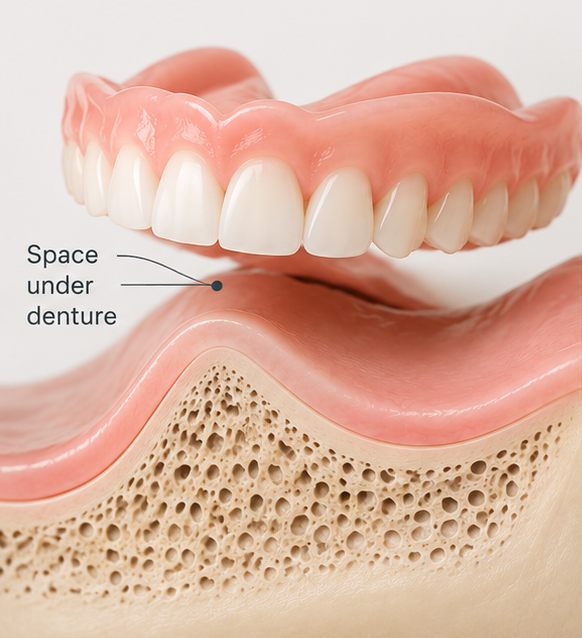
Imagine making a perfectly fitted shell over one shape and then slowly changing the shape underneath it. Eventually the two surfaces won't correspond as closely as they once did.
That's one of the reasons a denture that fit comfortably when it was made may begin feeling different years later.
What changes underneath a denture after teeth are lost?
The ridge underneath a denture is made up of bone covered by soft tissue. After teeth are removed, both the healing process and the longer-term remodeling of that bone affect its shape.
The amount and pattern of change aren't identical from person to person. That's important. There isn't a universal amount of bone change that tells us exactly when someone's denture will become loose.
Earlier
A fuller supporting ridge
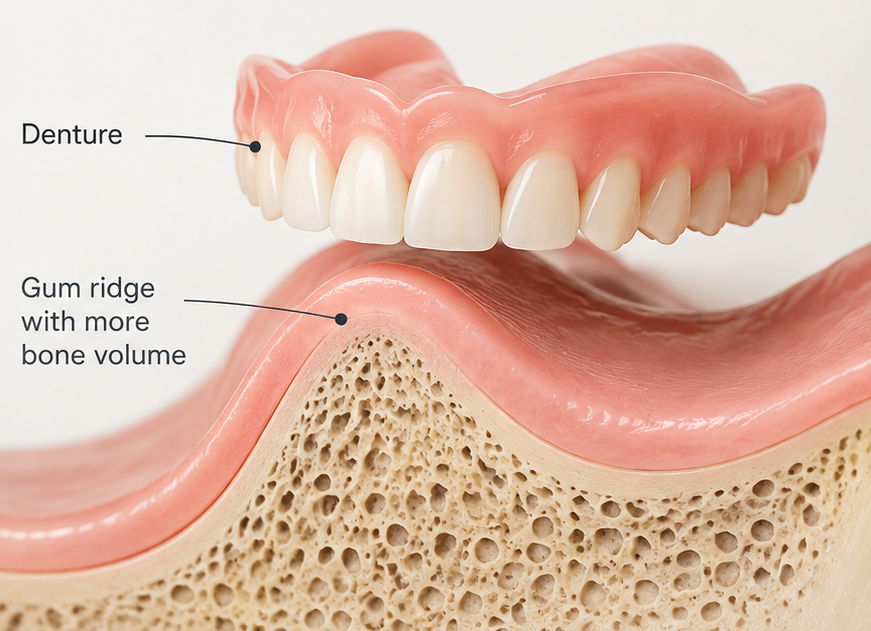
Later
The ridge has changed
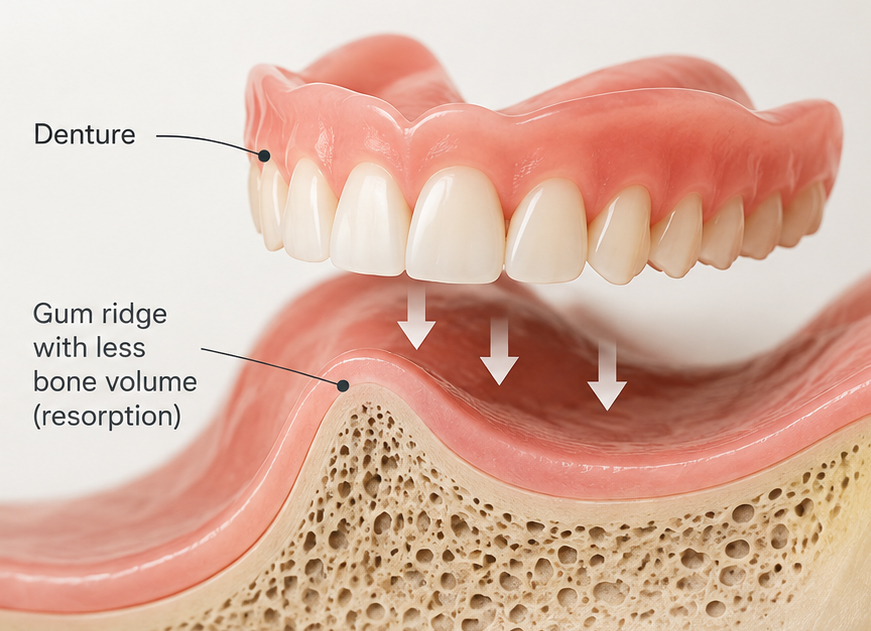
That difference matters because conventional dentures depend heavily on the anatomy underneath them for support, retention, and stability. When that foundation changes, the denture may begin behaving differently even though the teeth on the denture still look fine.
Why is the lower denture often the difficult one?
Upper and lower dentures don't have the same anatomy to work with. An upper complete denture covers a broad area of the palate and can often take advantage of that larger surface for retention.
A lower denture has a much more complicated environment. The tongue is moving beside it. The floor of the mouth moves. The cheeks and lips are active around it, and there is less surface area available for support.
If the lower ridge has also become flatter over time, controlling the denture can become increasingly difficult.
That's why someone can have an upper denture that feels relatively secure while the lower denture is the one that moves during eating or speaking.
How can you tell when a denture no longer fits well?
A loose denture isn't always dramatic. The changes can be gradual enough that you adapt to them without realizing how much your habits have changed.
- The denture moves when you chew. You may notice rocking or lifting when pressure is placed on one side.
- Food gets underneath more often. A changing relationship between the denture and the tissues can create spaces where food collects.
- You rely on more adhesive than you used to. Adhesive can be useful, but a noticeable change in how much you need is worth understanding.
- New sore spots keep appearing. Movement and uneven pressure can irritate specific areas of the supporting tissue.
- Speaking feels less secure. A denture that shifts during certain sounds may change the way you speak or make you more conscious of it.
- You avoid foods you used to eat. Sometimes the first sign of a functional problem is simply that your diet has quietly become more limited.
Is bone loss always the reason a denture feels loose?
No. This is why I wouldn't decide what a loose denture needs without examining it.
The supporting ridge may have changed, but the denture itself also needs to be evaluated. The teeth can wear. The bite can change. Parts of the denture can become damaged. The borders may no longer function the way they should.
Saliva and the condition of the oral tissues can influence how a removable denture behaves too.
"My denture is loose" describes the experience. It doesn't tell us the reason yet.
The first question isn't how to tighten the denture. It's why the denture is moving.
Does a loose denture need a reline or a new denture?
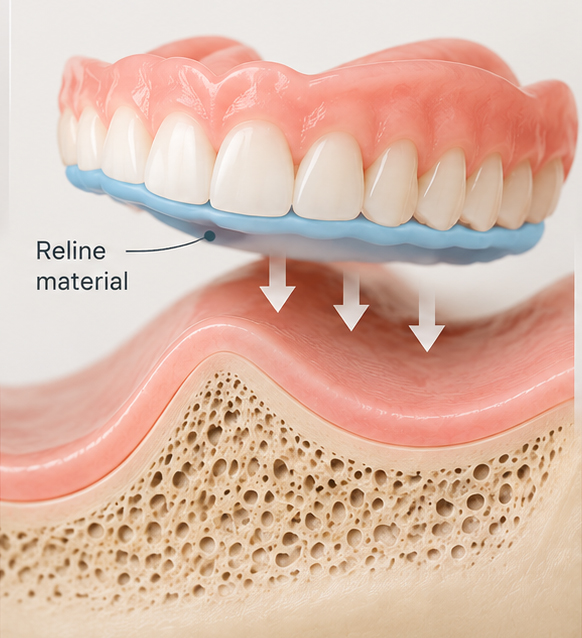
Sometimes an existing denture is still in good enough condition that improving its relationship with the current tissues makes sense. That's where a reline may enter the conversation.
A reline changes the tissue-facing surface of the denture so it corresponds more closely to the anatomy that exists now.
But a reline isn't automatically the right answer for every loose denture. If the denture is significantly worn, damaged, poorly positioned, or the bite and tooth arrangement need substantial correction, making a new denture may be the better solution.
Loose denture
Reline the denture
Make a new denture
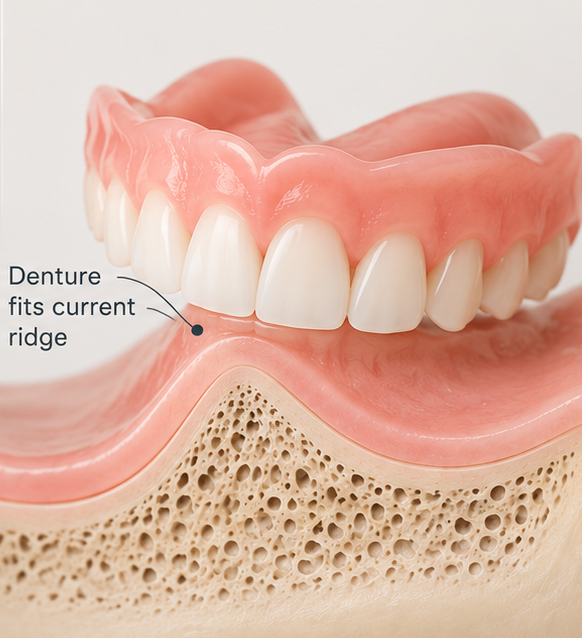
The decision isn't really "reline versus new denture" in isolation. It's whether the existing denture is still a good foundation worth adapting.
Can denture adhesive fix a loose denture?
Denture adhesive can improve retention for some people. Using adhesive doesn't automatically mean that something is wrong with your denture.
But I would separate "adhesive helps my denture feel more secure" from "I need increasing amounts of adhesive to make this denture usable."
Adhesive can't tell us why the denture has become loose. It also doesn't restore a worn bite, repair a damaged denture, or make a poorly fitting base match anatomy that has substantially changed.
If your relationship with adhesive has changed, that is useful information. Bring the denture in and let's look at why.
What if a conventional denture never feels stable enough?
There are situations where the problem isn't simply that an older denture needs to be refreshed. The patient may have very little remaining ridge, may struggle particularly with a lower denture, or may simply want more stability than a conventional removable denture can provide.
That's when dental implants may become part of the discussion.
Implants can provide retention that doesn't depend entirely on the shape of the gum and residual ridge. That can change how the denture behaves during chewing and speaking.
It doesn't mean everyone with a loose denture needs implants. Sometimes a reline is enough. Sometimes a new conventional denture is the appropriate answer. Sometimes implant support solves the specific problem the patient has been struggling with.
Our guide to implant-supported dentures vs. traditional dentures goes deeper into that decision.
What if the denture is new and already feels loose?
That's a different conversation from a denture that has gradually loosened over several years.
New dentures have an adjustment period. Your tongue and muscles are learning to control something unfamiliar, and that can initially feel like movement even when the denture itself doesn't necessarily require major changes.
Immediate dentures can change particularly quickly because they're being worn while extraction sites and the supporting tissues are healing.
We explain that early period in New Dentures: How Long Does It Take to Adjust?
When should a loose denture be checked?
You don't need to wait until the denture is falling out of your mouth before having the fit evaluated.
I would want to look at it if movement is interfering with eating, if new sore spots are developing, if you're suddenly relying much more heavily on adhesive, or if the bite simply doesn't feel the way it used to.
The goal is not to make every older denture new again. It's to understand what changed and choose the smallest appropriate solution that restores comfortable function.
A loose denture is a symptom. The right treatment depends on what's causing it.
Key takeaways
Dentures are rigid. The mouth underneath them isn't.
- 01 The jaw ridge continues to remodel after teeth are lost, so the foundation supporting a denture can change over time.
- 02 A denture that once fit well can become loose even when the denture itself hasn't dramatically changed.
- 03 Increasing movement, food underneath the denture, sore spots, and greater dependence on adhesive can all signal a change in fit.
- 04 Depending on the cause and condition of the denture, the solution may be an adjustment, reline, or new denture.
- 05 When conventional dentures can't provide the stability a patient needs, implant support may be worth considering.
Frequently asked questions
A few questions patients ask most.
Why do dentures become loose after several years?
One important reason is that the jaw ridge continues to remodel after teeth are lost. A review of residual ridge resorption describes continued bone loss in the edentulous jaw following extraction and healing. As that supporting anatomy changes, a denture made to an earlier shape may no longer adapt as closely.
Does everyone lose jawbone at the same rate after losing teeth?
No. Residual ridge resorption varies among patients and is influenced by multiple factors. A systematic review of ridge resorption in denture treatment found considerable variation across the available evidence, which is one reason denture fit and maintenance need to be evaluated individually.
Can a loose denture be relined instead of replaced?
Sometimes. Relining changes the tissue-facing surface of an existing denture to improve its adaptation to the current ridge. A systematic review of complete dentures with resilient liners found generally favorable results for masticatory function, satisfaction, and quality of life. Whether a particular denture is worth relining still depends on its overall condition, tooth wear, bite, and design.
Does denture adhesive help loose dentures?
It can improve retention and function in conventional complete dentures. A systematic review and network meta-analysis of denture adhesives found that cream and powder adhesives improved measures of mandibular denture retention and bite force. Adhesive does not, however, identify or correct the underlying reason a previously stable denture has become loose.
Why are lower dentures often looser than upper dentures?
The lower denture has less supporting surface and must function beside the moving tongue and floor of the mouth. The clinical importance of the remaining ridge is also well established. Research evaluating mandibular residual ridge resorption and complete denture outcomes has examined how an atrophic lower ridge affects masticatory function and oral health-related quality of life.
Are implant-supported dentures more stable than conventional dentures?
For the edentulous lower jaw, evidence generally favors implant-retained overdentures when stability and retention are major concerns. A systematic review comparing conventional complete dentures with implant-retained overdentures found higher patient ratings for stability, comfort, chewing, speaking, overall satisfaction, and oral-health-related quality of life with two-implant mandibular overdentures.
How often should dentures be relined?
There isn't a scientifically established schedule that says every denture should be relined after a specific number of years. A recent evidence review of denture relining and rebasing found no evidence-based guidelines establishing how often those procedures should be performed. The decision should be based on fit, function, tissue health, and the condition of the denture rather than the calendar alone.