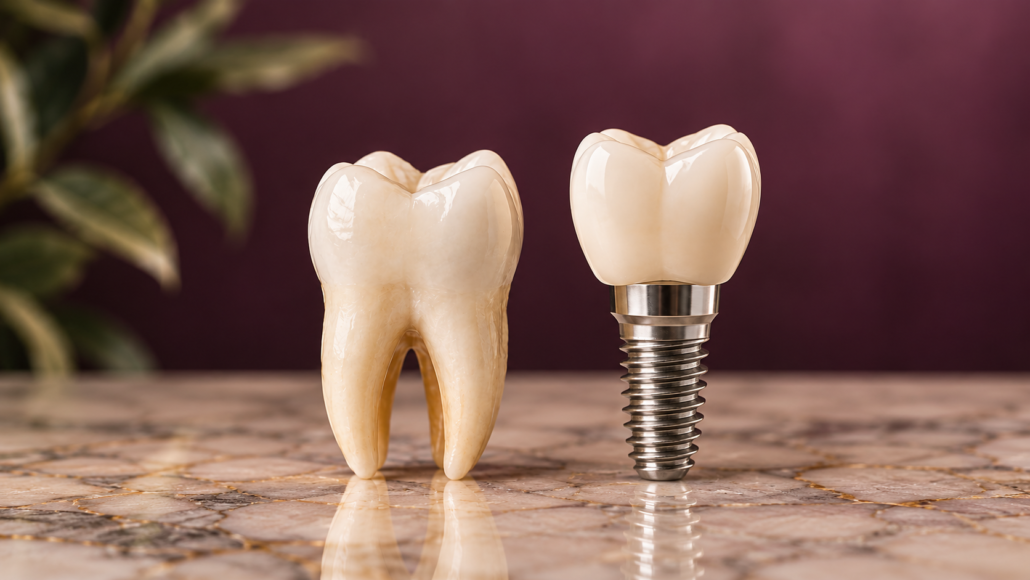
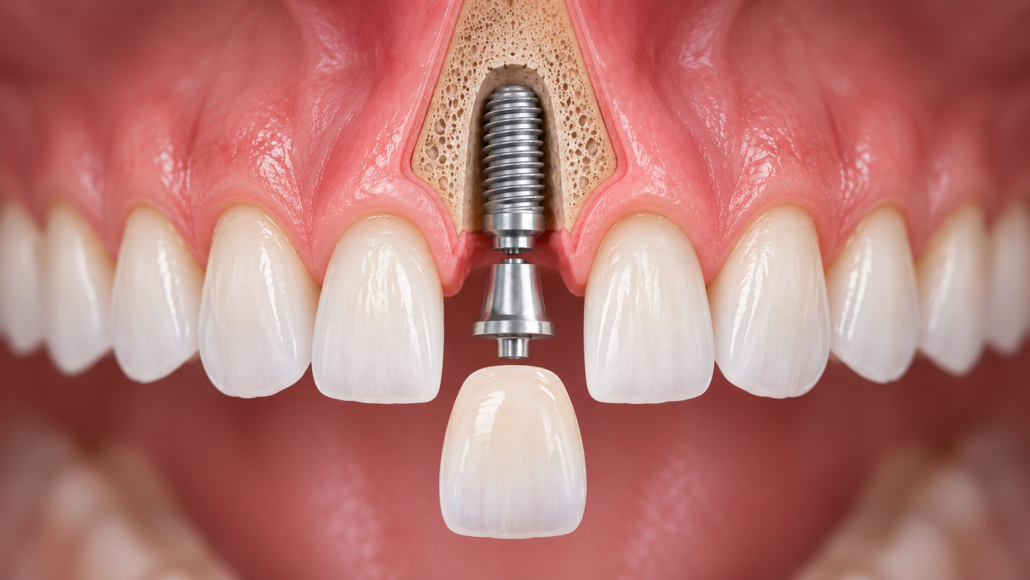
Being told that you have bone loss does not necessarily mean that you cannot have a dental implant. It means we need to understand the foundation before deciding what comes next.
Dental implants depend on the jawbone for support, so it is understandable that bone loss can sound like the end of the conversation. In reality, there is a wide range between having ideal bone and having so little usable bone that implant treatment becomes much more involved.
Some people have enough bone to move forward without additional treatment. Some have a localized deficiency that can be rebuilt. Others have more significant changes that require us to approach treatment in stages. The decision depends on what is actually present, where the implant needs to go, and what we are ultimately trying to restore.
Why does bone matter for a dental implant?
A dental implant is placed within the jawbone. During healing, the bone develops a stable relationship with the implant surface, creating the foundation that eventually supports the replacement tooth.
That means we need enough bone around the planned implant to support it appropriately. But I am not looking only at the amount of bone. I am also looking at its shape, position, and relationship to the neighboring teeth and other anatomy.
Height
We need to understand the vertical amount of available bone and the anatomy beyond the area where the implant would be placed.
Width
The ridge also needs enough width to accommodate the planned implant with appropriate bone around it.
Position
Having bone somewhere in the area is not enough. It needs to support the implant in a position that works for the final tooth.
Quality
The character of the bone also matters when we consider implant stability, healing, and the overall treatment plan.
This is why there is no single measurement that answers the question for everyone. A successful implant plan has to work both below the gumline and for the tooth we are creating above it.
Our dental implants page explains the broader treatment process and how implants are used to replace missing teeth.
Why does bone loss happen after a tooth is gone?
The jawbone around a tooth is not a static structure. After a tooth is removed, the bone that once surrounded and supported that tooth begins to change. Over time, the ridge can become narrower and lose height.
This is one reason the amount of bone available today may be different from what was present when the tooth was originally lost. The longer a tooth has been missing, the more important it becomes to evaluate the current anatomy rather than assume the original space is unchanged.
The space where a tooth used to be may look unchanged from above. The bone underneath it may tell a very different story.
Bone can also be affected by infection, periodontal disease, trauma, or the condition that caused the tooth to be lost in the first place. Two people who have been missing the same tooth for the same amount of time can therefore have very different implant sites.
How do we know whether there is enough bone for an implant?
We start by examining the area and understanding what needs to be replaced. Imaging allows us to evaluate the underlying anatomy and plan the implant in relation to the bone that is actually available.
This is an important distinction. I do not want to look at the bone first and simply ask where an implant will fit. I want to know where the replacement tooth belongs, then determine whether the foundation underneath can support that plan.
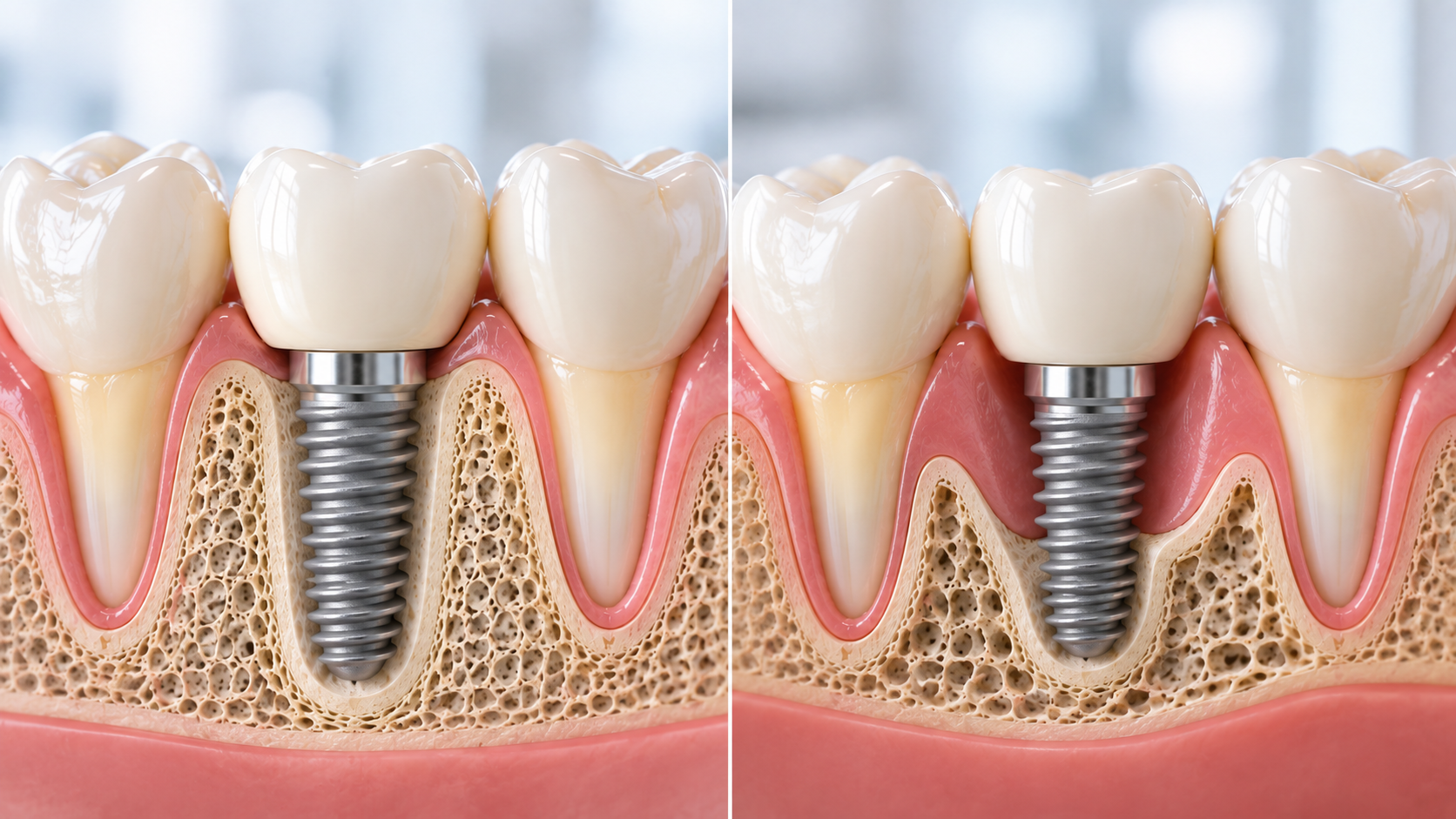
Sometimes that evaluation shows that the existing bone is adequate. Sometimes the deficiency is small and can be managed as part of implant treatment. In other cases, rebuilding the site first gives us a better foundation before the implant is placed.
The location also changes the conversation. Bone and gum tissue are especially important when replacing a visible tooth. I explain those additional aesthetic considerations in Front Tooth Dental Implants: Why They Are Different.
What if there is not enough bone?
Finding a bone deficiency does not automatically mean that implant treatment stops. It changes the treatment plan. The next question is how much support is missing and whether rebuilding that area would create a predictable foundation for the implant.
Existing foundation
Enough bone
If the available bone can support the planned implant in the right position, additional bone grafting may not be necessary.
Rebuilding the foundation
Not enough bone
If the ridge is too narrow, deficient, or missing bone where the implant needs support, grafting or another treatment approach may become part of the plan.
The extent of that treatment varies considerably. A small localized defect is very different from a ridge that has undergone substantial change over many years. That is why the phrase “you have bone loss” does not tell us enough by itself.
What does a bone graft actually do?
Bone grafting is a way of rebuilding or preserving the foundation where an implant is planned. The purpose is not simply to add material around an implant. We are trying to develop enough support in the right location for the restoration we ultimately want to create.
Depending on the situation, grafting may be used when a tooth is removed, before implant placement, or at the time an implant is placed. The approach depends on the shape and size of the deficiency and whether the implant can be positioned with the stability and support we need.
- Preserve a site after extraction When we know a tooth is being removed and replacement is planned, preserving the ridge can sometimes reduce how much the site changes during healing.
- Rebuild a narrow ridge If the bone has already become too narrow in the area where the implant needs to sit, augmentation may be used to develop additional width.
- Rebuild a larger deficiency More substantial bone loss can require a more involved graft and a separate healing period before implant placement is considered.
- Support a localized implant defect In selected cases, a smaller deficiency can be addressed at the same time the implant is placed.
Not everyone with bone loss needs the same procedure, and not everyone needs a graft. The treatment should match the anatomy rather than making the anatomy fit a predetermined treatment.
Can a bone graft and dental implant be done at the same time?
Sometimes. If the implant can be placed in the correct position with adequate initial stability and the bone deficiency can be managed appropriately, the graft and implant may be performed during the same procedure.
In other situations, I would rather rebuild the site first and allow it to heal before placing the implant. Staging treatment adds time, but combining procedures simply to make treatment faster is not always the better choice.
Evaluate the site
We look at the missing tooth, available bone, gum tissue, bite, neighboring teeth, and the position of the planned restoration.
Plan the final tooth
We determine where the replacement tooth needs to be so the implant can be planned around the final result rather than simply around the available space.
Assess the foundation
If the existing bone supports that plan, implant placement may be straightforward. If it does not, we determine what needs to be rebuilt.
Choose simultaneous or staged treatment
The size and location of the deficiency help determine whether grafting can reasonably occur with implant placement or whether the site should heal first.
The shortest treatment plan is not necessarily the simplest or most predictable one. I would rather give the foundation the time it needs than rush toward the implant because it seems more convenient.
Does gum loss matter too?
Yes. Bone is only part of the foundation around an implant. The gum tissue around the final restoration also contributes to its health, cleanability, and appearance.
This becomes especially noticeable around front teeth, where the transition between the implant crown and the gum can be visible when you smile. Someone can have enough bone to support an implant and still need us to think carefully about the surrounding soft tissue.
Bone and gum therefore need to be evaluated together. The goal is not merely to place a titanium implant successfully. We are creating a replacement tooth that needs to function within the mouth and relate naturally to the tissues around it.
What if you have already been told you do not have enough bone for implants?
I would want to understand exactly what that means in your particular case. “Not enough bone” describes an anatomical problem, but it does not tell you how extensive the problem is, where the deficiency is located, or what options may still be available.
For one person, it may mean a relatively small graft. For another, it may mean rebuilding the site and allowing it to heal before implant placement. In a more complicated situation, we may decide that another restorative option makes more sense.
The question is not, “Can we somehow place an implant?” It is, “Can we create a foundation that makes the implant a sensible treatment?”
That distinction matters. Dental implants are an excellent way to replace missing teeth when the conditions are appropriate, but the implant itself should never become the goal at the expense of the larger treatment plan.
Bone loss changes the plan, not necessarily the possibility.
If you have been missing a tooth for years or have been told that you have significant bone loss, it is reasonable to wonder whether you waited too long for an implant. Sometimes the treatment is more involved than it would have been earlier, but bone loss alone does not answer whether an implant is still possible.
We need to look at the site that exists today, understand where the replacement tooth needs to be, and decide whether the available foundation can support it. If it cannot, we determine whether rebuilding that foundation makes sense.
And if there is still a natural tooth in the area that might be treatable, that is a different conversation. Our article on whether to save a tooth or get a dental implant explains why a restorable natural tooth should not automatically be replaced simply because an implant is possible.
Key takeaways
Bone loss does not automatically mean no dental implants.
- 01 Dental implants need adequate bone support, but bone loss varies considerably from one person and one implant site to another.
- 02 The amount, width, height, shape, and location of the available bone all influence implant planning.
- 03 Not everyone with bone loss needs a bone graft. Treatment depends on what the planned implant actually requires.
- 04 Bone grafting can sometimes occur with implant placement, while larger deficiencies may be better treated in stages.
- 05 Good implant planning starts with the replacement tooth we want to create and works backward to determine what foundation is needed.
Frequently asked questions
A few questions I hear most.
Can you get dental implants with severe bone loss?
Sometimes. Significant bone loss can make treatment more involved, but ridge augmentation can create additional bone volume for implant placement in appropriately selected patients. Implants have been successfully placed in areas reconstructed with guided bone regeneration, although the appropriate approach depends on the individual defect.
Can you get a dental implant without a bone graft?
Yes. A bone graft is not automatically required for dental implant treatment. It becomes a consideration when the existing ridge does not provide the bone needed for the planned implant. After a tooth is removed, however, the jaw ridge naturally undergoes dimensional changes, which is one reason available bone needs to be evaluated before treatment.
Can a bone graft and dental implant be done at the same time?
In selected cases, yes. Some bone deficiencies can be augmented when the implant is placed, while other sites are better rebuilt first and allowed to heal. Both simultaneous and staged implant placement after bone regeneration have been described, and the choice depends on the clinical situation.
Why does bone shrink after a tooth is removed?
The bone that surrounds a tooth changes after the tooth is lost. The ridge typically becomes narrower and can also lose height as healing and remodeling occur. Post-extraction remodeling reduces both the width and height of the alveolar ridge, which can affect future implant planning.
Does everyone with bone loss need the same type of bone graft?
No. Bone deficiencies can differ in size, shape, and location, so the grafting approach has to match the site. Bone preservation and augmentation procedures include multiple techniques performed before or together with implant placement, rather than one universal procedure for every patient.
Can I still get an implant if the tooth has been missing for years?
Possibly. The important question is how much usable bone remains at the site today. Tooth loss is followed by changes in ridge dimensions, and those structural changes can affect the width, length, and position available for an implant. Imaging and examination are needed to determine what treatment is appropriate now.
Can bone loss around an existing dental implant be treated?
Bone loss around an implant that is already in place is different from having inadequate bone before implant treatment. It requires evaluation of the implant, surrounding tissues, and cause of the bone loss. Regenerative approaches are used in selected peri-implant defects, but treatment depends on the specific condition rather than simply adding graft material. Research on guided bone regeneration demonstrates that defect characteristics influence regenerative outcomes around implants.