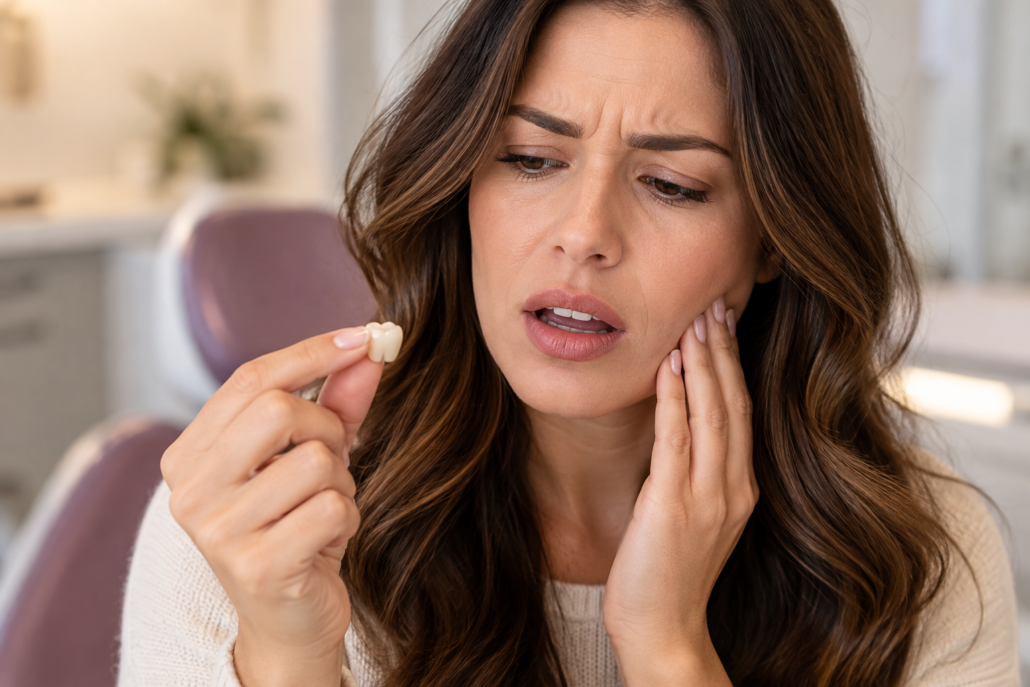
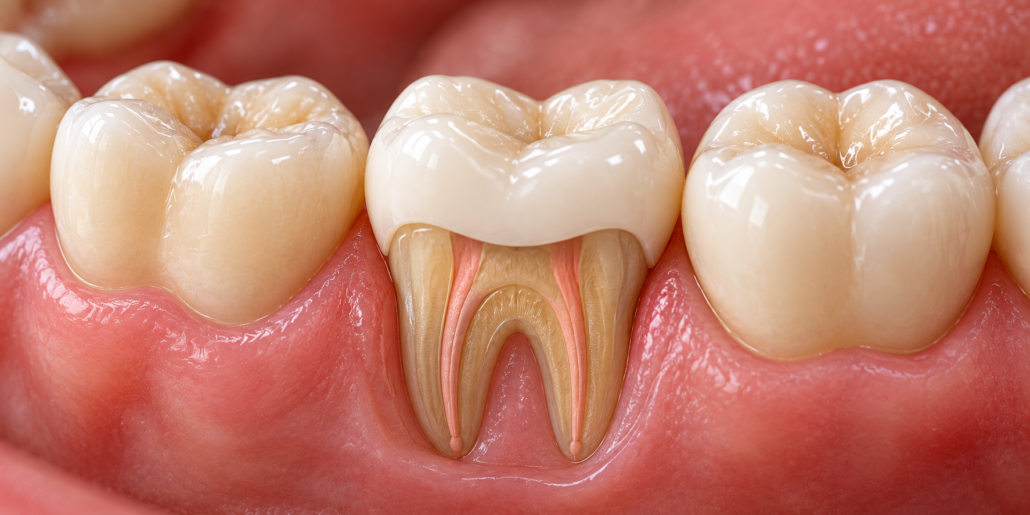
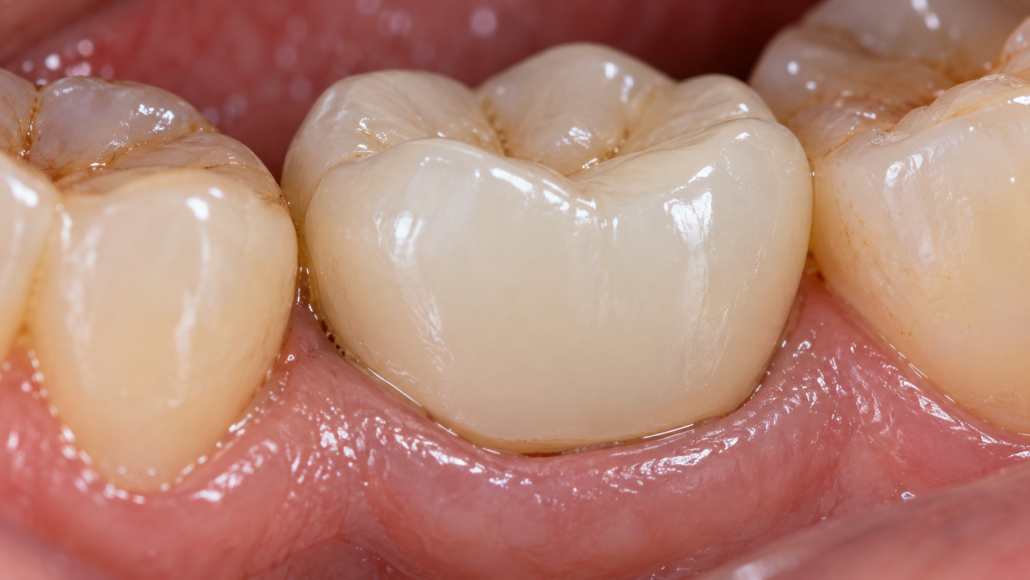
If you've been told that a damaged back tooth needs more than a filling, you may hear two possibilities: an onlay or a crown. Both are made outside the mouth and then bonded or cemented to the tooth, and both can restore a tooth that has lost a meaningful amount of structure.
But they don't treat the tooth the same way. An onlay is a partial-coverage restoration. It replaces the damaged portion of the tooth and can extend over one or more cusps while leaving other healthy areas uncovered. A crown provides much more extensive coverage around the tooth.
I don't start by asking whether I can do an onlay instead of a crown. I start by asking how much healthy tooth we can predictably keep.
Sometimes that leads us to an onlay. Sometimes the tooth needs the additional coverage of a crown. If you're looking specifically for information about full-coverage restorations, our dental crowns page explains when we use them, how treatment works, and what we consider when restoring a damaged tooth.
What's the difference between a crown and an onlay?
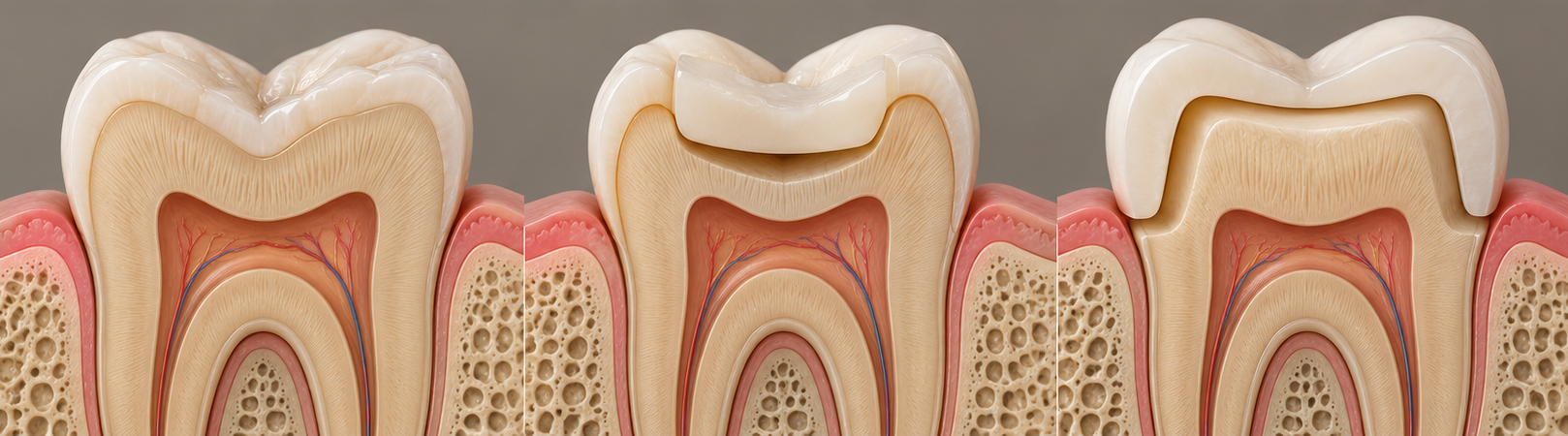
The easiest way to understand the difference is to look at how much of the natural tooth each restoration covers.
Dental Onlay
Partial coverage
An onlay replaces damaged tooth structure and covers the weakened areas that need protection. Depending on the tooth, it may cover one cusp or several cusps while leaving other healthy portions of the natural tooth intact.
Dental Crown
Full coverage
A crown surrounds essentially the entire visible portion of the prepared tooth. It is used when broader coverage is appropriate because of the amount or location of damage, existing restorations, cracks, or other structural concerns.
Neither approach is automatically better. The important question is whether the restoration matches the condition of the tooth.
How much natural tooth do you keep?
This is where the difference becomes important. To place a restoration, we need enough space for the restorative material while also creating a shape that can function predictably. Because an onlay covers only part of the tooth, it can sometimes allow us to retain areas of healthy tooth that would otherwise need to be reduced for a full crown.
Preserving natural tooth structure matters, but preservation doesn't mean leaving a weak part of a tooth simply because we can. If a cusp is thin, cracked, undermined by an old filling, or otherwise unlikely to hold up well under chewing forces, keeping it may not actually be the conservative choice.
Conservative dentistry is not about doing the least possible treatment. It's about removing what needs to be removed, preserving what is healthy, and choosing a restoration that gives the remaining tooth a reasonable chance to stay healthy and functional.
Where does an onlay fit between a filling and a crown?
Patients sometimes think of these restorations as small, medium, and large versions of the same treatment. That's useful as a starting point, but the real decision is more specific than size alone.
Filling
A filling replaces a more localized area of damaged or decayed tooth structure. Enough strong tooth remains around it to support the restoration without intentionally covering the cusps.
Onlay
An onlay becomes useful when the damage is too extensive for a conventional filling or when one or more cusps would benefit from coverage, but enough healthy tooth remains that full coverage may not be necessary.
Crown
A crown provides broader protection when the remaining tooth has been weakened more extensively or when the pattern of damage makes full coverage the more appropriate restoration.
There isn't a line on a tooth where a filling suddenly becomes an onlay or an onlay suddenly becomes a crown. I look at the entire tooth, including what is healthy, what is compromised, and what will remain after old restorative material or decay is removed.
When might an onlay make more sense?
An onlay can be a useful option when a back tooth needs more protection than a filling can reasonably provide, but substantial healthy tooth structure remains.
- A large existing filling needs replacement. Removing an older restoration may leave one or more cusps weakened while other portions of the tooth remain healthy.
- One or more cusps need protection. An onlay can extend over those areas without necessarily covering every surface of the tooth.
- There is enough healthy tooth to preserve. If sound tooth structure remains in useful locations, partial coverage may allow us to keep it.
- A conventional filling would leave the tooth too vulnerable. As restorations become larger, the remaining cusps may need additional support rather than another filling placed between them.
The important word here is may. An onlay isn't a compromise crown, and it isn't something I would choose simply because it removes less tooth. It has to be the right restoration for the structure that's actually there.
When might a crown make more sense?
A crown becomes more appropriate when the tooth needs broader coverage. That may be because too little strong tooth remains for a partial restoration, or because the pattern of damage involves several surfaces and cusps.
- The tooth is extensively broken down. There may simply not be enough predictable structure remaining for a more limited restoration.
- Several cusps are weak or compromised. Full coverage may make more sense when the concern isn't isolated to one portion of the tooth.
- A very large existing restoration has replaced much of the tooth. What appears to be a large tooth from the outside may actually contain relatively little natural tooth once an old restoration is removed.
- Cracks or fractures change the structural picture. The location and extent of a crack can influence how much coverage the tooth needs.
A crown still shouldn't be automatic simply because a tooth has a large filling or has been restored before. Our crown treatment is planned around the condition of the individual tooth rather than a one-size-fits-all rule.
How do I decide between an onlay and a crown?
I can't make that decision by looking only at the size of the old filling. What matters is what the tooth looks like after we account for decay, cracks, weakened cusps, previous dental work, and the quality of the remaining tooth structure.
Look at what's damaged
We evaluate decay, fractures, existing restorations, and the areas of the tooth that are already missing or weakened.
Look at what's healthy
Just as important, we identify strong natural tooth structure that may not need to be removed.
Think about function
Back teeth absorb significant chewing forces. The restoration has to protect the vulnerable areas while functioning with the teeth around and opposite it.
Choose the coverage the tooth needs
If partial coverage can predictably restore and protect the tooth, an onlay may make sense. If the tooth needs broader protection, a crown may be the better design.
The most conservative treatment isn't always the smallest restoration. It's the one that preserves healthy tooth without asking weakened tooth structure to do more than it should.
What if the tooth already has a large filling?
This is a common reason the crown-versus-onlay conversation comes up. A tooth can look fairly intact until an old filling is removed. Underneath it, there may be thin walls, cracks, decay, or unsupported cusps that weren't obvious from the outside.
The opposite can happen too. An old restoration may be large, but once it is removed we may find strong tooth structure that is worth preserving. That's why I don't like making the decision based only on how old a filling is or how large it appears on the surface.
This same principle applies when evaluating older crowns. A restoration doesn't need replacement simply because it has been there for a long time. If you're curious about what can happen underneath an existing crown, our article on cavities under dental crowns explains where decay can begin and how we evaluate it.
Does a crown last longer than an onlay?
I wouldn't choose between them based on the assumption that a crown automatically lasts longer. Both can be durable restorations when they're used in the right situation, designed well, and maintained properly.
Longevity depends on much more than whether the restoration is called an onlay or a crown. The amount of healthy tooth remaining, the bite, the restorative material, the quality of the margins, oral hygiene, decay risk, and habits such as grinding can all influence how a restored tooth performs over time.
That's another reason I would rather match the restoration to the tooth than choose the restoration with the biggest footprint.
Sometimes the best restoration is the one you don't notice
Most patients aren't hoping to leave the office with an impressive onlay or crown. They want the tooth to feel normal again. They want to chew comfortably, keep as much of their natural tooth as reasonably possible, and not have to think about the restoration every time they eat.
That's how I think about restorative treatment too. Whether the answer is a filling, an onlay, a crown, or something else, the restoration should solve the problem without turning the treatment itself into the focus.
If several teeth are damaged, worn, missing, or have older restorations that need to be evaluated together, our restorative dentistry page explains how we approach the larger treatment plan.
Key takeaways
Don't choose the restoration first. Start with the tooth.
- 01 An onlay provides partial coverage while a crown covers essentially the entire visible portion of the prepared tooth.
- 02 An onlay can preserve more natural tooth structure when enough healthy tooth remains.
- 03 A crown may be more appropriate when damage, cracks, or weakened tooth structure are more extensive.
- 04 Neither restoration is automatically better or longer lasting simply because it covers more or less tooth.
- 05 The goal is to preserve healthy natural tooth while giving compromised areas enough protection to function predictably.
Frequently asked questions
A few questions patients ask most.
Is an onlay better than a crown?
Not automatically. An onlay can preserve more natural tooth structure when the remaining tooth is strong enough for partial coverage. A systematic review and meta-analysis found no significant short-term difference in survival or success between onlays or partial crowns and full crowns in posterior teeth.
Does an onlay preserve more of my natural tooth?
It often can because an onlay provides partial rather than full coverage. The advantage matters only when the tooth structure being preserved is healthy and useful. A systematic review comparing onlays and crowns describes onlays as the more tooth-conserving option for certain posterior teeth while also noting that evidence comparing outcomes remains limited.
How long do dental onlays last?
Onlays can function for many years, but there isn't one lifespan that applies to every tooth. A systematic review of ceramic onlays reported survival ranging from 91% to 100% in studies with two to five years of follow-up and 71% to 98.5% in studies extending beyond five years.
Do crowns last longer than onlays?
Current evidence doesn't support assuming that a crown will always outlast an onlay. A systematic review of inlays, onlays, and complete coverage restorations found five-year survival above 90% for both categories, while differences among the available studies prevented a meaningful direct comparison between restoration types.
Can an onlay be used after a root canal?
In selected posterior teeth, yes. The amount and configuration of remaining tooth structure are important when deciding how a root canal treated tooth should be restored. A systematic review of root canal treated posterior teeth found favorable short- to midterm results for full cuspal-coverage onlays compared with full veneer crowns.
Can an onlay fix a cracked tooth?
Sometimes, but the location and extent of the crack matter. Both onlays and crowns can provide cuspal coverage for structurally compromised posterior teeth. A review of posterior teeth with substantial structural loss found that current evidence is not strong enough to say that onlays or crowns universally provide the better outcome.
Why not just put a crown on the tooth to be safe?
More coverage isn't automatically safer. Full crown preparation requires additional tooth reduction, so the benefit of that coverage should justify removing healthy structure. Current comparative evidence for posterior teeth shows that appropriately selected partial-coverage restorations can perform similarly to full crowns in the short term.
How does a dentist decide whether I need a filling, onlay, or crown?
The decision depends on the amount and location of healthy tooth remaining, the size of the defect, whether cusps are weakened, cracks, previous restorations, and how the tooth functions in your bite. Research on restoring structurally compromised teeth consistently emphasizes the importance of the amount and configuration of remaining tooth structure when planning the restoration.