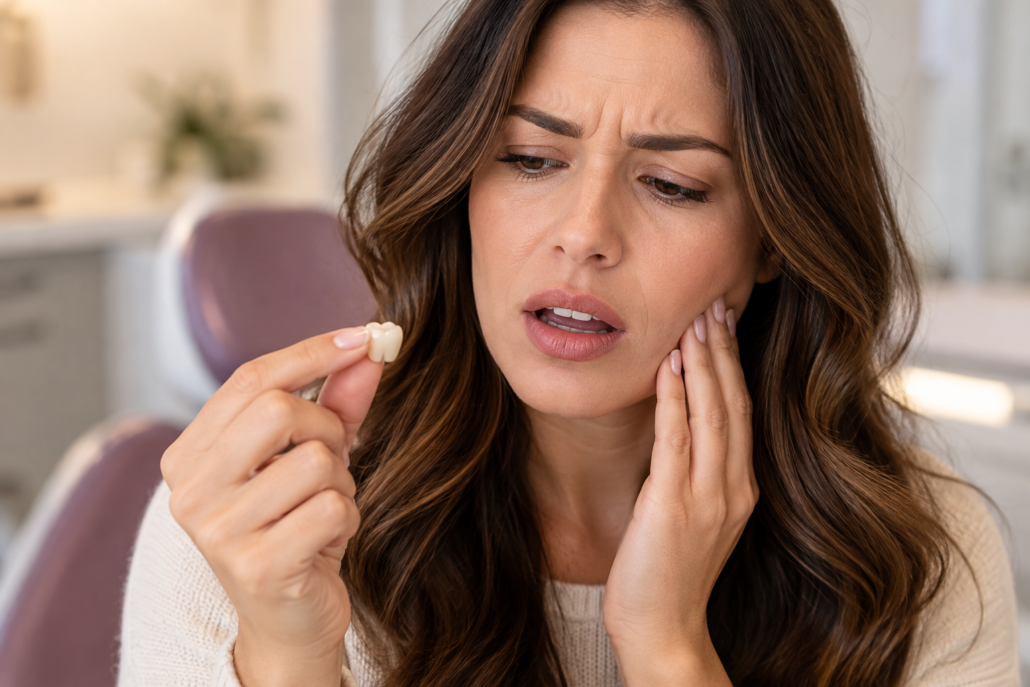
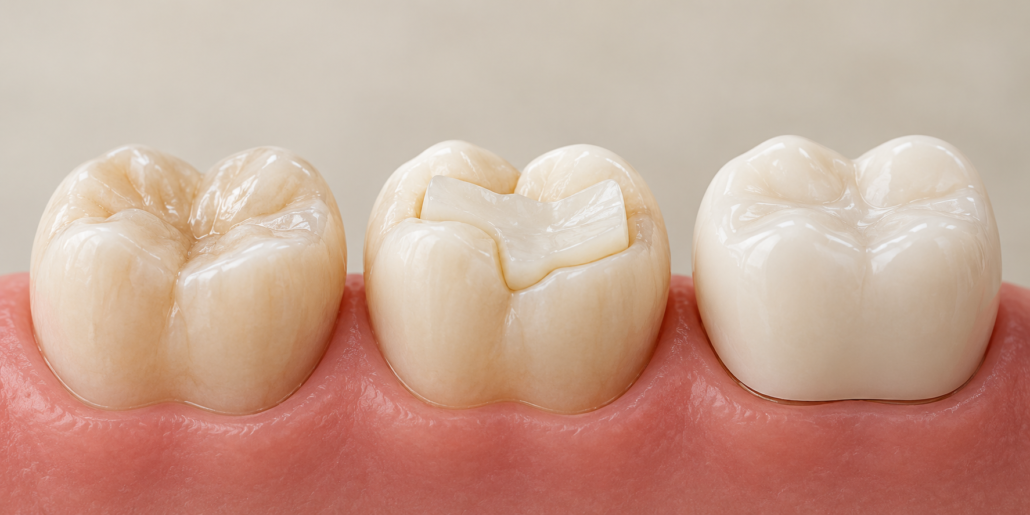
I sometimes hear patients say, “But that tooth has a crown. How can it have a cavity?” It's a completely reasonable question. Once a crown is placed, the tooth can feel finished. You see the porcelain or ceramic on the outside, so it's easy to think of the crown as the tooth.
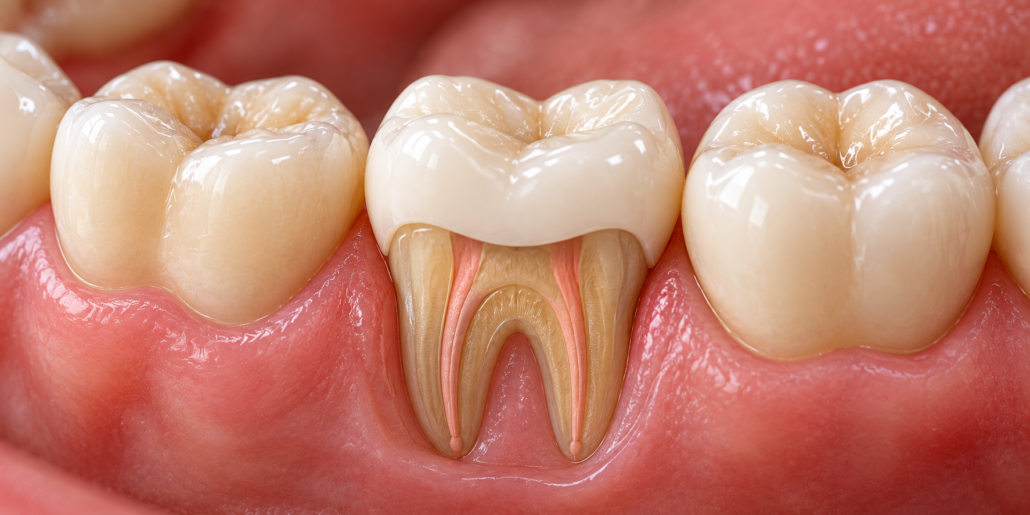
But underneath it is still your natural tooth. The crown itself isn't going to develop a cavity, but the natural tooth supporting it still can.
A crown covers a tooth. It doesn't make the tooth disappear.
If you're trying to understand the restoration itself first, our dental crowns page explains why we use crowns, how they're made, and what the treatment process involves. Understanding where decay can begin makes the whole idea of a “cavity under a crown” much easier to understand.
Where does a cavity under a crown actually start?
A crown covers the visible portion of a tooth, but eventually the restoration has to end and your natural tooth begins. That transition is called the crown margin.
Ideally, the margin is smooth, well-fitting, and easy to keep clean. But the tooth structure around and below it is still natural tooth structure.
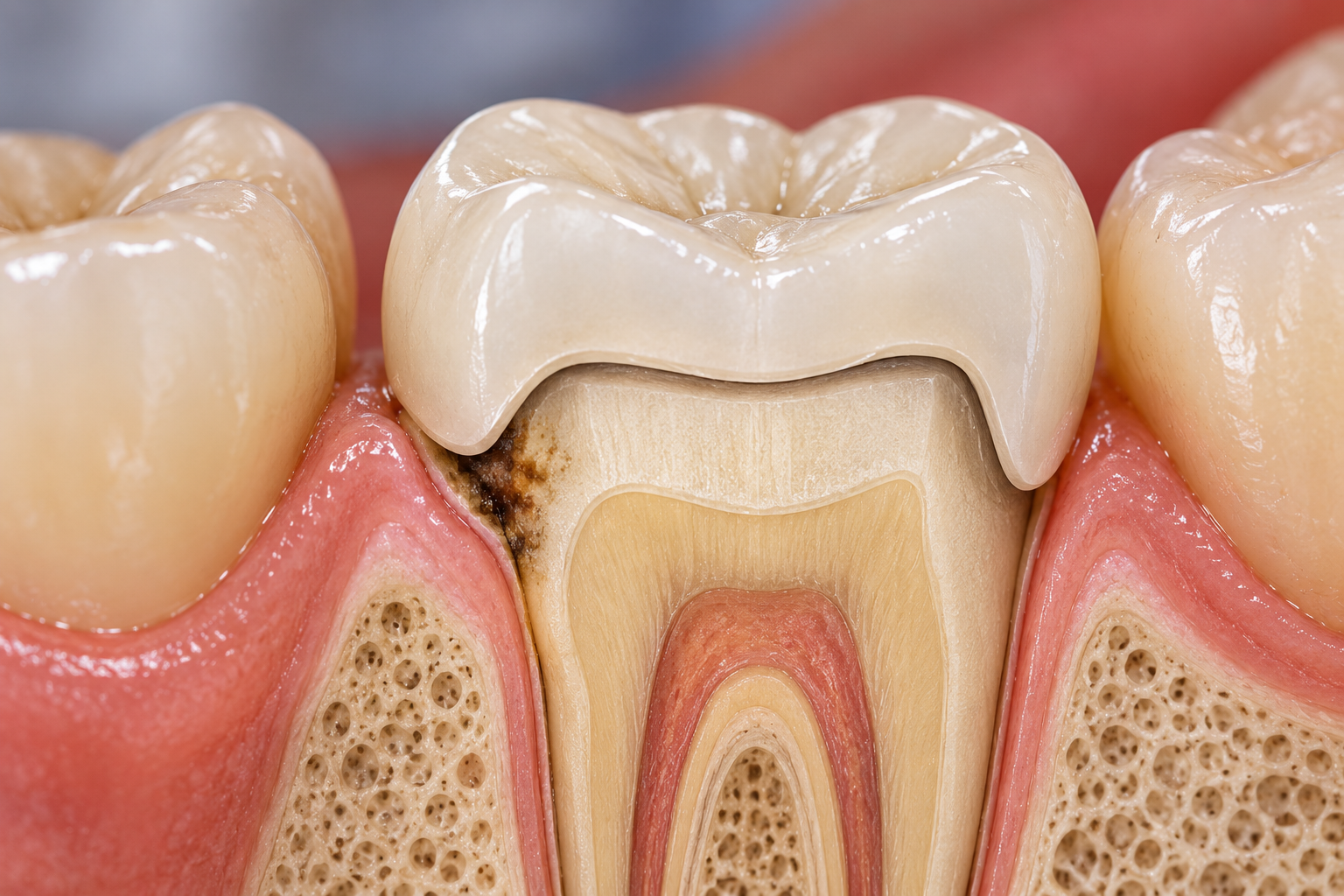
If plaque remains around that area, decay can begin in the exposed tooth and gradually extend underneath the crown. That's why a crowned tooth still needs the same daily attention as every other tooth, and why we continue checking existing restorations during routine dental exams.
The restoration may cover most of what you can see, but the health of the natural tooth underneath still determines whether that crown has a healthy foundation.
Why can decay under a crown be easy to miss?
Because the crown can hide part of the story. A natural tooth may show a visible cavity or discoloration, while much of a crowned tooth is hidden by the restoration. The outside of the crown may still look completely normal.
You can also have decay without pain, particularly when the problem is still relatively limited. That's one reason I don't evaluate an older crown only by asking whether it looks good or whether it hurts.
I want to know how the margin looks and feels, what the surrounding gum tissue looks like, whether anything has changed on an X-ray, and whether the tooth is giving us any other reason to be suspicious.
What are the signs of a cavity under a crown?
Sometimes there aren't any. When a crowned tooth does begin giving you clues, they can include:
- New sensitivity. The tooth may become sensitive to cold, sweets, or pressure.
- Discomfort when chewing. Biting on the tooth may suddenly feel different or tender.
- Food catching around the crown. A place that repeatedly traps food deserves a closer look.
- A change around the margin. You may notice a rough edge or an area that feels different with your tongue.
- Changes in the gum. Irritation, tenderness, or inflammation around one particular crown may be worth evaluating.
- A loose crown. A crown that begins moving or no longer feels the same should be examined.
None of these automatically means there is decay underneath the crown. They tell us that something has changed, and the next step is finding out what.
If a crowned tooth becomes significantly painful, swollen, or suddenly breaks, our emergency dentistry page explains which dental problems should be evaluated promptly.
How does a dentist find decay under a crown?
I start with the tooth, not just the X-ray. The crown margin can be examined directly to see how the restoration meets the natural tooth and whether there are areas that feel or look suspicious.
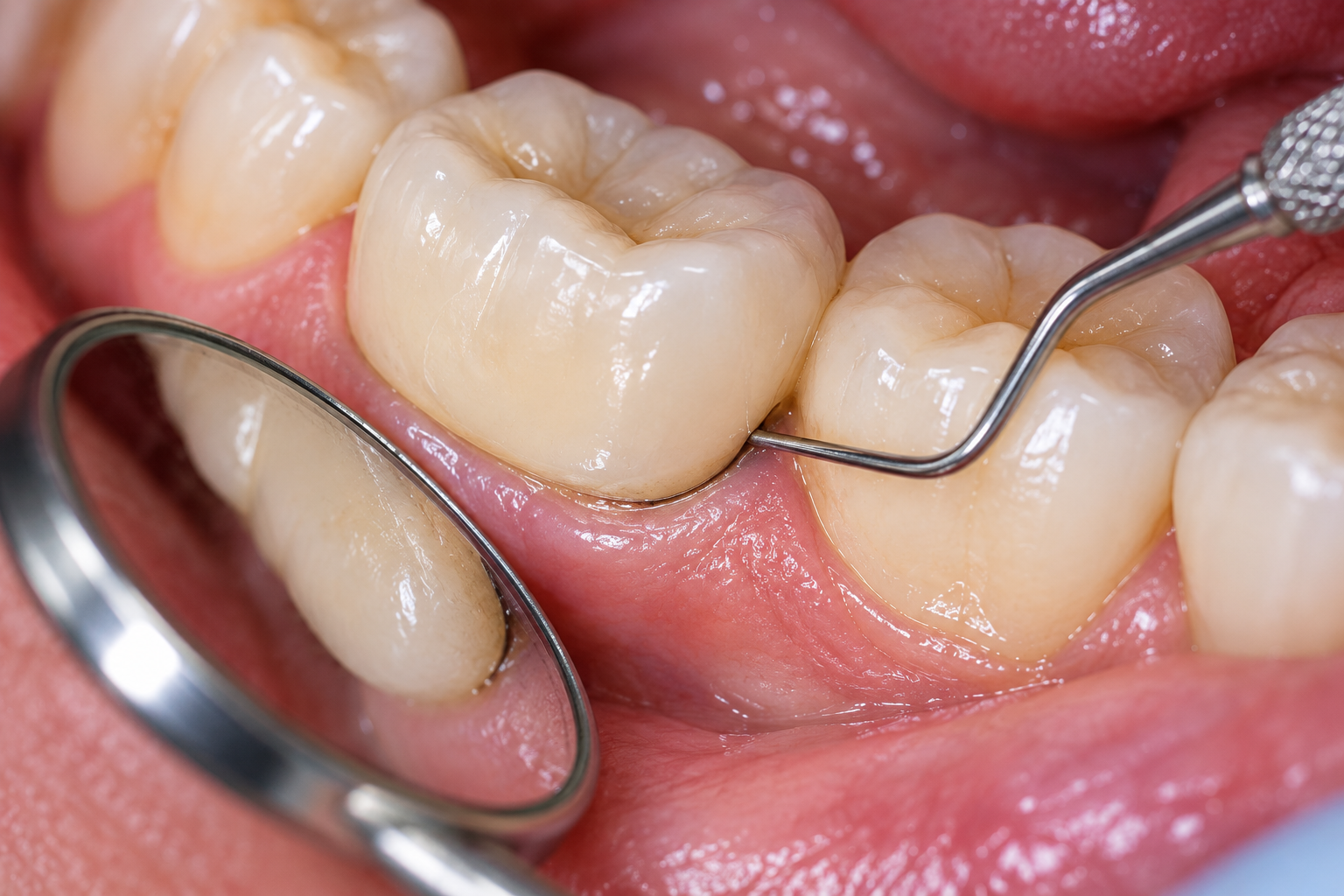
Dental X-rays can add information about portions of the tooth we cannot see directly, but I don't want to make a treatment decision from one finding in isolation. A dark margin doesn't automatically mean there is a cavity, and an X-ray doesn't show every problem perfectly either.
I want the examination, imaging, condition of the crown, and anything you're feeling to make sense together.
The question isn't whether the crown looks old. It's whether the tooth underneath it is healthy.
What happens if there is decay under the crown?
This is where the amount of decay matters. Finding a cavity doesn't immediately tell me that the crown needs to be replaced, that the tooth needs a root canal, or that the tooth cannot be saved. We have to see what we're actually dealing with.
Evaluate the decay
We first want to understand where the cavity is and how much tooth structure appears to be involved.
Evaluate the crown
We look at the fit, margins, condition, and whether the existing restoration is still doing its job.
Evaluate the tooth underneath
The amount of healthy tooth remaining matters more than simply knowing that a cavity exists.
Decide what actually needs treatment
Once we understand the tooth and the restoration, we can decide whether the area can be treated conservatively or whether the crown needs to be removed and replaced.
If the existing restoration can no longer predictably protect the tooth, a new crown may become part of the treatment plan. Our dental crowns page goes into more detail about how we plan and place a crown when one is actually needed.
Does the crown always have to come off?
No. But sometimes removing it is the only way to properly treat what's happening underneath. If decay extends significantly beneath the crown, we may need to remove the restoration so the damaged tooth structure can be accessed and the remaining tooth can be evaluated.
Once the crown is off, I want to know how much healthy tooth remains and whether it can predictably support another restoration. In a more limited situation, the treatment may be different.
That's why I wouldn't tell someone that every cavity near a crown automatically means making a new crown.
What if the decay has reached deeper into the tooth?
The center of a tooth contains the pulp, where the nerves and blood supply live. If decay progresses far enough toward that area, the conversation can change. A tooth with an irritated or infected pulp may need root canal treatment before it can be restored again.
If a significant amount of tooth structure has been lost, we also have to decide whether there is enough healthy tooth remaining to support another crown predictably. That larger question, how much of the natural tooth can be preserved and what restoration will best protect it, is at the heart of restorative dentistry.
This is why finding decay earlier is valuable. The smaller the problem is when we find it, the more options we may have for preserving the tooth.
How do you prevent decay under a dental crown?
You don't need a completely different hygiene routine because you have a crown. You do need to keep the natural tooth around it clean.
- Brush along the gumline. Pay attention to the area where the crown and tooth meet rather than brushing only the chewing surface.
- Clean between the teeth every day. Plaque doesn't care whether the neighboring surface is enamel or porcelain.
- Pay attention when something changes. New food trapping, sensitivity, or a crown that suddenly feels different is worth mentioning.
- Keep regular dental examinations. A crown that feels perfectly normal can still benefit from having its margins checked periodically.
Regular preventive dental care also gives us an opportunity to follow existing crowns over time rather than waiting until a restored tooth hurts. An older crown doesn't automatically need replacement simply because it is old.
Age alone isn't a reason to replace good dentistry. What matters is whether the tooth and restoration are still healthy.
Key takeaways
The crown protects the tooth. It doesn't make the tooth invincible.
- 01 A crown itself cannot develop a cavity, but the natural tooth underneath it can.
- 02 Decay often begins around the margin where the restoration meets natural tooth structure.
- 03 A cavity under a crown may cause sensitivity or discomfort, but it can also exist without symptoms.
- 04 Examining the crown margin and using appropriate dental imaging help us understand what's happening underneath.
- 05 Treatment depends on the extent of the decay, the condition of the crown, and how much healthy tooth remains.
Frequently asked questions
A few questions patients ask most.
Can a tooth get a cavity underneath a crown?
Yes. The crown itself cannot decay, but the natural tooth underneath it can. A review of secondary caries describes decay associated with existing restorations and the importance of both patient cavity risk and the restoration margin.
Where does decay around a crown usually start?
One important area is the crown margin, where the restoration meets natural tooth structure. Research evaluating secondary caries at crown margins examined the relationship between changes visible at the margin and decay in the supporting tooth.
Can an X-ray show a cavity under a crown?
Sometimes, but radiographs don't reveal every lesion. In research comparing clinical and radiographic evaluation of crowned teeth, clinical examination identified more secondary caries at crown margins than radiographs alone.
Does a dark line around a crown mean there is decay?
Not necessarily. Appearance alone isn't enough to diagnose a cavity. Research involving crown-margin discoloration found that some localized discoloration overestimated whether decay was actually present.
Can a cavity under a crown exist without pain?
Yes. Pain isn't required for decay to be present. A systematic review of secondary caries detection found limitations among available diagnostic methods, which supports evaluating suspicious restorations rather than relying on symptoms alone.
Does decay under a crown mean I need a new crown?
Not automatically. The extent and location of the decay, the condition of the existing restoration, and the remaining healthy tooth all matter. Research examining treatment decisions for recurrent decay around crown margins found that characteristics of the lesion influence whether crown removal is considered.
Can decay under a crown lead to a root canal?
It can if decay progresses deeply enough to affect the pulp inside the tooth, but a cavity beneath a crown does not automatically mean root canal treatment is needed. A review of contemporary deep-caries management describes treatment decisions based on the depth of decay and the condition of the pulp.
How can I help prevent decay around a crown?
Keep the crown margin clean with regular brushing and interdental cleaning, and have the restoration checked during routine dental examinations. Overall cavity risk remains important even after a tooth has been restored, as discussed in this review of secondary caries .