A new denture changes more than the appearance of your smile. Your tongue suddenly has new surfaces around it. Your cheeks and lips interact with a different shape. Your teeth meet differently when you chew.
Things you normally do without thinking, like eating and speaking, may require a little concentration at first.
That doesn't necessarily mean anything is wrong. Learning to wear dentures involves a real period of adaptation, and that experience isn't identical for everyone.
The distinction I would make is between something that feels unfamiliar and something that consistently hurts or doesn't function properly.
Getting used to dentures is a process, not a single appointment. Your mouth has to learn something new.
What should you expect the first day with new dentures?
The first thing you may notice is simply how present the dentures feel. They can seem bigger than expected because your tongue, cheeks, and lips are suddenly interacting with shapes that weren't there before.
You may also notice more saliva, slightly different speech, and an unfamiliar feeling when the upper and lower teeth come together. Your tongue may seem almost fascinated by the new denture and keep finding it throughout the day.
Eating is usually easier if you start gently. Smaller bites and foods that don't require a lot of chewing give you an opportunity to learn how the dentures behave without asking too much of the supporting tissues immediately.
This isn't a test of how quickly you can return to your normal diet. The first day is mostly about becoming familiar with something new.
Why do new dentures feel so big?
Your mouth is remarkably sensitive to small changes. The tongue notices contours that you probably wouldn't even see if you looked at the denture closely.
A new denture also occupies space differently than your natural teeth or an older denture did. Your tongue has to learn where the teeth are. Your cheeks and lips have to adapt to the new contours. Even swallowing can feel more deliberate for a short time.
That awareness should become less prominent as the mouth adapts. Instead of constantly noticing the denture, the muscles and tongue gradually begin working around it automatically.
The denture may not actually be changing. Your awareness of it is.
Why do new dentures make you produce more saliva?
A new denture is an unfamiliar object in the mouth, and one early response can be an increase in saliva. It can make the first day or two feel even more unusual because you're adjusting to both the denture and the way your mouth is responding to it.
Try to swallow normally rather than repeatedly removing the denture because of the extra saliva. As wearing it becomes more familiar, the sensation often becomes much less noticeable.
What happens during the first week with dentures?
The first week is less about simply having dentures in your mouth and more about learning how to use them.
Speaking should begin to feel easier with repetition. Chewing may require less concentration. Inserting and removing the dentures becomes more familiar, and your lips, cheeks, and tongue begin adapting to the new contours.
This is also when pressure areas can become apparent. A spot that felt perfectly comfortable during the initial fitting may become tender after several hours of eating and talking.
That information is useful. A denture is being used against living tissue, and sometimes the fit needs to be refined after you've had the opportunity to actually live with it.
How do you learn to eat with new dentures?
Eating is often the part of denture adjustment that requires the most patience. Natural teeth provide a different kind of feedback and stability, so chewing with a removable denture is a skill that develops with experience.
I would begin with foods that are relatively easy to manage and then expand the diet as comfort and control improve.
- Start with softer foods. Eggs, soft fish, cooked vegetables, pasta, and other tender foods require less chewing while you're learning.
- Take smaller bites. Smaller pieces give you more control and make it easier to learn how the denture responds during chewing.
- Slow down. Eating deliberately at first gives the tongue and chewing muscles time to develop a new pattern.
- Add more challenging foods gradually. The goal isn't to remain on a soft diet. It's to give yourself a manageable place to begin.

Trying to prove that a new denture can handle a difficult meal on day one usually doesn't make the adjustment process any easier.
Will eating with dentures ever feel normal?
It should become much more natural, but I also think it's important to set realistic expectations.
Dentures don't reproduce every sensation or mechanical advantage of natural teeth. What usually changes with experience is the amount of conscious effort involved. You stop analyzing every bite and begin using the dentures more automatically.
If eating remains consistently difficult, however, I wouldn't assume that more practice is always the answer. Fit, stability, the bite, the anatomy of the supporting tissues, and other factors can affect how well a denture functions.
Why does talking sound different with new dentures?
Speech depends on very precise relationships between the tongue, teeth, palate, and lips. When those surfaces change, certain sounds can temporarily feel unfamiliar.
Practice helps because your tongue is essentially learning a slightly different map. Reading aloud, talking normally, and repeating words that feel difficult can help those movements become automatic again.
What sounds very obvious to you may also be much less noticeable to everyone else. We tend to be especially sensitive to changes in our own speech.
Are sore spots normal with new dentures?
Small pressure areas can develop as you begin wearing a new denture for longer periods. A denture rests against soft tissue, and one small area can sometimes receive more pressure than the tissue around it.
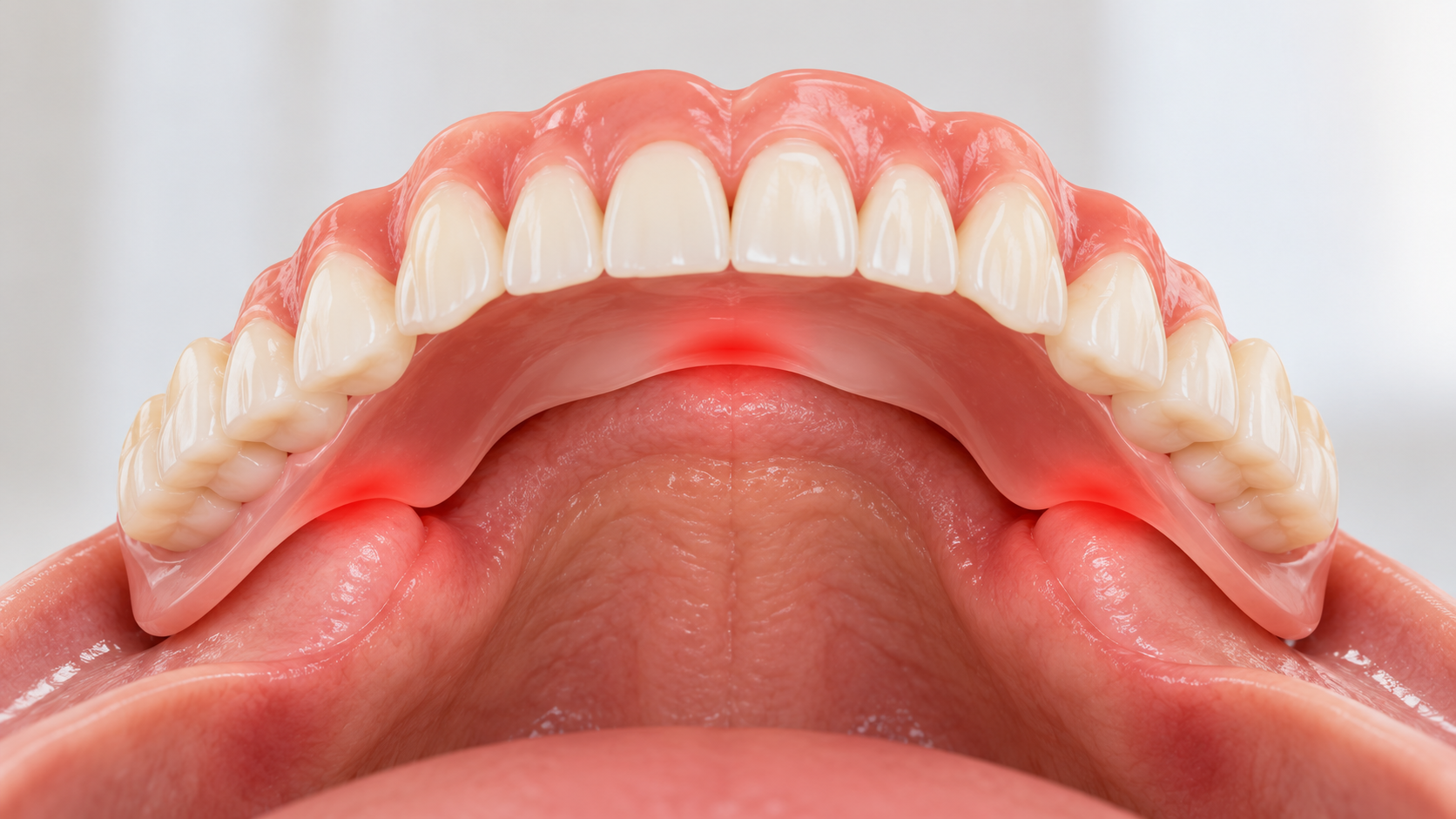
This is one reason follow-up adjustments are a normal part of the process for some patients. The location of the sore area gives us useful information about where the denture may need refinement.
What I don't want is someone repeatedly wearing through a painful area because they think the gums simply need to "toughen up." Persistent rubbing can continue irritating the tissue.
Some adjustment is part of learning to wear dentures. Persistent pain is not something you need to practice through.
How many denture adjustments are normal?
There isn't a useful universal number.
Some new dentures require very little adjustment. Others need several refinements once they've been worn during normal eating, speaking, and daily activity.
The anatomy of the mouth, muscle control, saliva, previous denture experience, and the stability of the supporting tissues can all affect that process.
An adjustment also doesn't automatically mean that something was made incorrectly. A denture is a rigid prosthesis resting against living tissue. Follow-up lets us refine that relationship based on how the denture actually performs outside the dental chair.
What should improve over the first few weeks?
I would look for a general direction rather than a specific deadline.
Eating should begin requiring less concentration. Speech should feel easier. Inserting and removing the dentures should become routine. The constant awareness that something new is in the mouth should begin fading into the background.
That doesn't mean everyone follows the same schedule. Someone who has worn dentures for years may adapt differently than someone wearing a complete denture for the first time.
The shape of the gums and bone, saliva, muscle control, the type of denture, and previous experience can all affect how quickly things begin feeling familiar.
What if new dentures still feel loose?
There is a difference between learning how to control a new denture and a denture that doesn't have enough stability.
If movement continues to interfere with eating, speaking, or comfort, I would rather evaluate why it's moving than simply assume more time will solve the problem.
For some people, conventional dentures provide the function and comfort they're looking for. For others, movement is the specific problem they want to solve.
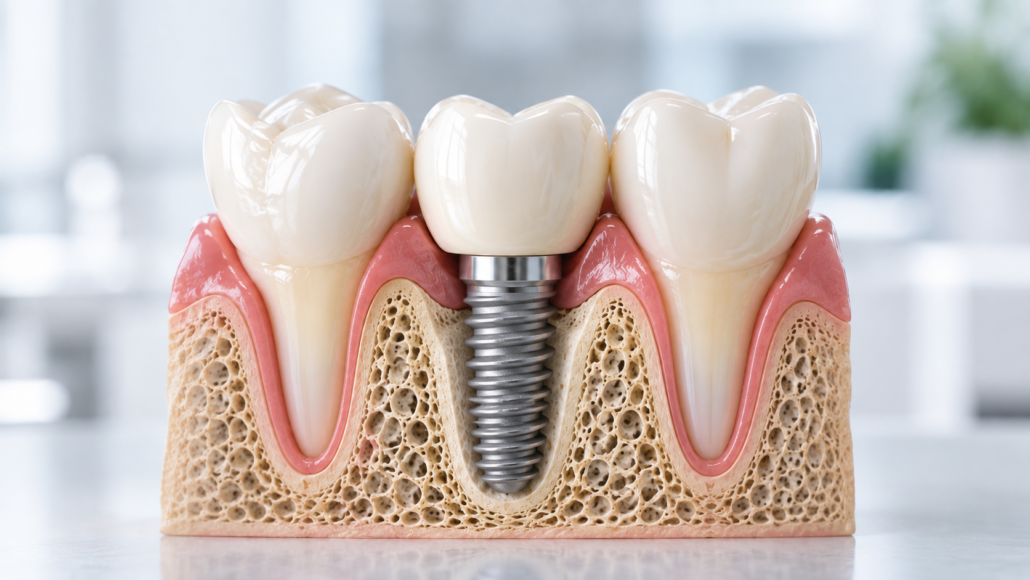
That's where the distinction between implant-supported dentures and traditional dentures becomes important. Adding support from dental implants can change how a denture is stabilized, but whether that makes sense depends on the individual situation.
Why are immediate dentures different?
Immediate dentures introduce another variable because the mouth is doing two things at the same time.
You're learning to wear a denture while the tissues underneath it are healing from tooth extraction.
Swelling changes. Extraction sites heal. The gums change shape, and the underlying bone continues to remodel. As those tissues change, the relationship between the denture and the mouth changes too.
That is why an immediate denture may need adjustments, relining, or other changes during healing. The denture isn't resting on the same anatomy several weeks later that it was resting on the day the teeth were removed.
Wearing instructions can also be different immediately after extractions. Follow the instructions provided for that specific situation rather than applying the routine for a conventional denture placed after the tissues have already healed.
Should you sleep with new dentures in?
Once the mouth is healed and you're following a normal denture routine, dentures are generally removed for a period each day so the tissues underneath aren't continuously covered. The dentures also need regular cleaning.
Immediate dentures are different. During the early period after extractions, you may be given a specific wearing schedule that includes leaving the denture in place for a period of time.
Follow the instructions given for your particular treatment rather than assuming that the same rule applies to every stage of denture treatment.
When should new dentures be checked?
I don't expect a new denture to feel completely invisible on the first day. I do expect the overall experience to move in the right direction.
If something is consistently preventing that progress, it deserves another look.
- A sore area keeps getting worse. Repeated pressure or rubbing may mean that a small adjustment is needed.
- Eating remains very difficult. Persistent movement, pain, or an uncomfortable bite should be evaluated.
- The denture repeatedly dislodges. A stability problem is different from simply learning how to use something new.
- The bite feels noticeably uneven. One area contacting differently can affect both comfort and chewing.
- The denture cracks or fractures. Avoid trying to make a permanent repair yourself.
- Something simply doesn't feel right. Follow-up is part of denture treatment. There is no benefit in struggling with a problem that may be correctable.
Don't judge new dentures by whether they feel perfect immediately. Judge the direction they're going.
Key takeaways
New dentures take practice. They shouldn't require you to live with persistent pain.
- 01 Eating, speaking, saliva, and the general feeling of the denture can all be different during the first several days.
- 02 Start with manageable foods and gradually expand your diet as chewing becomes more comfortable.
- 03 Small pressure areas can appear once the denture is being used normally and may require an adjustment.
- 04 Immediate dentures involve both denture adaptation and healing from tooth extraction, so their fit can change as the tissues heal.
- 05 The most useful measure is progress. Comfort, speech, and control should generally become easier rather than harder.
Frequently asked questions
A few questions patients ask most.
How long does it take to get used to new dentures?
There isn't one adjustment period that applies to everyone. Adaptation continues as the tongue and muscles learn to function around the new prosthesis. Chewing performance and other functional measures can continue changing during the adaptation period . What matters clinically is that comfort and function are generally improving rather than becoming more difficult.
Is it normal for new dentures to cause sore spots?
Localized pressure areas can develop once a new denture is being worn during normal daily activity. Post-insertion adjustments and oral ulceration have been evaluated during the early period after complete denture delivery . A persistent sore area should be evaluated rather than repeatedly irritated.
Why do new dentures make me produce more saliva?
A new prosthesis changes the environment inside the mouth, and salivary response can change with it. Changes in salivary flow have been measured after patients received new complete dentures . The increased awareness of saliva often becomes less noticeable as the mouth becomes accustomed to the denture.
Why is eating difficult with new dentures?
Chewing with a complete denture requires different control than chewing with natural teeth. Masticatory performance has been shown to change as patients functionally adapt to new complete dentures . Starting with manageable foods gives the mouth time to develop that control before more challenging foods are introduced.
Should dentures be worn while sleeping?
Once you're following a normal denture routine, the supporting tissues generally benefit from time without the denture in place. Continuous denture wearing has been associated with denture-related changes in the oral tissues . Immediate dentures can require different instructions during the early healing period, so follow the wearing schedule provided for your treatment.
Does dry mouth make dentures harder to wear?
Saliva contributes to lubrication and to the relationship between a conventional denture and the tissues underneath it. Salivary flow has been associated with adaptation and adjustment needs in conventional complete-denture wearers . Persistent dry mouth is therefore worth discussing rather than treating it as an unrelated inconvenience.
What if my new dentures keep moving when I eat?
Some improvement in control can occur as the muscles learn to work with a new denture, but persistent movement can also reflect a stability or fit issue. Functional adaptation to complete dentures continues after delivery , but movement that continues to interfere with eating or comfort should be evaluated rather than assumed to be something you simply have to tolerate.