
Oral Health · Volume 01
How to Clean a Night Guard: A Dentist's Daily and Weekly Routine

Written by
Dr. Marta Rudat
Cleaning a night guard means rinsing and brushing it with mild soap every morning, then giving it a deeper soak once a week in vinegar, hydrogen peroxide, or a denture cleaning tablet. Skip toothpaste and hot water, both of which damage the material. Let the guard air dry fully before it goes back in its case. Done consistently, this takes about two minutes a day.
If you already own a night guard, you probably found this page one of two ways. Either it smells like something died in your mouth, or you just got it from your dentist and want to do this right from day one. Both are good reasons to be here.
Written by the Dr. Marta Rudat DDS team. Medically reviewed by Marta Rudat, DDS, practicing in Tustin for 15+ years.
Why does cleaning a night guard actually matter?
A night guard sits in a warm, wet environment for six to eight hours a night. Your mouth alone holds billions of bacteria, and a lot of them end up on the guard's surface by morning.
Left uncleaned, that buildup shows up fast. First it's a film you can feel with your tongue. Then it's a smell. Then it's a cloudy, gritty surface that no amount of scrubbing fully clears. According to the Cleveland Clinic, oral appliances like night guards pick up bacteria from the mouth with every use, which is exactly why a daily rinse matters more than people expect.
I've had patients tell me their guard "tastes like a gym bag" after a few weeks of skipping the routine. It's not dramatic. It's just what happens when saliva and plaque sit on plastic overnight, every night, with no cleaning in between.
None of this is complicated to fix. It just has to be a habit, not an occasional chore.
How do you clean a night guard every day?
Every morning, as soon as you take the guard out, rinse it under cool water. Then brush it gently with a soft-bristled toothbrush and a small amount of mild, fragrance-free soap. Dish soap or castile soap both work well.
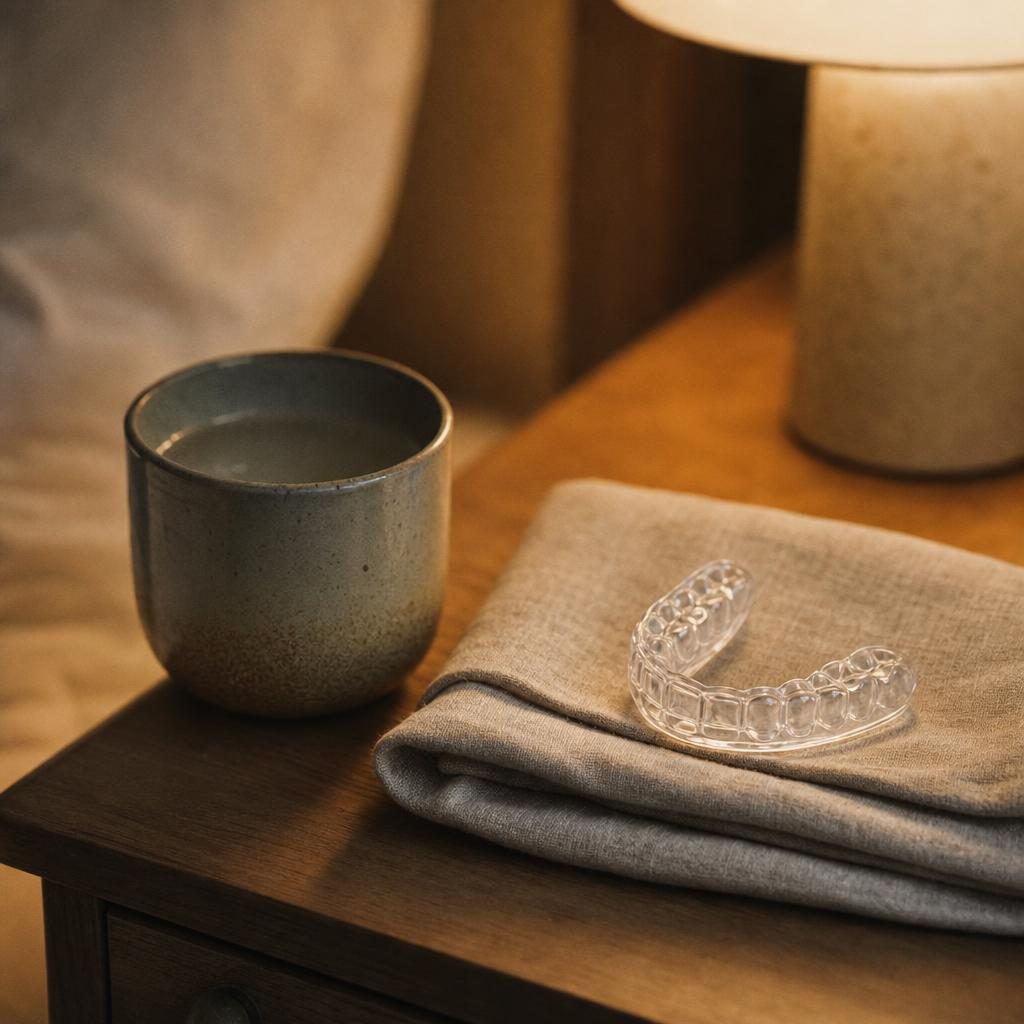
Rinse again to clear the soap, then set the guard on a clean towel to air dry before it goes back in the case.
That's the whole routine. It takes under two minutes, and it's the single biggest thing you can do to keep a guard from smelling or discoloring.
A word about the guard itself: if it's a custom guard fitted from your own impressions, it was calibrated to your bite down to the millimeter. Gentle daily care is part of what keeps that fit intact for years instead of months.
What's the best way to deep clean a night guard once a week?
Daily rinsing handles saliva and surface bacteria. It does not touch mineral buildup or deeper staining, which is where a weekly soak comes in.
Here are the three methods that actually work, side by side:
| Method | How | Time |
|---|---|---|
| White vinegar soak | 1 part vinegar to 3 parts water | 15 to 30 minutes |
| Hydrogen peroxide soak | Equal parts 3% peroxide and water | 10 to 30 minutes |
| Denture cleaning tablet | Dissolve one tablet in warm water per the package | Time listed on the box |
Vinegar breaks down calcium and mineral deposits and disinfects as it works. Hydrogen peroxide handles staining and bacteria in one pass, and it also neutralizes the vinegar taste if you use both back to back. Cleaning tablets are the least fuss: drop one in, walk away, rinse when the timer goes off.
The American Dental Association notes that certain denture and appliance cleansers are effective at reducing bacteria on removable devices like these, which is why a weekly tablet soak is a reasonable default if you want to think about it as little as possible.
Rinse thoroughly after any soak. A guard that still tastes like vinegar the next night is one nobody actually wants to wear.
Can you use toothpaste to clean a night guard?
Skip it. Most toothpaste, especially whitening formulas, contains abrasive particles meant to polish enamel. On the softer plastic or acrylic a night guard is made from, those same particles create microscopic scratches.
Those scratches do not just look bad. They become tiny grooves where bacteria hide, which is how a guard that gets "cleaned" every day still ends up smelling within a couple of weeks. The fix is simple: mild soap and a soft brush instead of toothpaste, every time.
This is one of the more common mistakes I see, usually from patients who assume that if it's good for their teeth, it must be good for the guard sitting next to them. It isn't, and it's an easy switch to make once you know.
If your current guard is already scratched, cloudy, or falling apart no matter how carefully you clean it, that's usually a sign of the guard itself, not your routine.
See how a custom-fit guard holds up → Learn more about custom night guards in Tustin
How should you store a night guard so it stays clean?
Storage undoes a lot of good cleaning habits if it's done wrong. A damp guard sealed inside a closed case is close to ideal conditions for bacteria and mold, which defeats the point of cleaning it in the first place.
A few rules that matter here:
- Let the guard air dry completely, usually 15 to 30 minutes, before it goes in the case.
- Use a case with ventilation holes, not an airtight container.
- Keep the case somewhere dry and out of direct sunlight. A nightstand drawer works better than a bathroom counter, where shower steam adds moisture back in.
- Never leave the guard in a hot car or near a heater. Heat warps the material and ruins the fit you're trying to protect.
The ADA specifically recommends storing a mouthguard in a sturdy, ventilated container and keeping it away from heat and direct sun for exactly this reason.
Why does my night guard still smell or feel gritty after cleaning?
If you're doing the daily rinse and the weekly soak and the guard still smells or feels rough, a couple of things are usually going on.
Calcium and tartar buildup happens gradually, even with good habits, especially if your water is hard. A slightly longer vinegar soak, up to 30 minutes instead of 15, usually clears it. If it doesn't clear after two or three attempts, the buildup has likely worked its way into the material itself.
A guard that's simply worn out is the other possibility. Thin spots, visible chew-through, or a persistent odor that survives a proper deep clean are signs the plastic has broken down at a level cleaning can't reverse. At that point, you're not protecting your teeth the way you think you are.
That matters more than it might seem. A guard that's stopped doing its job means the grinding force goes straight back to your teeth, and a cracked molar from unprotected grinding is one of the more common ways patients end up needing restorative work they could have avoided.
When should you replace a night guard?
A well-made custom guard typically lasts three to five years with consistent care. Heavier grinders wear through one faster, sometimes in half that time, and that's actually a good sign in a strange way: it means the guard took the damage instead of your teeth.
Watch for these signs that it's time for a new one:
- Visible thinning, cracks, or chew marks
- A fit that feels loose or shifts during the night
- An odor that doesn't go away after a proper deep clean
- Cloudiness or discoloration that soap and soaking no longer touch
The easiest way to stay ahead of this is to bring the guard with you to your next routine exam. Wear patterns on the guard tell a dentist a lot about how hard you're grinding, often more than what you can feel yourself.
Night guard cleaning questions, answered
How often should I clean my night guard?
Rinse and brush it every morning after you take it out, and do a deeper soak once a week. Daily cleaning handles saliva and surface bacteria, while the weekly soak clears mineral buildup and staining that brushing alone won't touch.
Can I use mouthwash to clean my night guard?
Only if it's alcohol-free, and even then, use it briefly rather than as a soak. Alcohol-based mouthwash dries out and breaks down the material over time, which shortens the life of the guard.
What's the fastest way to get rid of night guard odor?
A vinegar soak of 15 to 30 minutes, followed by a thorough rinse, clears most odor caused by bacteria and buildup. If the smell returns within a day or two of a proper deep clean, the guard itself may be past the point cleaning can fix.
Is it safe to boil a night guard to clean it?
No. Boiling or even hot tap water can warp a custom guard permanently, since the material is calibrated to your exact bite at room temperature. Stick to cool or lukewarm water for every step of cleaning.
How long does a custom night guard actually last?
Typically three to five years with regular cleaning and care, though heavy grinders may wear through one faster. Bringing it to routine dental exams lets your dentist catch wear before the guard stops protecting your teeth effectively.
Do I need a separate toothbrush for my night guard?
It's a good habit, mainly to avoid transferring bacteria between the two. A soft-bristled brush kept just for the guard, labeled if you want to be sure, is an easy way to keep the routine consistent.
TL;DR
- Rinse and brush your night guard every morning with mild soap and a soft brush.
- Deep clean it once a week with a vinegar soak, hydrogen peroxide soak, or denture cleaning tablet.
- Never use toothpaste or hot water on it.
- Let it air dry fully before storing it in a ventilated case.
- Bring it to your routine exams so wear gets caught early.
- Replace it at the first sign of cracks, persistent odor, or a fit that's changed.
Cleaning takes about two minutes a day. Replacing a molar that cracked from unprotected grinding takes a lot longer, and costs a lot more.
Book a night guard visit → Request an appointment at Marta Rudat DDS
Our front desk verifies your insurance benefit before anything is made, so you know your cost up front.
About the author
Dr. Marta Rudat
Boutique cosmetic, general & restorative dentistry in Tustin, CA.
Dr. Marta Rudat, DDS is a cosmetic and general dentist in Tustin, California, and a member of the American Academy of Cosmetic Dentistry. She fits custom night guards calibrated to each patient's bite and checks them for wear at routine exams. Marta Rudat DDS is located at 1076 E First Street, Suite D, Tustin, CA 92780. To book a visit, call (714) 665-4200.
- AACD member · Accreditation track
- Loma Linda University, DDS
- 15+ years in practice
- Cosmetic & full-mouth restoration
Continue reading
More from the Journal.


By private consultation only
Tell me what you've
been thinking about.
A consultation is a conversation.
Thirty minutes with Dr. Marta without a treatment plan pushed across the desk before you're ready.
Mon – Thu · Tustin, California