PORCELAIN VENEERS
Porcelain Veneers
Custom porcelain veneers designed for your face and smile, personally planned and placed by Dr. Marta Rudat, DDS.


PORCELAIN VENEERS
Custom porcelain veneers designed for your face and smile, personally planned and placed by Dr. Marta Rudat, DDS.
Quick Answer
Porcelain veneers can change the color, shape, proportion, and overall appearance of your teeth, but they are not the right solution for every cosmetic concern. They can be especially useful when several things need to change at once, such as deep discoloration, worn or chipped edges, uneven tooth shape, or small gaps.
If the concern can be addressed more conservatively with whitening, bonding, or orthodontics, Dr. Marta will discuss those options first. When veneers are appropriate, the goal is to preserve as much healthy tooth structure as possible while creating a smile that still looks naturally like you.
Natural Results
Yes, when they are designed for your face rather than pulled from a template. Many patients come to their consultation worried about ending up with teeth that look too bright, too uniform, or simply unlike them. Dr. Marta shares that concern, and it shapes the way she approaches every smile.
She begins by studying the way you smile, speak, and laugh. Your lip line, facial proportions, natural tooth shape, and the shades that complement your features all help guide the design.
Each porcelain veneer is shaped individually, with the translucency, texture, and subtle variation found in natural enamel. Edges can be softened, proportions refined, and small differences preserved so the result still feels like you.
The goal is a smile people notice without ever guessing why.
What Veneers Can Change
Porcelain veneers can address several cosmetic concerns at the same time, which is one reason they can be so useful in the right situation. The goal is not to change every tooth. It is to understand what is affecting your smile and choose the most conservative treatment that can accomplish what you want.
Deep or uneven discoloration that does not respond predictably to teeth whitening can sometimes be addressed with porcelain veneers.
Veneers can refine teeth that appear too small, narrow, uneven, or out of proportion with the rest of your smile.
Worn edges, small chips, and teeth that have gradually lost their original shape can sometimes be restored as part of a carefully planned smile. A more limited chipped tooth may have more conservative treatment options.
Small gaps may sometimes be improved by carefully changing the width and proportion of the surrounding teeth.
Certain visual irregularities may be improved restoratively when orthodontic treatment is not necessary or is not the preferred approach.
Aging bonding, older veneers, or restorations that no longer blend naturally can sometimes be redesigned as part of a more cohesive smile makeover.
Veneers become especially useful when we are trying to solve several of these concerns at the same time. If your concern can be addressed more conservatively with whitening, bonding, or orthodontics, we should talk about those options first.
Candidacy
Porcelain veneers are best suited to healthy, stable teeth when the concern is primarily cosmetic. They can be a strong option for:
Sometimes a simpler or more conservative treatment makes more sense, and Dr. Marta will say so:
The Process
From the first conversation to the final polish, a veneer case with Dr. Marta typically unfolds over a small number of visits, each with a clear purpose.
You and Dr. Marta talk before anyone picks up an instrument. She listens to what bothers you about your smile, examines your teeth and gums, and tells you plainly whether veneers are the right answer for you.
If a more conservative approach, such as professional whitening, could get you there, she will say so before you commit to porcelain.
Preserving your natural teeth guides every decision. Dr. Marta removes only the enamel needed to create space for each veneer while maintaining natural proportions.
Temporary veneers protect the prepared teeth while your porcelain is being crafted, and give you an opportunity to experience the new shape in your daily life.
Each veneer is individually crafted in porcelain to recreate the translucency, color depth, and surface character of natural enamel.
The shape, shade, proportions, and subtle details are refined to complement the smile you and Dr. Marta planned together.
At the final visit, Dr. Marta confirms the fit, color, and bite before bonding each veneer into place and carefully finishing the margins. A follow-up visit makes sure everything feels as good as it looks.
And because she remains your dentist afterward, the person who designed your smile is the same person caring for it in the years ahead.
Investment
Per Tooth
$925 – $2,500
Per porcelain veneer
Full Smile
$12,000 – $24,000
Typically six to eight front teeth
The number of teeth treated, the complexity of your bite, whether whitening or alignment comes first, and the level of ceramic artistry involved all shape the fee. That is why a price quoted before anyone has examined your teeth tells you very little.
The time horizon deserves equal attention. A well-made porcelain veneer typically serves for 10 to 20 years, so the investment is better considered over the years you will actually wear the restorations.
At your consultation, you will receive a clear, itemized estimate covering every step of your plan before you commit to anything.
Real Results
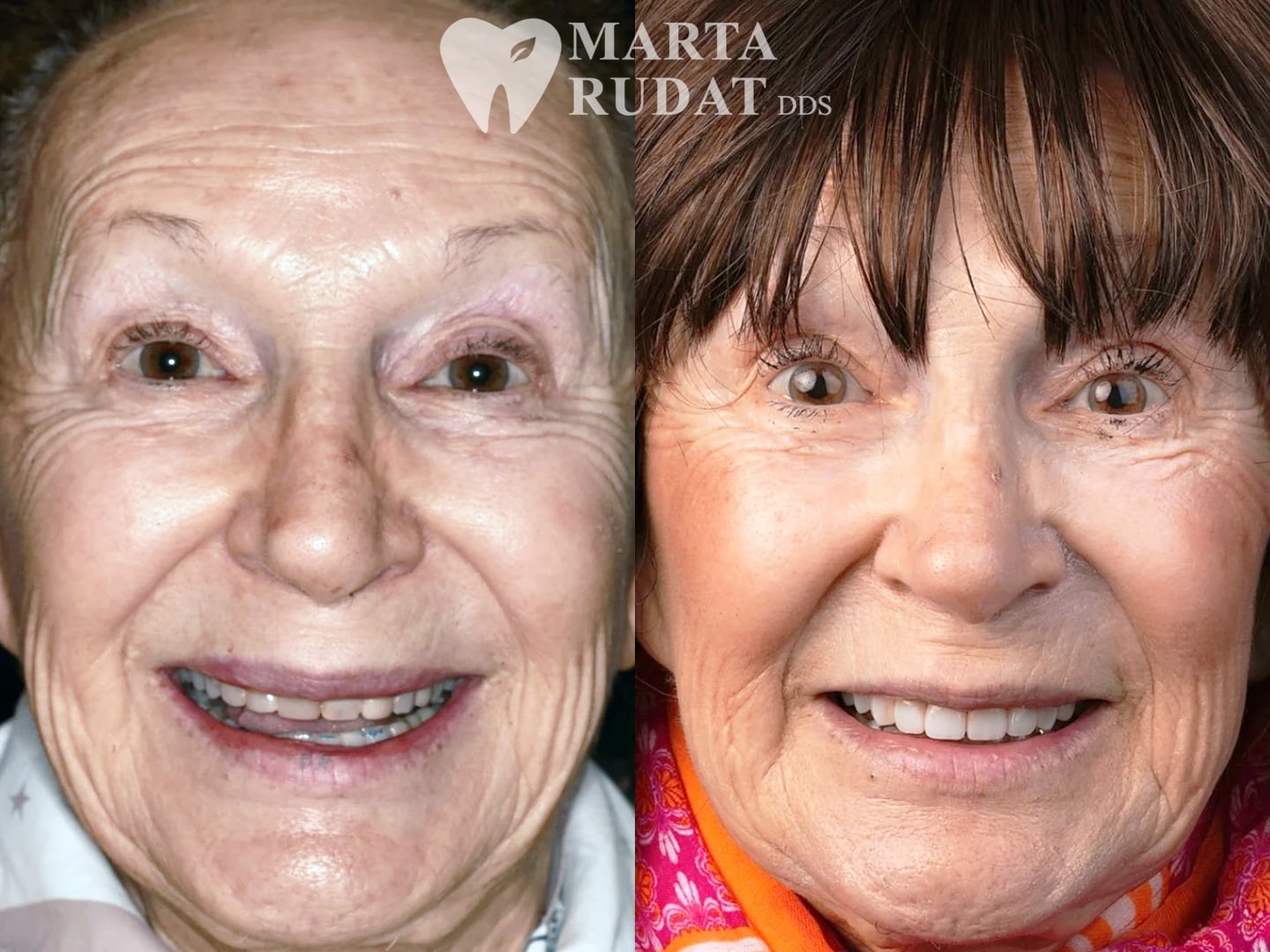
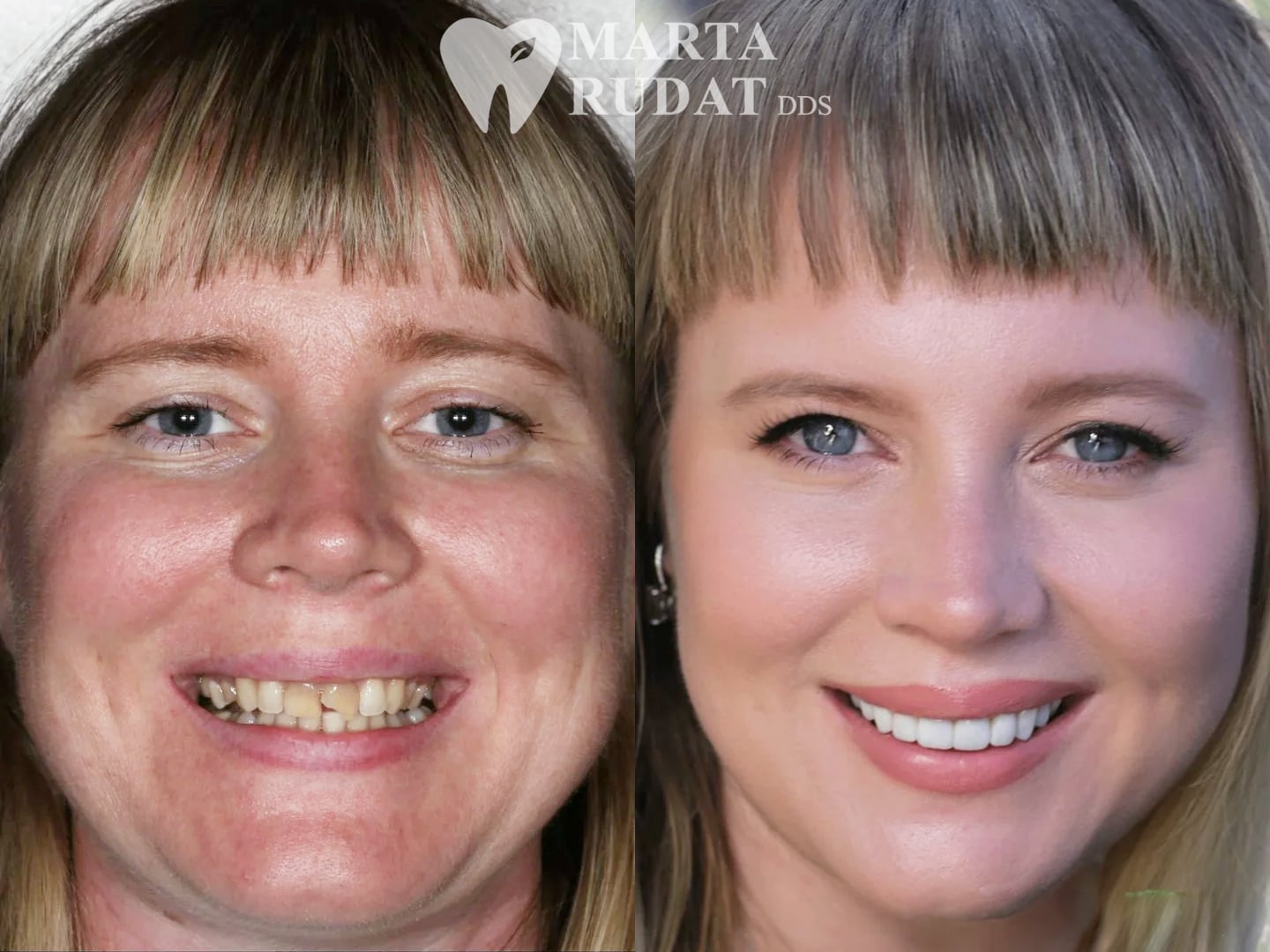
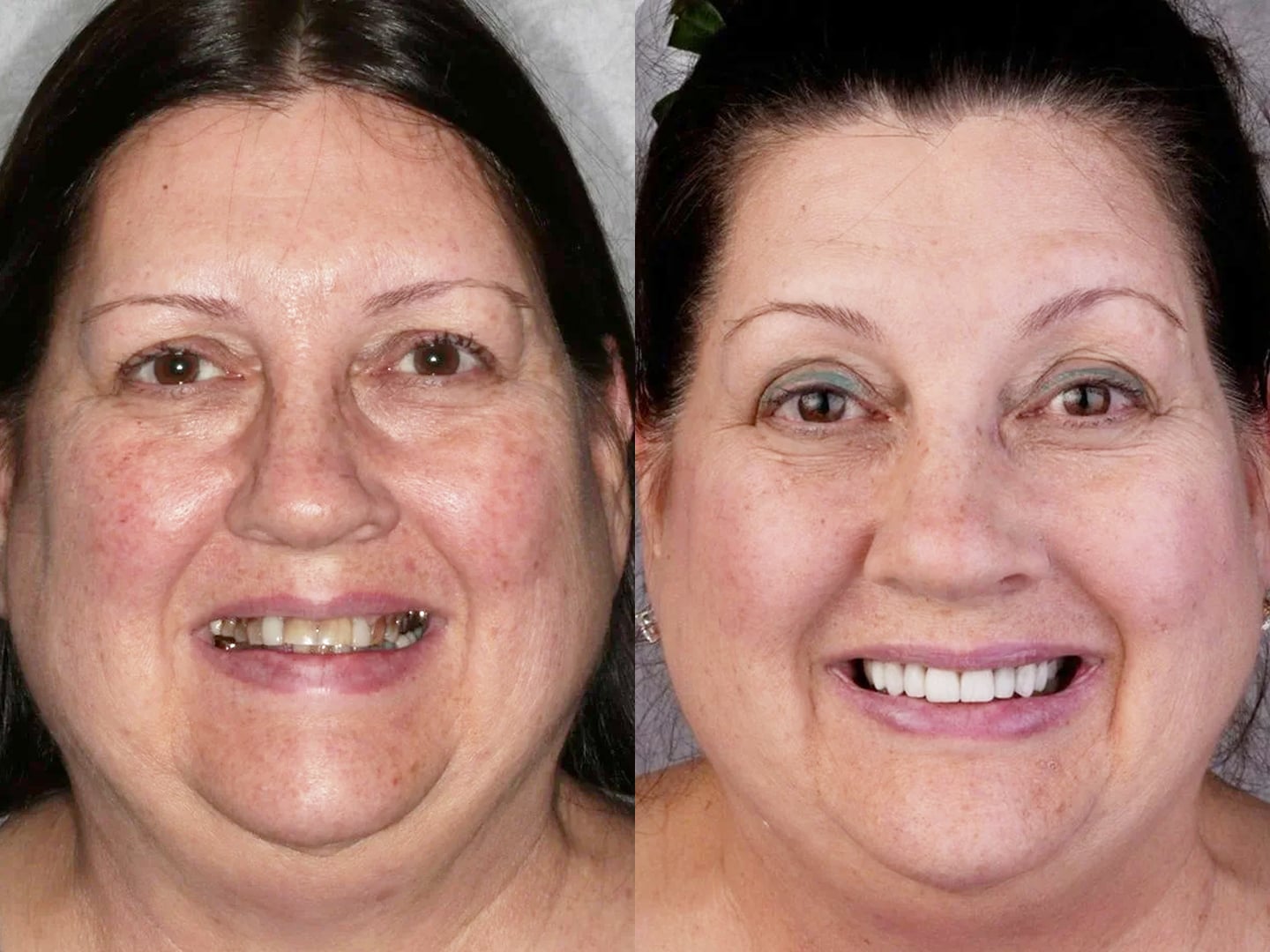
Every case shown here belongs to a real patient. Results vary from person to person, which is exactly the point of designing each smile individually. You can browse more cases in the smile gallery, and recent work appears on Instagram at @martarudat.
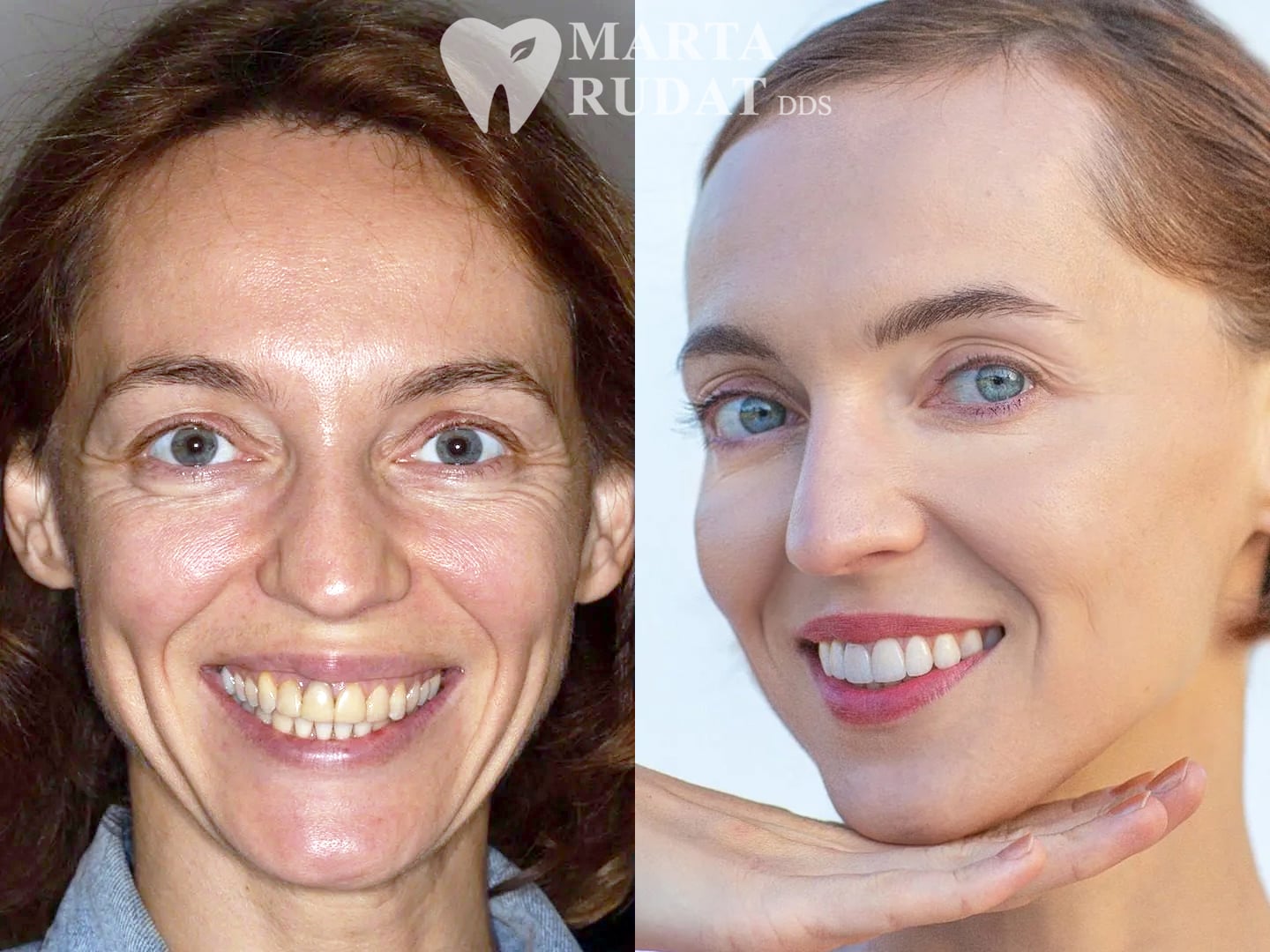
4 Crowns and whitening to replace stained misshapen composite on front teeth through digital design.
Request Your Veneer Consultation ↗1 crown, 3 veneers, composite bonding veneer to correct chipping, different colors teeth, old restorations.
Request Your Veneer Consultation ↗Smile design combination of veneers and overlays. Broken tooth, multiple colors of teeth, gum lift on some back teeth.
Request Your Veneer Consultation ↗Smile design, combination of crowns on back teeth 4, and composite veneers on front 8.
Request Your Veneer Consultation ↗In their words
For over 15 years, Dr. Marta has been grateful to earn the trust of her patients, reflected in hundreds of five-star reviews.
My smile has never looked better, but more importantly, my confidence and overall outlook on dental care have completely transformed. Dr. Marta Rudat has not only improved my teeth and my health, but has also restored my trust in dentistry.
I was searching for a dentist. I’m so glad to find Dr. Marta. I wanted veneers and Dr. Marta went above and beyond my expectations. She brought back my confidence and smile. I highly recommend Dr. Marta for your dental needs.
Dr. Marta Rudat and her staff are the best. Dr. Rudat made me feel very comfortable. When I came in I was embarrassed to smile, but now with my new teeth I have more confidence. I would highly recommend her to anyone.

Trust
Dr. Marta Rudat has practiced for more than 15 years and has earned hundreds of five-star reviews
That matters with veneers. Cosmetic dentistry is not a recognized dental specialty and any licensed dentist can offer veneers. AACD Accreditation provides an independent standard for evaluating the quality of cosmetic dental work. Dr. Marta chose to pursue that standard voluntarily and she personally plans and places every veneer case, from the first conversation to the final polish.
- Dr. Marta
Frequently Asked
How much do porcelain veneers cost?
Porcelain veneers in the Tustin area generally cost about $925 to $2,500 per tooth, with a full set of six to eight front teeth typically ranging from $12,000 to $24,000. Veneer fees depend on the number of teeth treated, the complexity of your bite, the materials chosen, and the level of lab artistry involved. Rather than quote a number that may have little to do with your case, Dr. Marta prepares a clear, itemized estimate at your consultation, so you know exactly what your plan involves before deciding anything.
Does insurance cover veneers?
Usually, no, because insurers classify veneers as cosmetic treatment. If part of your plan also addresses a structural problem, some portions may qualify for benefits. Our front desk team verifies your coverage and itemizes anything that applies, so there are no surprises in your estimate.
How long do porcelain veneers last?
Porcelain veneers can last well beyond 10 years when they are properly planned, bonded, and maintained. A systematic review of 6,500 porcelain veneers estimated 95.5% survival at 10 years. Individual results depend on the tooth, bite, material, and habits such as grinding.
Do teeth have to be shaved down for veneers?
Usually, some enamel is conservatively removed, but the amount depends on the tooth and the result being created. Modern veneer preparation emphasizes preserving as much enamel as possible because veneers bonded primarily to enamel have excellent long-term outcomes.
Are porcelain veneers permanent?
Veneers should be considered a long-term, irreversible treatment when tooth structure has been removed. They may eventually need repair or replacement because of fracture, debonding, wear, marginal changes, or changes to the underlying tooth.
Can porcelain veneers stain or change color?
Porcelain is generally color-stable, but veneers and especially their margins can show color changes over time. Clinical research has documented increasing marginal discoloration with longer follow-up, which is one reason ongoing dental care and hygiene remain important.
Can you get cavities with veneers?
Yes. A veneer covers the front surface of a tooth; it does not make the underlying tooth immune to decay. Secondary caries is an identified complication of porcelain veneers, although a systematic review found it to be an uncommon cause of veneer failure.
Can I get veneers if I grind my teeth?
Possibly, but grinding can increase the risk of veneer fracture or debonding. Clinical studies have found higher failure rates in patients with bruxism, and one prospective study found better veneer survival among patients with bruxism who regularly wore an occlusal splint.
What happens to the natural teeth underneath veneers?
The natural teeth remain underneath the restorations. The goal is to preserve as much healthy enamel as possible because bonding to enamel is associated with excellent veneer survival. Teeth still require normal brushing, flossing, professional care, and monitoring for decay or other dental problems.
Take the Next Step
A veneer consultation with Dr. Marta is an unhurried conversation, free of sales pressure. She will examine your teeth, listen to what you want to change, and recommend the approach she would choose for her own smile, even when the answer is something simpler than veneers.