When someone loses a tooth today, the conversation often jumps immediately to dental implants.
There's a good reason for that. Implants allow us to replace a missing tooth without relying on the neighboring teeth for support, and for the right patient they can be an excellent solution.
But excellent doesn't mean automatic.
A missing tooth needs a thoughtful plan. It doesn't automatically need an implant.
I have patients who don't want surgery. Others don't have enough bone for straightforward implant placement. Sometimes the teeth beside the space already need crowns, which changes the conversation completely. And sometimes we're talking about a missing tooth so far back in the mouth that replacing it may not meaningfully improve function.
That's why I don't start by asking, "Can I put an implant here?"
I start by asking what we're trying to accomplish, what we have to work with, and which option makes the most sense for the whole mouth.
Do you need a dental implant?
Not necessarily.
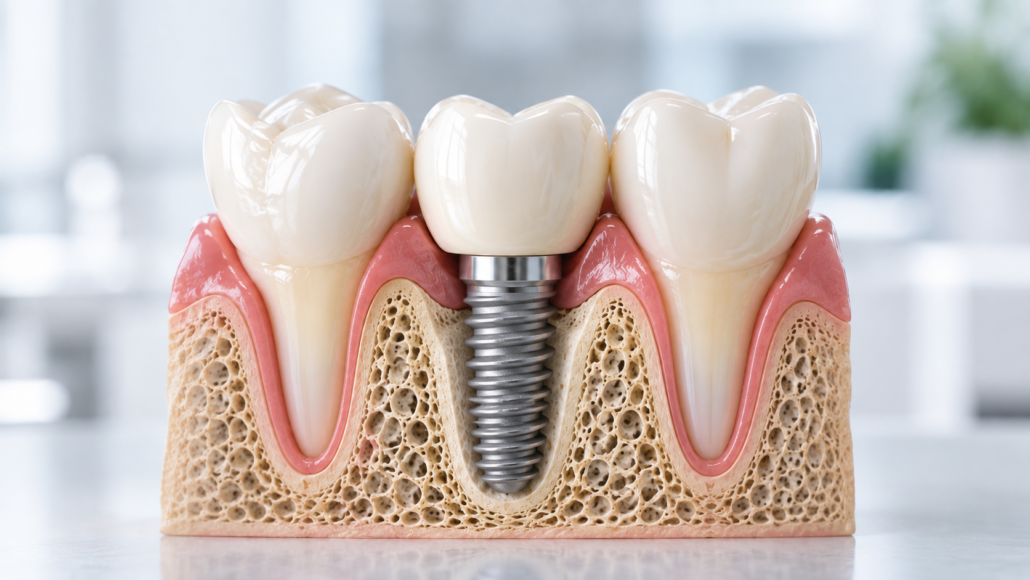
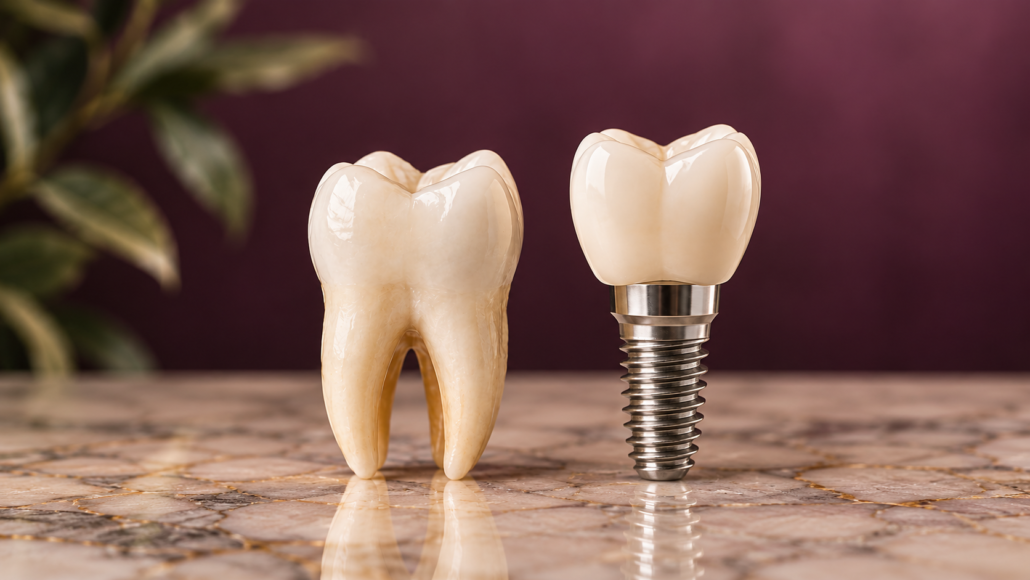
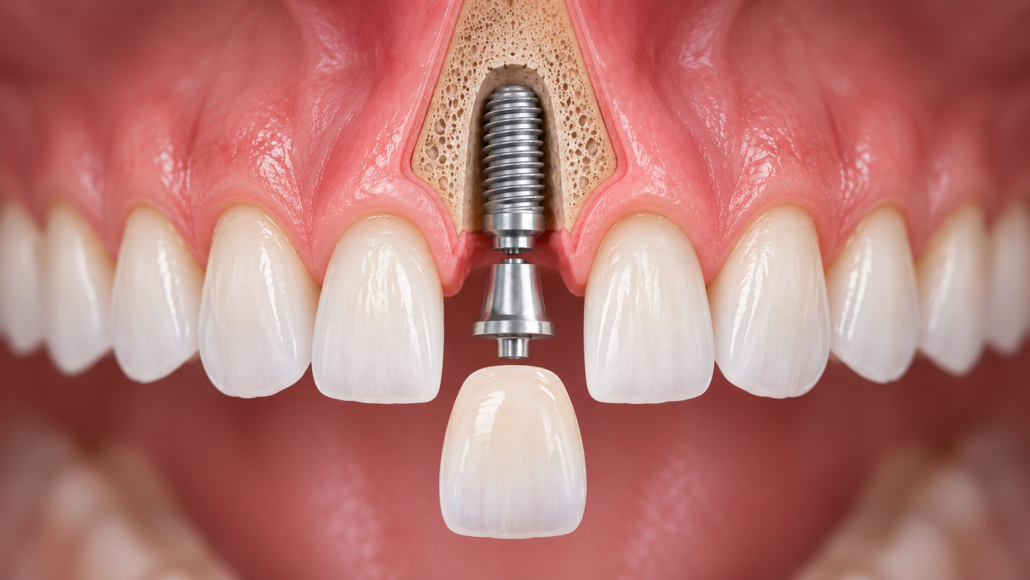
A dental implant replaces the root portion of a missing tooth with an implant placed in the jaw. A crown, bridge, or removable prosthesis can then be supported by that implant.
One of its biggest advantages is independence. If you're replacing one tooth, the neighboring teeth usually do not have to become supports for the new tooth.
But implants also involve surgery, healing, adequate bone and soft tissue, ongoing maintenance, and enough time for the treatment to progress properly.
There are situations where those advantages make an implant my first choice. There are other situations where a non-implant option is every bit as worthy of discussion.
The alternatives fall into three main groups: a fixed bridge, a removable prosthesis, or, in selected situations, leaving the space alone.
1. A traditional dental bridge
A conventional dental bridge replaces a missing tooth by connecting the replacement tooth to teeth beside the space.
Imagine one tooth is missing between two existing teeth. Those neighboring teeth can be prepared for crowns, and the replacement tooth is joined between them as part of one fixed restoration.
Nothing comes in and out. Once the bridge is cemented, it functions as a fixed part of your mouth.
When a bridge makes sense
A bridge becomes particularly interesting when the teeth on either side of the space already have large restorations, significant damage, or another reason they would benefit from crowns.
In that situation, we're not necessarily preparing two untouched teeth just to replace one missing tooth. We may be solving several restorative problems at once.
Bridges also have decades of conventional prosthodontic history behind them.
A systematic review comparing tooth-supported and implant-supported restorations estimated survival of conventional tooth-supported fixed dental prostheses at 93.8% after five years and 89.2% after ten years.
What is the tradeoff?
The biggest consideration is the neighboring teeth.
A conventional bridge requires us to prepare them so they can support the restoration. If those teeth are completely healthy and untouched, that's a meaningful decision.
Cleaning is different too. Because the replacement tooth is connected to the supporting crowns, you need to clean underneath it rather than flossing straight down between each tooth the way you would with separate teeth.
None of that makes a bridge a bad treatment. It simply means the condition of the teeth beside the space should be part of the decision.
2. A resin-bonded bridge
There is another kind of bridge that deserves much more attention than it gets.
A resin-bonded bridge, sometimes called a Maryland bridge, can replace a missing tooth using a restoration bonded to a neighboring tooth rather than covering that tooth with a full crown.
That can allow us to preserve considerably more natural tooth structure.
Where it can work particularly well
Resin-bonded bridges are often most interesting when we're replacing a front tooth and the supporting tooth is healthy.
Case selection and design matter enormously.
A systematic review of 2,300 resin-bonded bridges estimated survival at 91.4% after five years and 82.9% after ten years. The review also found better survival for restorations with a single retainer than those with two or more retainers, and better survival in the anterior region than in the posterior mouth.
That's an important point because older ideas about Maryland bridges often involved bonding the replacement tooth to both neighboring teeth. Modern single-retainer designs can behave differently.
Sometimes the best alternative to an implant isn't a bigger restoration. It's a smaller one.
What is the tradeoff?
Resin-bonded bridges aren't appropriate for every space or every bite.
They rely on adhesive bonding, and debonding is one of the complications we have to consider. The amount of available enamel, the bite, the position of the missing tooth, and the design of the restoration all matter.
But when the conditions are right, preserving an otherwise healthy neighboring tooth can be a very compelling reason to consider one.
3. A removable partial denture
A partial denture replaces missing teeth with a prosthesis you can remove for cleaning and sleeping.
I think partial dentures sometimes suffer from an unfair comparison. They are removable, so patients can assume they're automatically an inferior version of fixed dentistry.
That's not how I look at them.
A well-designed partial can replace several missing teeth without requiring an implant at every space and without necessarily preparing every neighboring tooth for a crown.
When a partial denture makes sense
The more teeth that are missing, the more relevant a removable option can become.
It may also make sense when surgery isn't desired, when anatomy makes implant treatment more involved, or when someone wants a more economical way to restore several spaces at the same time.
A systematic review and meta-analysis of removable partial dentures found an estimated five-year survival rate of 95.1% for cast-clasp removable partial dentures. The review also found few periodontal changes overall, although abutment teeth had a higher risk of extraction and should be monitored over time.
What is the tradeoff?
It is removable.
Some patients don't mind that at all. Others know immediately that they want something fixed.
A partial denture also relies on the remaining teeth and tissues for support, so its design, fit, hygiene, and regular follow-up matter.
This is one of those decisions where lifestyle matters just as much as the X-ray.
4. Sometimes, no replacement
This one surprises people.
Dentistry has traditionally been very good at telling patients that every missing tooth needs to be replaced.
That isn't always true.
I'm not talking about ignoring a missing front tooth or leaving a space that is compromising your bite, chewing, appearance, or the stability of the surrounding teeth.
I'm talking about selected missing teeth toward the back of the mouth in someone who still has enough functional tooth contact to eat comfortably.
There is an actual prosthodontic concept for this: the shortened dental arch.
Instead of replacing every missing molar, treatment focuses on maintaining a healthy, functional dentition with enough teeth to meet the patient's needs.
A systematic review and meta-analysis comparing shortened dental arches with removable partial dentures found no statistically significant difference in oral-health-related quality of life at six or twelve months between those approaches in the studies reviewed.
The goal isn't to replace every space. The goal is a healthy, comfortable, functional mouth.
When would I leave a space alone?
Only after looking at the whole bite.
I want to know which tooth is missing, what is opposing it, how many functional teeth remain, whether adjacent or opposing teeth are changing position, how well you chew, and whether the space bothers you.
"Do nothing" should still be a treatment decision, not an accident.
Which option is right for you?
This is where the conversation becomes personal.
I don't think there's much value in declaring that one tooth replacement is universally "best." Each option solves a slightly different problem and asks you to accept different tradeoffs.
Dental implant

Worth considering when you want a fixed replacement that does not depend on neighboring teeth and you are a good candidate for implant treatment.
Traditional bridge

Particularly worth considering when the teeth beside the space would already benefit from crowns or when implant surgery isn't desired.
Resin-bonded bridge

A conservative fixed option worth considering in selected cases, particularly for certain missing front teeth.
Partial denture

A removable option that can replace several teeth at once without requiring an implant for every missing space.
No replacement
Occasionally reasonable for selected posterior spaces when function, comfort, stability, and appearance are not being compromised.
What I look at before recommending anything
The missing tooth is only part of the diagnosis.
- The teeth beside the space. Are they completely healthy, heavily filled, crowned, cracked, or already in need of restorative treatment?
- The bone and gums. Implant treatment depends on the anatomy available to support the implant and the restoration around it.
- Your bite. A replacement tooth has to function within an entire system, not simply fill an empty space on an X-ray.
- How many teeth are missing. Replacing one front tooth is a very different problem from replacing several back teeth.
- What you want to live with. Some patients strongly prefer a fixed restoration. Others would rather avoid surgery. Those preferences matter.
- How much dentistry each option requires. I want to know not only what we gain from treatment, but what healthy tooth structure, surgery, maintenance, time, and future treatment we're asking you to accept in return.
That's the part of restorative dentistry I find most important. We're not choosing between an implant and "second-best" dentistry. We're choosing among different ways of solving the same problem.
Key takeaways
What to remember before choosing an implant.
- 01 Dental implants are an excellent tooth-replacement option, but they are not the only option.
- 02 A traditional bridge can make particular sense when the neighboring teeth already need restorative treatment.
- 03 Resin-bonded bridges can provide a more conservative fixed solution in carefully selected cases.
- 04 Removable partial dentures remain a legitimate way to replace several missing teeth at once.
- 05 Not every missing back tooth automatically needs to be replaced.
- 06 The right treatment depends on the entire mouth, not just the empty space.
Frequently asked questions
A few questions patients ask most.
What is the best alternative to a dental implant?
There isn't one alternative that's best for everyone. A fixed bridge, resin-bonded bridge, or removable partial denture may all be appropriate depending on the location of the missing tooth and the condition of the rest of the mouth. Long-term evidence shows that conventional tooth-supported bridges can have high survival rates , which is why they remain an important alternative to implant treatment.
Can I get a bridge instead of an implant?
Yes. A conventional bridge uses neighboring teeth to support a fixed replacement tooth. A systematic review estimated survival of conventional tooth-supported fixed dental prostheses at 93.8% after five years and 89.2% after ten years. Whether a bridge makes sense for you depends in part on the health of the teeth that would support it.
Is a dental bridge as good as an implant?
They solve the problem differently, so I would not reduce the decision to one being universally better. A bridge relies on neighboring teeth; an implant relies on a fixture placed in the jaw. Comparative systematic-review evidence has found substantial survival for both tooth-supported and implant-supported fixed restorations, while each carries different biological and technical complications.
What is a Maryland bridge?
A Maryland bridge is a type of resin-bonded bridge. The replacement tooth is bonded to a neighboring tooth using a retainer rather than requiring that supporting tooth to receive a conventional full crown. A systematic review of resin-bonded bridges estimated 91.4% survival at five years and found higher survival for anterior restorations and single-retainer designs.
How long does a resin-bonded bridge last?
Longevity varies with the location, design, bite, material, and individual patient. A systematic review involving 2,300 resin-bonded bridges estimated survival at 91.4% after five years and 82.9% after ten years. Debonding remains an important complication to consider.
Can a partial denture replace several missing teeth?
Yes. One removable partial denture can replace several missing teeth in different areas of the same arch. A systematic review and meta-analysis estimated five-year survival of cast-clasp removable partial dentures at 95.1% and found few periodontal changes overall in the remaining teeth.
Are partial dentures still a good option?
They remain a useful option for appropriately selected patients, particularly when several teeth are missing or implant surgery isn't desired. A systematic review of masticatory performance found that many of the included clinical studies reported improvements in chewing after removable partial denture treatment, although results varied across the studies and outcome measures.
Do I have to replace every missing tooth?
No. Selected patients can function well without replacing every missing posterior tooth. This is known as the shortened-dental-arch concept. A systematic review and meta-analysis found no statistically significant difference in oral-health-related quality of life between shortened dental arches and removable partial dentures at six or twelve months in the studies analyzed.
What happens if I leave a missing tooth alone?
It depends on which tooth is missing and the rest of your bite. Leaving some posterior spaces untreated may be reasonable, while other spaces can affect function, appearance, or stability. Research on the shortened-dental-arch approach supports considering function and quality of life rather than assuming every missing posterior tooth automatically requires replacement.
Can I avoid dental implant surgery completely?
Often, yes. Conventional bridges, resin-bonded bridges, and removable partial dentures can all replace teeth without placing an implant. In selected posterior cases, replacement may not be necessary at all. The important question is whether a non-surgical option can restore the function, appearance, and stability you need.
Which option preserves the most natural tooth structure?
It depends on the case. An implant can avoid preparing neighboring teeth, while a resin-bonded bridge may require considerably less preparation than a conventional bridge. Long-term evidence on resin-bonded bridges supports their use as a fixed treatment option in selected cases, particularly in the anterior mouth.
How do I decide between an implant and a bridge?
I look at the health of the neighboring teeth, the available bone and gums, the bite, the location of the missing tooth, your medical history, and your preferences. A systematic review comparing fixed tooth-supported and implant-supported restorations reported substantial long-term survival with both approaches, along with different patterns of biological and technical complications.