One of the first questions patients ask when we talk about dental implants is surprisingly simple: How long am I going to feel like I just had dental surgery?
Usually, not nearly as long as the implant itself takes to heal. That's because dental implant recovery has two very different timelines. There is the recovery you can feel, and then there is the healing happening quietly underneath.
The first involves things like tenderness, swelling, eating carefully, and taking it a little easier than usual. The second is the biological process happening between the implant and your jawbone. By the time your mouth feels fairly normal again, that deeper healing may still have a long way to go.
There are really two dental implant recovery timelines: the recovery you can feel and the healing you can't.
Feeling better and being fully healed are not the same thing.
When patients hear that dental implants can take months to integrate with the jawbone, it's easy to imagine months of soreness, swelling, and eating soft foods. That's not what the timeline usually means.
The part you notice most happens at the beginning. Your gum tissue has been treated, the implant has been placed into the bone, and your body responds the way it does to any carefully performed surgical procedure. The area can feel tender and swollen while those tissues begin healing.
Underneath, something slower is happening. Bone begins healing around the implant. Over time, that relationship becomes stable enough for the implant to function as the foundation it was designed to be.
That means you can be back to work, eating much more normally, and hardly thinking about the surgery while the implant is still going through an important part of its healing process.
Dental implant recovery, day by day.
No two recoveries are identical. One straightforward implant is different from several implants, and an implant placed with bone grafting may have different instructions from one placed without it. Think of this timeline as a general picture of what recovery can look like, not a schedule your body is required to follow.
The day of surgery
Your mouth may remain numb for a while after the procedure. Some light bleeding or oozing can occur, and this is the time to protect the surgical area rather than test it. You'll usually be eating differently, resting, and following the postoperative instructions you were given.
This is also when a cold pack may be recommended to help manage early swelling. Follow the instructions from your treating dentist rather than applying one on an arbitrary schedule.
Days 1–3
This is often the part of recovery you notice most. The area may feel sore or tender, and swelling can become more apparent before it begins settling down.
You should still be careful with the surgical site and choose foods that don't require aggressive chewing around the implant. Take any medications exactly as directed and give yourself permission to have a quieter couple of days.
Days 4–7
At this point, the direction of recovery matters more than the calendar. Tenderness and swelling should generally be moving toward better, not becoming progressively worse.
You may feel much more like yourself, but the surgical area still deserves some respect. Continue following your cleaning, eating, and activity instructions even if you feel ready to forget the implant is there.
Week 2
For many patients, the procedure itself is beginning to fade into the background. The gum tissue continues healing, and everyday routines may feel much more normal.
Feeling good does not mean the implant is finished healing. This is where the visible recovery and the biological recovery begin to look very different.
The following weeks and months
Your attention shifts away from soreness and toward healing you cannot see or feel. The tissues around the implant continue to mature while the bone develops its connection with the implant.
Your dentist will determine when the implant is ready for the next stage based on your particular case. There isn't one date on the calendar that applies to everyone.
What is happening underneath while you feel better?
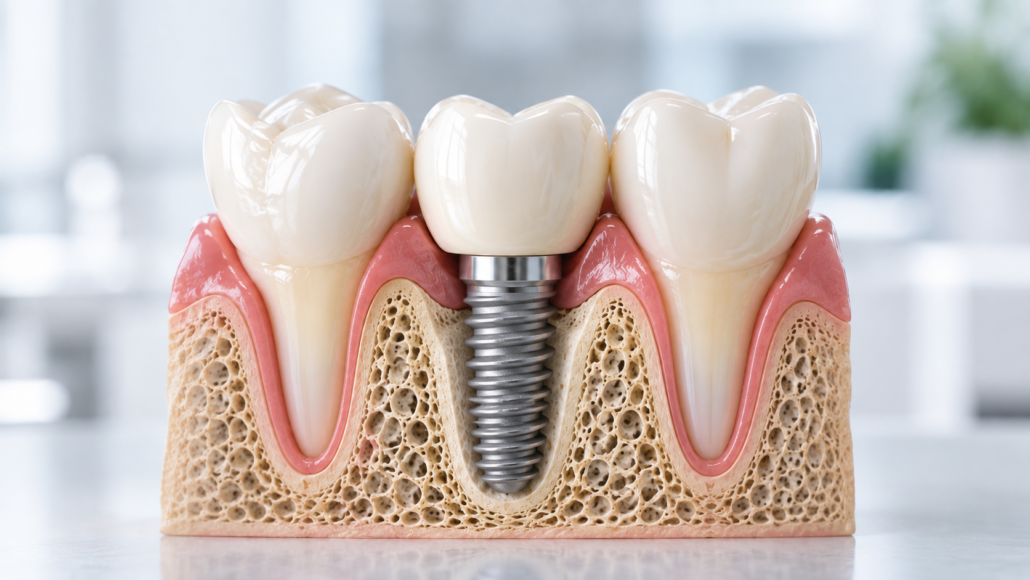
This is the part of implant recovery patients can't watch happening. The implant is placed into the jawbone, but placement itself is only the beginning. The surrounding tissues have to heal and the bone has to develop a stable biological relationship with the implant.
The process is often called osseointegration. It doesn't happen all at once. Healing progresses from the immediate response after surgery through new bone formation and continued remodeling around the implant.
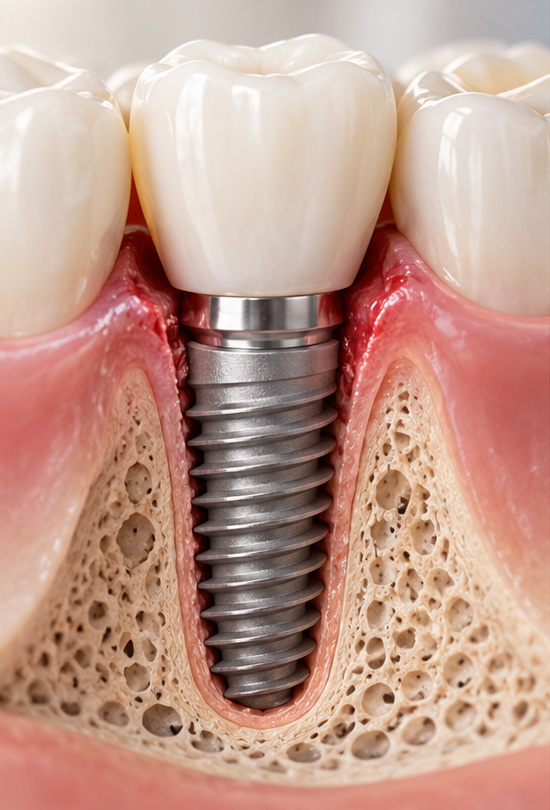
Immediately after placement
The implant is mechanically stable in the bone, but the tissues around it have just begun their healing response. This is the stage when you are most aware that you've had a procedure.
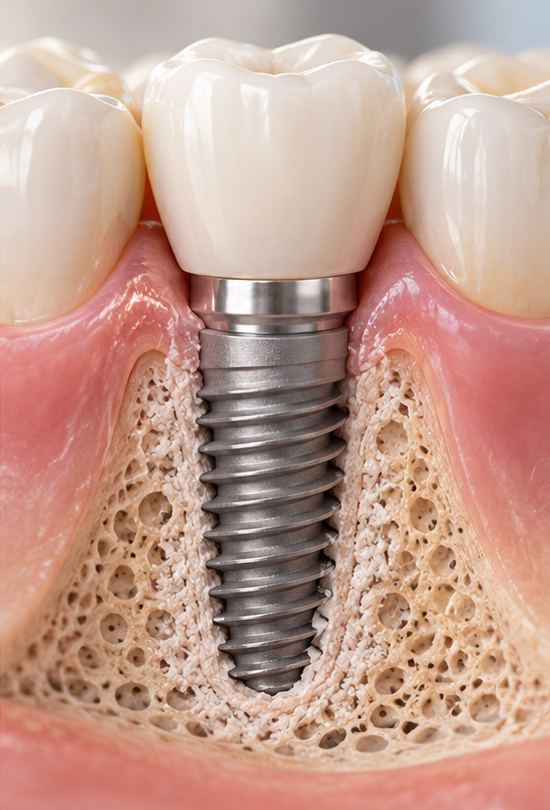
Early bone healing
Your mouth may already feel dramatically better while new bone is forming and the tissues around the implant continue to mature. Much of the important work is now happening where you cannot see it.
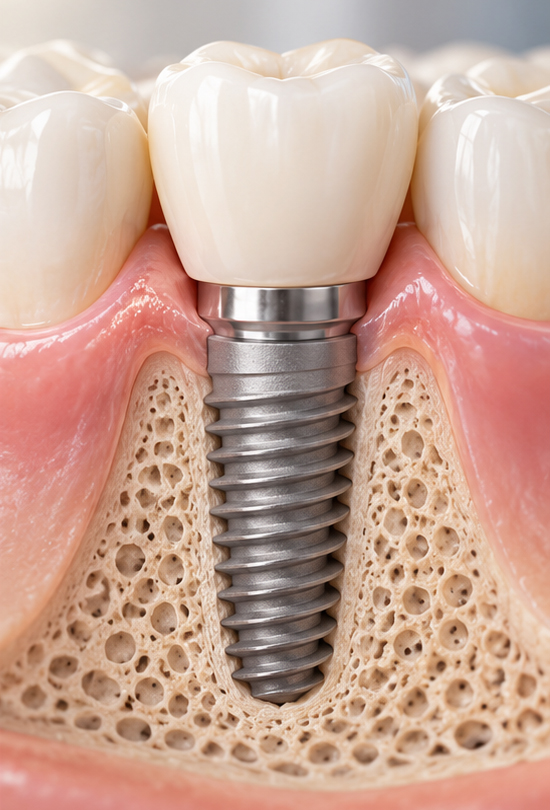
Osseointegration
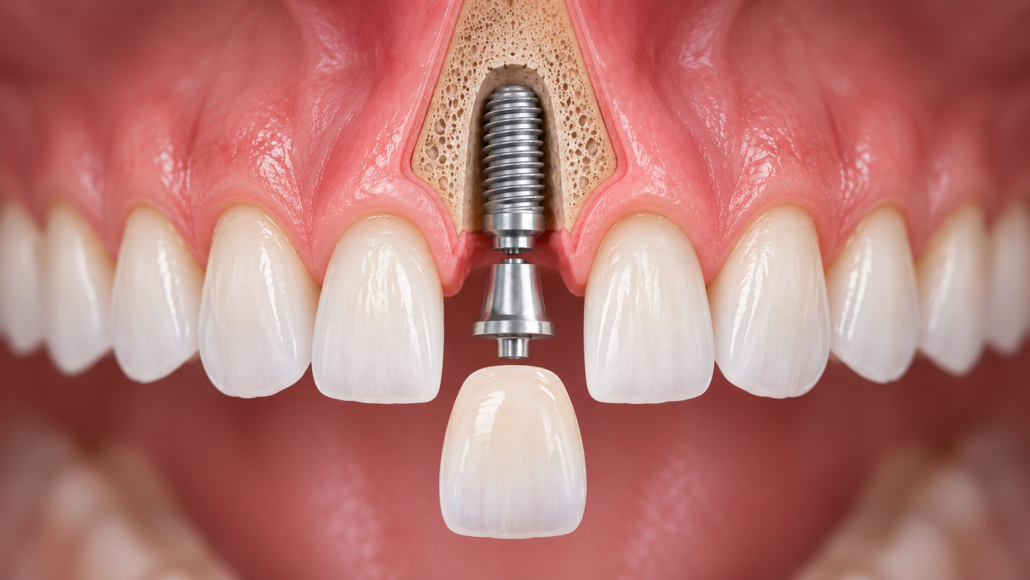
Bone continues forming and remodeling around the implant. Once healing has progressed appropriately, the implant can provide the stable foundation needed for the final restoration. For a single-tooth implant, that restoration is typically a dental crown.
Your mouth can feel completely normal while the implant underneath is still healing.
Why your recovery may look different from someone else's.
Comparing implant recoveries can be misleading because the words "dental implant surgery" can describe very different procedures. Someone receiving one implant in an already healed site may have a very different experience from someone receiving several implants along with bone grafting.
- How many implants were placed. A single surgical site and several surgical sites aren't necessarily going to feel the same afterward.
- Whether grafting was needed. Bone grafting or other additional procedures can change both the experience and the instructions that follow surgery.
- Where the implant was placed. Every area of the mouth is a little different anatomically and functionally.
- Your individual healing. Health, oral hygiene, smoking, medications, and other individual factors can influence healing and treatment planning.
The type of restoration being supported matters too. One implant replacing one tooth is a different treatment from using implants to stabilize a larger prosthesis. If you're comparing those options, our guide to implant-supported dentures vs. traditional dentures explains how those two approaches differ in everyday use.
This is why another person's recovery is useful as a story, but not as a prediction. Your own procedure and your dentist's instructions are what matter.
What can you eat during dental implant recovery?
Early on, the goal is simple: don't make the surgical area work harder than it needs to. Softer foods can make eating more comfortable while helping you avoid unnecessary pressure around the implant site.
As tenderness improves, your diet can usually begin moving back toward normal according to the instructions you were given. Exactly how quickly that happens depends on where the implant was placed, whether other procedures were performed, and whether the implant is carrying a temporary restoration.
Feeling capable of chewing something and being ready to chew directly on a healing implant are not necessarily the same thing. When in doubt, protect the area and ask.
When can you go back to work and exercise?
There isn't a universal number of days everyone needs away from work. A person with a desk job after a straightforward procedure may have very different needs from someone whose work is physically demanding or whose implant surgery was more involved.
Exercise deserves the same individualized approach. The fact that you feel energetic again doesn't automatically mean it's time for a strenuous workout. Follow the activity restrictions you were given after surgery and return gradually when you've been cleared to do so.
Planning a little breathing room after the procedure is usually easier than scheduling yourself tightly and hoping you won't need it.
Recovery should have a direction.
Tenderness, swelling, and some changes in how you eat can all be part of the early recovery period. What we pay attention to is not just whether a symptom exists, but where it is headed.
As healing progresses, things should generally be settling down. Pain that becomes significantly worse instead of better, swelling that is increasing unexpectedly, persistent or heavy bleeding, fever, drainage, or anything that simply feels wrong deserves a call to your dental office.
You don't need to diagnose the problem yourself. If something about your recovery concerns you, that's reason enough to ask.
The implant is only one part of the restorative plan.
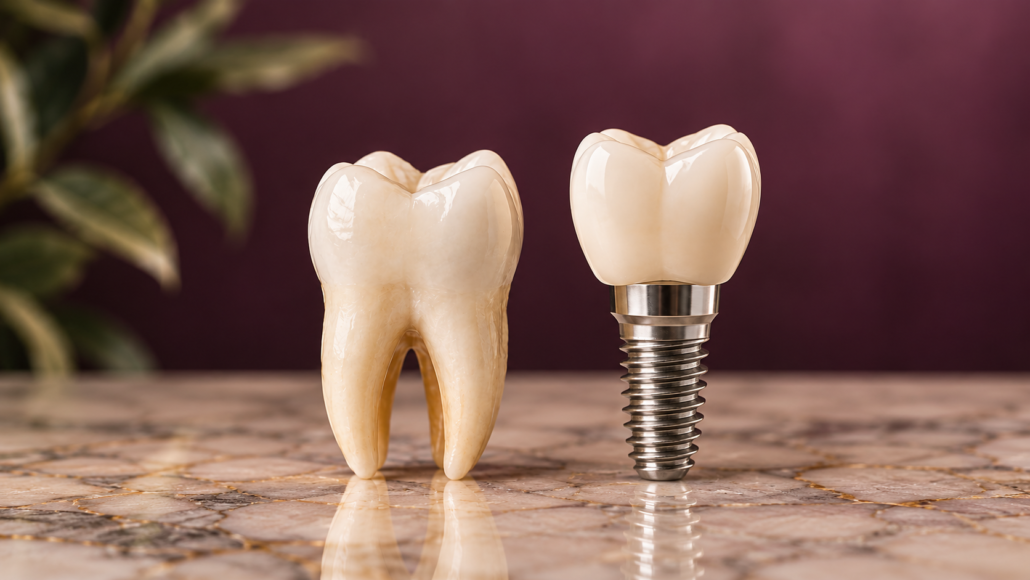
An implant is a way to replace a missing tooth root. What ultimately matters to you is the tooth, or teeth, that the implant allows us to restore. That's why implant planning belongs inside a larger restorative dentistry conversation rather than being treated as an isolated surgical procedure.
And an implant isn't automatically the answer every time a tooth is missing or compromised. There are situations where another approach may make more sense. If you're still deciding how to replace a missing tooth, our guide to alternatives to dental implants walks through the other options and where they may fit.
Key takeaways
Feeling recovered is only one part of implant healing.
- 01 The first few days are usually when tenderness and swelling are most noticeable.
- 02 Your mouth may feel much more normal while the bone around the implant is still healing.
- 03 The number of implants, grafting, your health, and the details of the procedure can all change the recovery timeline.
- 04 A recovery that's steadily improving is more important than matching somebody else's day-by-day experience.
- 05 Your own postoperative instructions always take priority over a general recovery timeline.
Frequently asked questions
A few questions patients ask about implant recovery.
How painful is dental implant recovery?
Some postoperative discomfort is expected, particularly early in recovery, but the experience varies with the extent of surgery and the individual patient. A systematic review of randomized clinical trials found that short-term analgesic strategies can reduce pain after dental implant surgery, although the available studies were too varied to identify one regimen as best for everyone.
What day is the worst after dental implant surgery?
There isn't one worst day for every patient. Pain and inflammation are primarily early postoperative concerns, so the first few days are usually the period patients notice most. The clinical evidence on pain after implant surgery also shows meaningful variation between patients and treatment protocols.
How long does it take for the gums to heal around a dental implant?
The surface may feel better well before the tissue has finished maturing. Research describing soft-tissue healing around titanium implants places establishment and maturation of the soft-tissue complex at roughly six to eight weeks after surgery.
How long does it take for a dental implant to fuse with the bone?
Osseointegration is a gradual biological process rather than an event that occurs on one specific day. Bone formation and remodeling continue after placement, which is why the implant can still be healing long after your mouth feels comfortable. Reviews of hard- and soft-tissue healing around dental implants describe this as a sequence of healing events rather than a single universal timeline.
Does smoking affect dental implant healing?
Yes. Smoking is associated with a higher risk of early implant failure. A 2024 systematic review and meta-analysis covering more than 59,000 implants found a significantly greater risk of early implant failure among smokers. If you smoke, discuss it openly with your dentist before and after implant surgery.
How do I know if my dental implant is healing properly?
Early tenderness and swelling should generally trend toward improvement rather than becoming progressively worse. Proper healing also involves changes you cannot evaluate at home, including maturation of the tissue around the implant over the following weeks. The biology of peri-implant soft-tissue healing supports why follow-up examinations remain important even after the area feels normal.
Can I eat normally after getting a dental implant?
Not immediately. Your diet is usually modified early in recovery to protect the surgical site, then advanced according to your dentist's instructions. Because tissue healing continues well beyond the first few days , feeling comfortable does not necessarily mean the implant is ready for unrestricted chewing.
Why does my implant still need time to heal if it doesn't hurt anymore?
Pain and biological healing measure different things. Discomfort can settle relatively early while the tissues around the implant continue developing and maturing. Research on the sequence of implant healing shows that soft tissue and bone continue changing after the early postoperative period has passed.