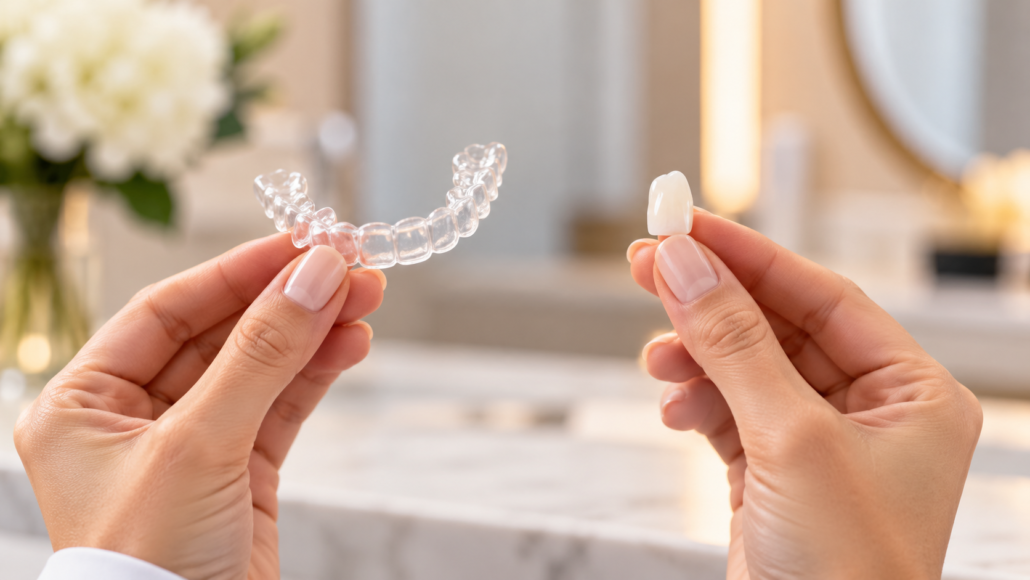
One of the first questions patients ask me about Invisalign is wonderfully straightforward: "Is this going to hurt?"
My answer is that I expect you to feel it. I don't expect you to spend your treatment in pain.
Invisalign works because your teeth are moving. Some pressure is part of the process, but pain should not become the process.
When you first put an aligner in, particularly a new one, it can feel snug. Your teeth may feel tender when you bite into something. You may be very aware that there is something new in your mouth. Then, for most patients, things settle down.
The research actually gives us a useful picture of that experience. A systematic review comparing Invisalign with fixed braces found that Invisalign patients generally reported less pain during the first few days of treatment. After that early period, the differences became much less noticeable.
So let's separate normal Invisalign pressure from the kind of pain I actually want you to call me about.
What does Invisalign actually feel like?
Most patients describe the beginning of Invisalign treatment as pressure, tightness, or tenderness rather than constant pain.
That distinction makes sense. Orthodontic treatment works by applying controlled forces to teeth. The tissues surrounding the roots respond to those forces, allowing the teeth to gradually change position.
A prospective study that followed patients during their first week of orthodontic treatment found that discomfort with Invisalign peaked around the first 24 hours and declined over the remainder of the week.
You may notice it most when biting or chewing. A tooth that felt completely normal yesterday may suddenly feel tender when you bite into something firm.
That does not automatically mean anything is wrong. It often means that tooth is responding to the orthodontic force being applied to it.
How long does Invisalign hurt?
There isn't a clock that applies perfectly to every patient, but the pattern is usually more useful than the exact number of hours.
The first several hours
Your aligners usually feel tightest when they first go in. You may notice pressure on particular teeth rather than your entire mouth feeling sore.
This is also when you're getting accustomed to the physical presence of the aligners themselves.
The first 24 to 48 hours
This is when tenderness may be most noticeable, particularly when biting or chewing.
In one prospective Invisalign study, pain intensity peaked at approximately 24 hours and then decreased during the rest of the first week.
Days 3 to 7
For many patients, the teeth begin feeling much more normal during this part of the week.
The same prospective study found the lowest average pain level at day seven. That doesn't mean everyone follows exactly the same timeline, but discomfort should generally be heading in the right direction.
When you change aligners
A new set can bring some of that tight feeling back. The difference is that by this point you know what it is, and your mouth is no longer adapting to wearing aligners for the first time.
Some trays will feel more noticeable than others because different teeth are being asked to make different movements during treatment.
Why does a new aligner feel tight?
Each aligner represents the next planned position for your teeth. When you first insert it, your teeth have not reached that position yet. That small difference is what creates the orthodontic force.
As the teeth begin responding, the aligner generally feels less tight.
What I don't want you to do is assume that more pain means the treatment is working better.
A tighter tray is not a contest. More pain does not mean more progress.
An aligner should seat over the teeth as intended. If a new tray will not go into place, has a large visible gap, suddenly feels dramatically different from previous trays, or causes significant pain in one specific area, call the office rather than forcing it.
Does Invisalign hurt less than braces?
This is one of the places where we have useful comparative research.
A systematic review of Invisalign and fixed appliances concluded with moderate certainty that Invisalign patients appeared to experience lower levels of pain during the first few days of treatment. The difference was not apparent later in treatment.
A later systematic review and meta-analysis reached a more specific conclusion: pain was lower with clear aligners on days three and four after treatment began, while significant differences were not found at the other measured time points.
A randomized prospective trial also found greater discomfort with traditional fixed appliances during the first week and after later adjustment appointments. That study found chewing produced more discomfort than resting for both treatment groups.
Invisalign
- Pressure as teeth begin moving
- Tenderness after some aligner changes
- No brackets or wires against the cheeks
- Aligners are removable for meals
Fixed braces
- Pressure from orthodontic tooth movement
- Tenderness after adjustments
- Brackets and wires can irritate soft tissues
- Appliances remain in place while eating
I wouldn't choose Invisalign solely because you expect it to be painless. Both treatments move teeth, and both can create discomfort. The better question is which treatment can predictably accomplish what your particular teeth need.
What helps with Invisalign soreness?
Most early discomfort is manageable, and you usually don't need to do very much to get through it.
- Give the new aligner a little time. Pressure during the first day is expected. If the tray is fitting correctly and the discomfort is mild, your mouth may simply need time to adapt.
- Choose softer foods when your teeth are tender. You remove the aligners to eat, but the teeth themselves may still feel sensitive when you chew. Eggs, pasta, yogurt, soups, rice, fish, and other softer foods can make the first day or two easier.
- Keep wearing the aligners as prescribed. Taking them out repeatedly because the teeth feel tender can make it harder to maintain the treatment schedule. Follow the wear instructions we give you for your particular case.
- Don't keep testing the sore tooth. Patients do this without realizing it. They bite down, tap the tooth, bite again, and keep checking whether it still hurts. If a tooth is temporarily tender, let it settle.
- Call us if something feels mechanically wrong. A rough or damaged aligner, an edge digging into the tissue, or a tray that isn't seating properly is different from ordinary orthodontic pressure.
If you need an over-the-counter pain reliever, ask your dentist or physician what is appropriate for you based on your health history and medications. A systematic review and meta-analysis of orthodontic pain found that commonly studied analgesics can reduce discomfort associated with orthodontic treatment.
It's not always the teeth you notice
There's another part of getting used to Invisalign that I think patients should know about. Sometimes the first few days feel strange even when the teeth themselves aren't particularly sore.
Your tongue knows something has changed. Your bite can feel different with the aligners in. You may initially feel more aware of saliva. And some patients notice a temporary change in speech.
A systematic review of clear aligners and speech found that aligners can temporarily affect articulation, particularly certain consonant sounds. Most patients in the included studies adapted within about one to two weeks, although the evidence quality was low and some patients took longer.
That's a useful expectation to have before your first tray goes in. The first few days are an adjustment period, not necessarily a preview of how the entire treatment will feel.
When should Invisalign pain concern you?
Normal orthodontic tenderness should generally settle rather than escalate. I want to know when the experience doesn't fit that pattern.
When to call
- Severe pain rather than pressure or tenderness. Especially if it is concentrated around one tooth.
- Pain that keeps getting worse. Normal adjustment discomfort should trend toward better.
- An aligner that will not seat properly. Don't force a tray that clearly isn't fitting the way previous trays have.
- A sharp or damaged aligner. A tray should not continually cut or injure your cheek, tongue, or gum tissue.
- Significant swelling or another unexpected symptom. Don't assume every problem that happens during Invisalign treatment is caused by Invisalign.
You don't have to decide on your own whether something is normal. If you're unsure, call us and let us take a look.
Key takeaways
What to remember about Invisalign discomfort.
- 01 Invisalign can cause pressure and tenderness because orthodontic forces are moving the teeth.
- 02 Discomfort is often most noticeable during the first day or two and should generally improve.
- 03 A new set of aligners can temporarily make the teeth feel tight or tender again.
- 04 Research suggests clear aligners may cause less pain than fixed braces during parts of early treatment.
- 05 Severe, worsening, or highly localized pain is different from normal orthodontic pressure and deserves a call.
Frequently asked questions
A few questions patients ask most.
Does Invisalign hurt when you first get it?
Some discomfort is common when treatment begins. Patients often describe pressure or tenderness rather than constant pain. A prospective study of Invisalign patients found that discomfort was greatest around the first 24 hours and declined over the first week.
What day does Invisalign hurt the most?
There is individual variation, but early discomfort tends to be the most noticeable. Research following Invisalign patients during their first week found that pain intensity peaked at 24 hours and was lowest by day seven.
Does every new Invisalign tray hurt?
Not necessarily. Different aligners can feel different because the planned tooth movements change throughout treatment. A six-month prospective study of orthodontic pain found that clear-aligner pain remained relatively minimal across treatment compared with the repeated pain peaks observed with some fixed-appliance adjustments.
Does Invisalign hurt less than braces?
During parts of early treatment, research suggests that it can. A systematic review specifically comparing Invisalign with fixed appliances found moderate-certainty evidence of lower pain with Invisalign during the first few days, with no clear difference later.
Why do my teeth hurt when I eat with Invisalign?
Orthodontic force can make teeth temporarily tender to biting pressure even after you remove the aligners for a meal. A randomized prospective trial found that orthodontic patients reported greater discomfort while chewing than while at rest.
How long does Invisalign soreness usually last?
The strongest discomfort is generally concentrated early rather than lasting continuously. First-week Invisalign research showed pain declining after its 24-hour peak and reaching its lowest measured level by day seven.
Can I take pain medicine for Invisalign soreness?
Over-the-counter analgesics can reduce orthodontic discomfort, but which medication is appropriate depends on your health history and other medications. A systematic review and meta-analysis found that commonly studied analgesics were effective for controlling orthodontic pain. Ask your dentist or physician what is appropriate for you.
Does Invisalign cause less discomfort over time?
Patients can still experience temporary tenderness later in treatment, but discomfort is not usually constant. A prospective six-month comparison found that pain intensity in the clear-aligner group remained minimal across the study period.
Can Invisalign affect the way I talk?
Temporarily, yes. A systematic review of clear aligners and speech found temporary effects on articulation and speech clarity. Most patients in the included studies adapted within about 7 to 14 days, although some took longer and the overall quality of evidence was low.
Is Invisalign pain a sign that my teeth are moving?
Orthodontic tooth movement can produce discomfort, but the amount of pain is not a measure of how well treatment is working. A systematic review comparing Invisalign and braces found different early pain levels between the two approaches even though both use orthodontic forces to move teeth.
Is it normal for one tooth to hurt more than the others?
One tooth may feel more tender when a particular movement is being emphasized, but severe or persistent pain in one tooth deserves evaluation. Studies of clear-aligner treatment show that different tooth movements vary in their predictability , which is one reason your dentist monitors individual tooth movement rather than judging treatment by soreness alone.
When should I call my dentist about Invisalign pain?
Call if pain is severe, continues to worsen rather than settle, is strongly concentrated around one tooth, or comes with swelling, injury, or an aligner that will not fit correctly. Research describes clear-aligner discomfort as generally transient. A review of patient experiences with clear aligners found temporary effects involving pain and quality of life after treatment begins rather than persistent pain as the expected experience.