A surprising number of adults begin an Invisalign conversation by telling me their age.
"I'm 42. Is it too late?"
"I had braces when I was younger. Can I really do this again?"
"I'm in my 50s. Will my teeth even move?"
Those are reasonable questions. But your age usually isn't the first thing I'm thinking about when I evaluate you for Invisalign.
I'm looking at your teeth and gums. I'm looking at your bite, which teeth need to move, how far they need to move, and whether a removable clear aligner can make those movements predictably.
Your teeth don't know how many birthdays you've had. They respond to biology, force, and good treatment planning.
That makes adult Invisalign much less about age and much more about choosing the right treatment for the person sitting in front of me.
Does Invisalign work for adults?
Yes, for the right case.
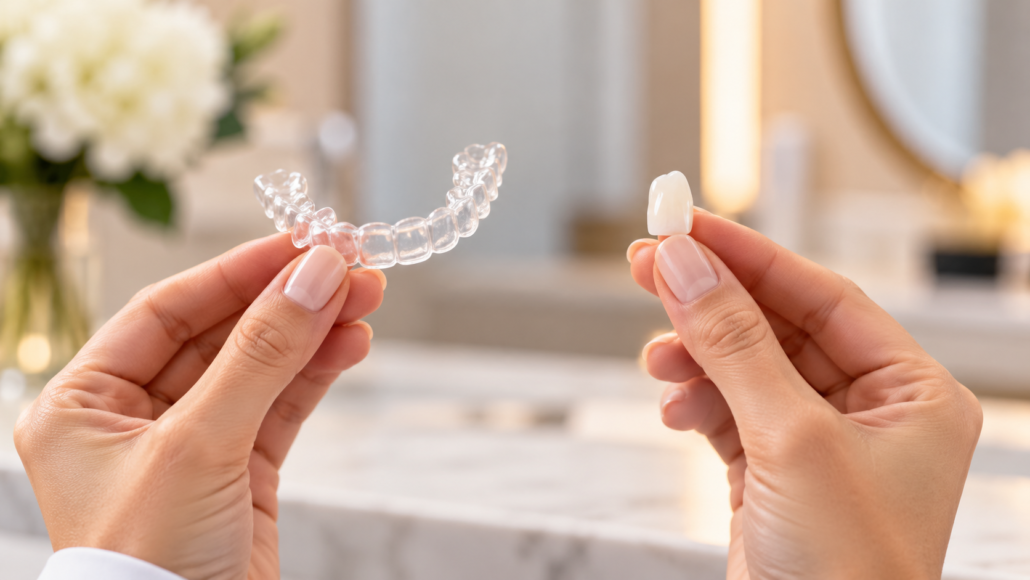
Invisalign uses a sequence of custom clear aligners to apply controlled forces to your teeth. Each aligner represents another small step toward the positions we've planned.
That biological process doesn't stop when you leave your twenties.
What changes from person to person is the condition of the teeth, gums, supporting bone, bite, and any dentistry that's already present.
That's why I don't think of Invisalign as a product you qualify for because you want straighter teeth. I think of it as one orthodontic tool.
First we decide what needs to change. Then we decide whether clear aligners are the right way to change it.
So, are you too old for Invisalign?
There isn't a universal birthday after which orthodontic treatment stops being an option.
A healthy person in their 50s or 60s may be a better candidate for tooth movement than someone much younger with active gum disease or untreated decay.
What does change as we get older is the dental history I need to consider.
- In your 30s, you may simply be addressing orthodontics you postponed or correcting teeth that shifted after earlier braces.
- In your 40s, crowns, fillings, bonding, or other previous dental work increasingly become part of treatment planning.
- In your 50s and beyond, periodontal health and the amount of supporting bone deserve especially careful attention before elective tooth movement.
None of those things automatically means no. They simply give me more information to work with.
What can Invisalign actually change in an adult smile?
This is where the conversation gets more useful.
"I want straighter teeth" can describe several very different orthodontic problems.

Crowding
If teeth overlap because there isn't enough room, we need to create and manage space while moving them into better positions. Many adult crowding cases can be treated with clear aligners.
Spacing
Spaces can often be closed by bringing neighboring teeth together. But I also want to understand why the space exists. Missing teeth, tooth size, gum conditions, and the overall bite can all affect the plan.
Rotated or crooked teeth
Clear aligners can correct many rotations. Some teeth are simply harder to rotate predictably than others, which is one reason attachments or additional aligners may become part of treatment.
Bite problems
Invisalign can also be used in selected cases involving overbite, open bite, crossbite, and other bite relationships.
But "can Invisalign treat an overbite?" isn't really a yes-or-no question. Two people can both have what they call an overbite while needing very different movements to correct it.
The computer can show us a beautiful destination. The important question is whether your teeth can predictably get there.
Invisalign has become sophisticated, but not every planned movement happens with equal predictability. Rotation, root position, vertical movement, and more complex bite correction can require additional strategies or a different orthodontic approach.
"But I already had braces."
You're in very good company.
Your teeth looked straight when the braces came off. You wore the retainer. Then you wore it less. Eventually it lived in a drawer.
Years later, one lower front tooth begins to turn. A small space appears. The smile you remember isn't quite the smile you see now.
Teeth can shift after orthodontic treatment, particularly when retention is discontinued.
If the relapse is limited, treatment today may be considerably different from the orthodontics you remember as a teenager. But I still want to evaluate the entire bite rather than simply straighten the one tooth you can see moving.
The tooth that bothers you may be the reason you came in. It isn't necessarily the only tooth we need to think about.
Before we move teeth, I want the foundation healthy.
Orthodontics isn't separate from the rest of dentistry.
Teeth move through supporting bone while the gums and periodontal tissues respond around them. So before talking about trays, I want to know that the mouth is ready for tooth movement.
Ready to move
- Healthy gums
- No untreated decay
- Stable existing restorations
- A treatment goal aligners can reasonably accomplish
Let's address this first
- Active periodontal disease
- Untreated cavities
- Dental problems that need restoration first
- A bite requiring a different orthodontic approach
Sometimes the best Invisalign plan begins by not starting Invisalign yet.
What if you already have crowns, veneers, or implants?
This is where adult orthodontics gets interesting.
Having previous dental work doesn't automatically exclude you from Invisalign. But different restorations behave differently when we start moving teeth.

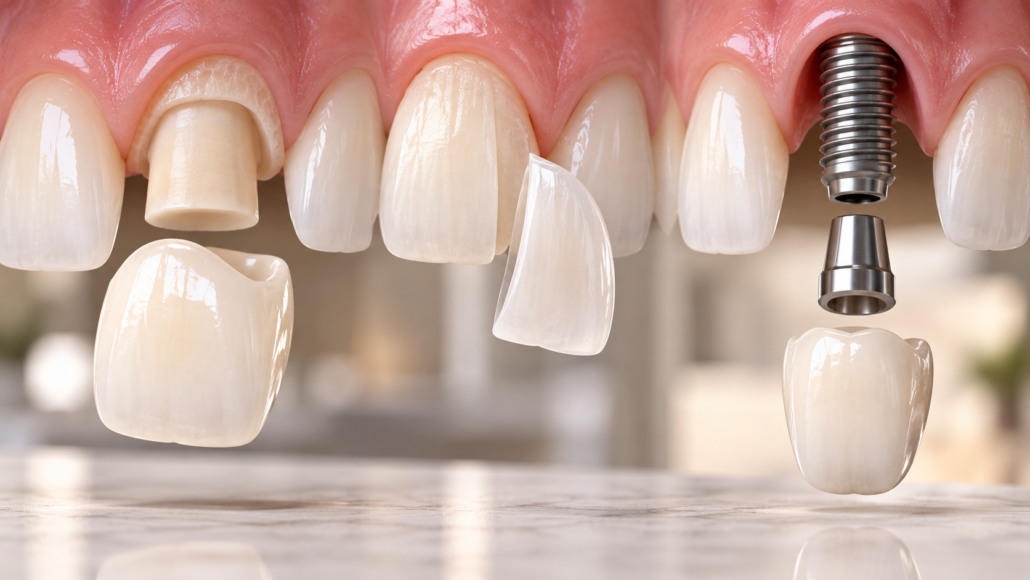
A crown can move with its tooth.
A dental crown covers a natural tooth. The root is still in the bone, so the tooth may still be moved orthodontically. I simply need to account for the restoration, particularly if an attachment needs to be bonded to it.
A veneer is still on a natural tooth.
The same basic principle applies to a veneered tooth. The natural root remains underneath. Movement may be possible, but the porcelain needs to be identified and protected during treatment.
An implant is different.
A dental implant is integrated directly with the jawbone. It does not move orthodontically the way a natural tooth does.
Sometimes we can move natural teeth around an existing implant. Sometimes the implant's position becomes a significant limitation in the plan.
Existing dental work doesn't necessarily stop orthodontics. It changes the map.
Invisalign or braces? For adults, that's a practical question too.
Adults often assume Invisalign is automatically the better choice because it's less visible.
Appearance matters, but it isn't the only thing I consider.
Invisalign
- Clear and relatively inconspicuous
- Removed for eating
- Normal brushing and flossing are easier
- Requires consistent daily wear
- Attachments may still be visible
- Some movements can be less predictable
Fixed braces
- Always working because they aren't removable
- Excellent control for many complex movements
- More visible
- Cleaning around brackets takes more effort
- Food restrictions may be necessary
- May be preferable for certain orthodontic problems
I wouldn't choose between the two by asking which one is universally better.
I'd ask which appliance gives us the right combination of control, predictability, practicality, and fit for your life.
What is Invisalign actually like when you have an adult life?
This is the part that's often missing from the polished ads.
The trays are clear. Most people adapt to them quickly. But they're still orthodontic appliances, and they become part of your day.
- Lunch now includes taking your aligners out. At home that's easy. At a restaurant, airport, business lunch, or long meeting, it requires a little more thought.
- Coffee becomes a routine rather than an all-morning event. Frequent sipping with aligners in isn't something I want you doing all day.
- Your speech may feel different at first. Some people notice a temporary change while the tongue adapts to the trays.
- The aligner case becomes surprisingly important. A napkin seems convenient until someone clears the table.
- You have to put them back in. This is the part that matters. Removable orthodontics works when the orthodontic appliance spends enough time on your teeth.
For most adults, those adjustments are manageable. I simply prefer that you know about them before treatment instead of discovering them during your first week.
How long will you wear Invisalign each day?
Most of the day and night.
The trays come out for meals, oral hygiene, and other situations specified in your treatment instructions. The important principle is that planned movement assumes the aligners are actually on your teeth.
Removability is Invisalign's greatest convenience. It's also its greatest responsibility.
And how many months will treatment take?
I wouldn't estimate that from your age. I'd estimate it from what we're asking your teeth to do.
Limited correction
Minor relapse or relatively straightforward alignment may require fewer stages.
More involved correction
Multiple rotations, significant crowding, coordinated arch movement, or bite correction naturally requires more planning and may require more stages.
Then there are refinements.
Your first series of aligners is a treatment plan, not a guarantee that every tooth will land perfectly after the final tray. If some teeth haven't tracked exactly as planned, we may scan again and create additional aligners.
The parts of Invisalign you don't always see in the ads.
Clear-aligner treatment isn't necessarily just a stack of invisible plastic trays.
Depending on the movements we're asking for, treatment can include tooth-colored attachments, small amounts of space creation, elastics, and additional aligners.

Attachments
Small tooth-colored shapes are bonded to selected teeth. They give the aligner something more precise to engage when a tooth needs a particular kind of movement.
IPR
Interproximal reduction, usually shortened to IPR, means carefully creating a very small amount of space between selected teeth when the treatment plan calls for it.
Elastics
Some bite corrections may use orthodontic elastics along with the aligners.
Refinements
If certain teeth haven't finished exactly where planned, another scan and an additional series of trays can refine the result.
None of those things means Invisalign has failed. They're tools used to help the teeth reach the result we're planning.
Sometimes straightening the teeth changes the cosmetic plan.
This is one reason I like looking at Invisalign through the lens of comprehensive dentistry.
You may come in thinking you need porcelain veneers because your teeth look uneven. But if position is contributing to what you're seeing, moving the teeth first may change how much restorative dentistry makes sense afterward.
The opposite can also be true. If the real concern is color, worn edges, tooth shape, or proportion, orthodontics alone may not solve the thing that's bothering you.
Don't choose the procedure first. Figure out what you actually want to change.
When would I tell you Invisalign isn't the right choice?
A good Invisalign consultation doesn't have to end with Invisalign.
Sometimes the useful answer is that we should do something else first. Sometimes another orthodontic approach makes more sense. And sometimes moving teeth isn't the answer to the concern that brought you in.
- Your teeth or gums need treatment first. Active disease comes before elective tooth movement.
- Your case needs movements better controlled another way. More complex orthodontic problems may benefit from fixed appliances or specialist orthodontic care.
- You know consistent wear won't fit your habits. That's useful information, not a character flaw. A removable appliance depends on being worn.
- Your concern isn't really orthodontic. Color, worn edges, tooth shape, and proportion may call for a different solution.
- The result you're expecting isn't realistic. I would rather have that conversation before treatment than after months of aligners.
What should an Invisalign consultation actually tell you?
More than whether you're "approved."
I want to understand what bothers you first. Maybe your lower teeth have shifted. Maybe you've disliked a space for years. Maybe you want better alignment before doing cosmetic dentistry.
Then we look at the whole mouth: your teeth, gums, bite, existing dental work, previous orthodontics, and anything else that could influence treatment.
Digital records help us document where we're starting and plan potential movement. But the technology doesn't replace diagnosis.
At the end of that conversation, the useful answer isn't simply "yes, you can have Invisalign."
The goal isn't to qualify you for Invisalign. It's to figure out the right way to get where you want to go.
If clear aligners make sense, we can talk about what treatment would involve. If they don't, I'd rather explain why.
One last thing: Invisalign ends. Retention doesn't.
You wear a retainer after orthodontic treatment.
This isn't the glamorous part of the process, but for adults it may be one of the most familiar.
If you're considering Invisalign because teeth moved after braces earlier in life, you already know what can happen when retention disappears.
If you're straightening your teeth for the second time because the retainer disappeared, we already know how this story ends without one.
Key takeaways
Adult Invisalign isn't about age. It's about the right case.
- 01 Adults in their 30s, 40s, 50s, and beyond may be candidates for clear aligners. Oral health and treatment complexity matter more than age alone.
- 02 Invisalign can address many cases of crowding, spacing, rotation, orthodontic relapse, and bite misalignment, but not every movement is equally predictable.
- 03 Previous braces, crowns, veneers, and other dental work don't automatically rule out treatment. Dental implants require special planning because they don't move like natural teeth.
- 04 Invisalign is removable, which makes eating and oral hygiene easier but makes consistent wear important.
- 05 Attachments, IPR, elastics, and refinement trays can all be normal parts of clear-aligner treatment.
- 06 Retainers protect the result after treatment because teeth can shift again.
Frequently asked questions
A few questions adults ask most.
Does Invisalign really work for adults?
Yes, clear aligners can produce meaningful orthodontic tooth movement in adults. But effectiveness varies with the movement being attempted. A systematic review comparing clear aligners and fixed appliances in adults found mixed results across different anterior tooth movements and reported advantages for fixed appliances in some rotation and torque movements based on limited evidence.
Am I too old for Invisalign?
Age by itself doesn't tell me whether clear aligners are appropriate. I care much more about periodontal health, supporting bone, existing dentistry, the bite, and the movements we're asking the teeth to make.
Is Invisalign as effective as braces for adults?
It depends on the movement. A systematic review of anterior tooth movement in adults found that translation, intrusion, extrusion, tipping, torque, and rotation did not all behave the same way. Fixed appliances appeared to offer better rotation and torque control in some of the limited available evidence.
Can Invisalign fix crowded teeth in adults?
Many adult crowding cases can be treated with clear aligners. The important questions are how much space is needed and which movements are required to create it. A systematic review of Invisalign predictability found that treatment success depends on several factors, including case complexity, treatment planning, patient compliance, and the type of tooth movement required.
Does Invisalign take longer for adults?
Not simply because you're an adult. Treatment time depends on what we're trying to correct, how complex the movements are, how the teeth respond, whether refinements are necessary, and how consistently the aligners are worn. A systematic review examining Invisalign treatment success identified case complexity, treatment planning, and patient compliance among the factors affecting outcomes.
Does Invisalign hurt?
Pressure and soreness are normal when orthodontic forces are applied. A systematic review and meta-analysis comparing pain with clear aligners and fixed appliances found lower pain with aligners on days three and four after treatment began, but no difference at several other measured time points. I would describe Invisalign as orthodontic treatment, not painless treatment.
Are clear aligners easier to keep clean than braces?
Being able to remove the trays makes normal brushing and flossing more straightforward than cleaning around brackets and wires. An umbrella review comparing periodontal health with aligners and fixed appliances found a slight tendency toward healthier periodontal measures with aligners, although the authors concluded that the differences may be clinically negligible. Good home care matters with either treatment.
Is Invisalign more comfortable than braces?
Some evidence suggests an early comfort advantage, but it isn't absolute. A systematic review and meta-analysis found better oral-health-related quality-of-life scores with clear aligners at several points during treatment and lower pain on days three and four, while pain was similar at several other measured time points.
Can you get Invisalign if you have crowns?
Often, yes. A crown covers a natural tooth, and that tooth may still be moved orthodontically if it and its supporting tissues are healthy. The crown needs to be identified during planning, particularly if an attachment or significant movement is being considered.
Can you get Invisalign if you have veneers?
A veneer doesn't automatically prevent orthodontic treatment because a natural tooth and root remain underneath it. I do need to know which teeth are restored so the porcelain can be considered when planning movement and any attachments.
Can Invisalign move a dental implant?
No. An integrated dental implant doesn't move through bone the way a natural tooth does during orthodontic treatment. In some cases we can move neighboring natural teeth around an existing implant, but the implant's fixed position becomes part of the treatment plan.
How important is wearing Invisalign consistently?
Very. Clear aligners are removable, which means patient behavior becomes part of treatment. A systematic review of factors affecting Invisalign outcomes identified inadequate wear time as an important cause of suboptimal treatment results. Your actual wear schedule should follow the instructions given for your treatment.
Will my teeth move again after Invisalign?
They can. Orthodontically moved teeth retain the potential to shift after active treatment, which is why retention is part of orthodontic care. This is especially relevant for adults returning to treatment because teeth moved after braces earlier in life. Long-term retainer wear helps protect the new tooth positions.