You finished braces or Invisalign. Your teeth looked great. You wore your retainer faithfully for a while. Then maybe you started forgetting a night here and there. Eventually the retainer ended up in a drawer, a bathroom cabinet, or somewhere you were absolutely going to remember to look for it later.
Then one day you look closely at your teeth and something seems different. One of the lower front teeth has turned a little. Two teeth overlap where they did not before. Or you find the old retainer, put it in, and realize it does not fit the way you remember.
This is something we see. Some patients had orthodontic treatment years ago, stopped wearing their retainers, and eventually come back because the teeth have shifted and they want them straight again.
The braces may be gone. The job of keeping your teeth where we put them is not.
Why do you need a retainer after braces or Invisalign?
Orthodontic treatment moves teeth from one position to another. When treatment ends, the teeth and the tissues around them do not suddenly become fixed in that new position forever. Retention is the phase that helps maintain the result you worked to achieve.
That is true whether the teeth were moved with traditional braces or clear aligners such as Invisalign. The appliance that moves the teeth may be different, but both treatments still need a plan for keeping the teeth aligned afterward.
It also helps to think of retention as part of orthodontic treatment, not something separate that begins after the "real" treatment is over. Straightening the teeth is one part of the job. Maintaining that alignment is another.
What happens if you don't wear your retainer?
The simple answer is that your teeth have an opportunity to move. What that looks like is different from person to person. You might notice a very small rotation, a little crowding between the front teeth, a change in spacing, or a retainer that suddenly feels tighter than it used to.
There is not one reliable countdown that tells us exactly when visible movement will happen. The amount and pattern of relapse vary, and teeth can also continue to change naturally over time. That is why I would be careful with rules like, "You have exactly this many days before your teeth move."
What matters more is recognizing that movement can occur and responding to what is actually happening in your mouth.
Tooth movement may start small and become more noticeable
Orthodontic relapse does not necessarily look dramatic at first. You may notice only one tooth beginning to rotate or a little crowding where the teeth once formed a smooth line. If movement continues, the difference can become easier to see.
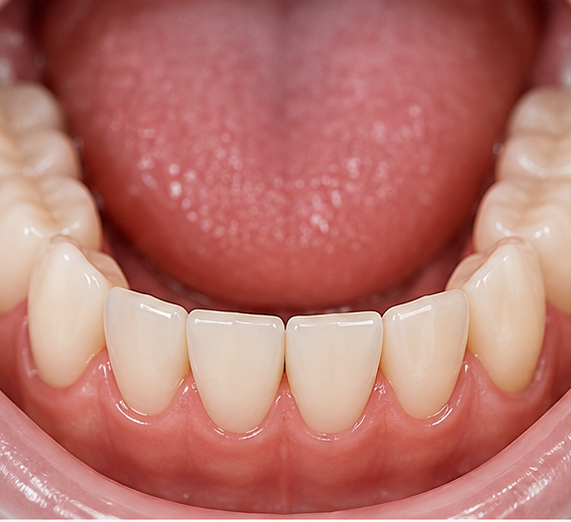
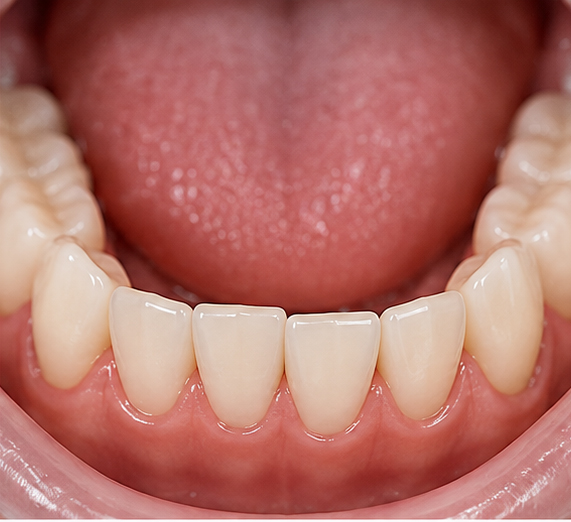
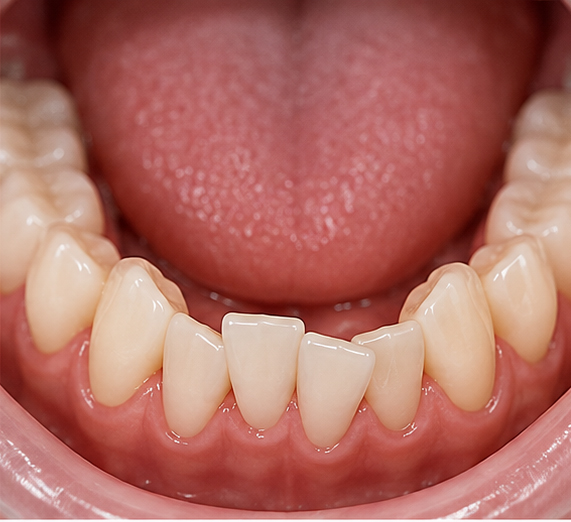
These images illustrate the idea of progressive movement rather than a specific timeline. Your teeth may change differently, and the amount of movement cannot be determined simply by how long the retainer has been out.
How quickly can teeth shift without a retainer?
This is usually what people really want to know. They missed a night, went on vacation without the retainer, or suddenly realized they have not worn it for several weeks. They want to know whether the damage has already been done.
There is no single timetable that applies to everyone. How your teeth respond depends on your original orthodontic problem, the movements made during treatment, how long ago treatment ended, your retention history, and the changes that have occurred in your mouth since then.
A practical clue is often the retainer itself. If it goes in normally and feels the way it usually does, that is different from a retainer that suddenly feels very tight, will not fully seat, or cannot be worn comfortably.
What if your retainer still fits but feels tight?
A retainer that feels different can be a clue that something has changed, but "tight" can mean different things. There is a difference between a retainer that seats completely and simply feels more snug than usual and one that has to be forced over teeth that are clearly no longer aligned with it.
If you have been inconsistent with your retainer and it still seats properly, contact your dentist or orthodontist and ask how they want you to resume wearing it. If it does not fully seat, causes significant discomfort, or requires force to get into place, stop trying to make the old appliance solve a problem it may no longer fit.
What if your old retainer doesn't fit anymore?
This is the point where I would want to see what has actually changed. Do not assume that forcing the retainer onto the teeth is the best way to move them back.
A retainer was made for a particular tooth position. If your teeth are now somewhere else, we first need to understand how much they moved, which teeth moved, how your bite is functioning, and whether the teeth and supporting tissues are healthy.
Still seats normally
The change may be limited
If the retainer fully seats and the teeth appear essentially unchanged, your dentist or orthodontist can advise you on the appropriate wear schedule.
No longer seats
The teeth need to be evaluated
If the retainer will not go fully into place, rocks, leaves obvious gaps, or requires significant pressure, the teeth may have moved beyond the position for which it was made.
I haven't worn my retainer. What should I do now?
You do not need to diagnose the amount of relapse yourself. Start with what you can observe, then let the examination determine what comes next.
- Look at your teeth. Compare what you see now with how they looked when orthodontic treatment ended. Notice crowding, rotation, new spacing, or a change in your bite.
- Check how the retainer fits. Does it seat completely and comfortably, feel unusually tight, or no longer go into place?
- Do not force an appliance that no longer fits. A retainer made for your old tooth positions is not automatically the right appliance for moving shifted teeth back.
- Have the movement evaluated. We can determine whether you simply need a new retention plan or whether enough movement has occurred that orthodontic treatment should be considered again.
Do you need braces again if your teeth shifted?
Not necessarily. The answer depends on how far the teeth have moved and what movements are needed to put them back into a healthy position. Our approach to orthodontic treatment starts with understanding the current position of the teeth and the bite before deciding whether braces, clear aligners, or another approach makes the most sense.
Marta sees patients who had orthodontic treatment in the past, stopped wearing their retainers, and later want their teeth straight again. Depending on the case, those patients may be candidates for clear aligners such as Invisalign or for braces.
For adults, aligners can be particularly appealing because they are clear and removable. But convenience does not replace compliance. Aligners only move teeth when they are actually being worn. Marta makes a similar point when discussing Invisalign with patients: if the trays are sitting on the nightstand, they are not doing the work.
More complicated tooth positions may require braces. That is why the choice is based on the movements your teeth need rather than simply which appliance you would prefer to wear.
Orthodontic treatment at our practice is provided by Dr. Edward Viloria. The goal is to determine how much correction is actually necessary and then choose the appropriate way to achieve it.
Why do my bottom teeth look crowded again?
The lower front teeth are often where people first notice a change. One incisor rotates slightly, another begins to overlap it, and the straight line you remember after braces gradually looks less even.
Not wearing a retainer can contribute to orthodontic relapse, but it is also important to remember that teeth can continue to change position during adulthood. If you are noticing movement years after treatment, our guide to why teeth shift as you get older looks at the broader reasons adult tooth position can change.
Do you really have to wear a retainer forever?
If you want to preserve orthodontic alignment over the long term, you should expect retention to remain part of the plan. Exactly what that looks like can vary. Retainers may be removable or fixed, and the recommended schedule can change over time.
What I would not assume is that there is a point when your teeth become permanently immune to movement. They are part of a living system that continues to change throughout adulthood.
Think of the retainer as protecting the result you already worked for. Keeping teeth straight is much easier than straightening them all over again.
Key takeaways
You finished orthodontic treatment. Retention is how you help keep the result.
- 01 Teeth can move after braces or Invisalign, particularly when retainers are no longer being worn.
- 02 There is no universal number of days or weeks after which everyone's teeth will shift the same amount.
- 03 A retainer that suddenly feels tight can be an early clue that the relationship between the appliance and your teeth has changed.
- 04 If your old retainer no longer seats properly, do not force it over teeth that have significantly shifted.
- 05 If your teeth have moved, you may need anything from a new retention plan to limited Invisalign or more comprehensive orthodontic treatment.
Frequently asked questions
Not wearing your retainer, answered.
How long can I go without wearing my retainer?
There is no single safe interval that applies to everyone. Relapse risk varies, and long-term retention is recommended because tooth position can change after orthodontic treatment. A review of retention and relapse in clinical practice emphasizes that long-term stability cannot be reliably predicted for an individual patient.
Will my teeth shift if I don't wear my retainer for a week?
They may, but there is no universal amount of movement that occurs during one particular week. Orthodontic relapse and normal long-term tooth movement vary among patients. A systematic review of orthodontic retention found limited evidence for prescribing one ideal retention strategy, which is one reason your individual orthodontic history matters.
Can I wear my old retainer after not wearing it for years?
That depends on whether it still fits your current tooth positions. Long-term research has documented tooth movement years after orthodontic treatment, including differences among patients with different retention histories. A long-term follow-up of post-orthodontic tooth movement illustrates why a retainer made years ago should not be assumed to fit unchanged teeth today.
Should I force my retainer on if it is tight?
If it no longer seats properly or requires significant force, have the fit evaluated rather than trying to make an old appliance correct the movement yourself. Retainers are intended primarily to maintain orthodontic results, and evidence comparing orthodontic retention procedures focuses on maintaining tooth position after active treatment, not using an ill-fitting appliance as unsupervised retreatment.
Can a retainer move my teeth back?
A conventional retainer is primarily intended to maintain tooth position, not replace active orthodontic treatment. There are clinician-directed techniques for correcting limited relapse using specially designed retention appliances, but those are different from forcing an old retainer over shifted teeth. Published treatment of minor orthodontic relapse describes an actively modified appliance used under professional treatment.
Do I need braces again if my teeth shifted?
Not automatically. Treatment depends on how much relapse occurred and what movements are required. Relapse of the lower front teeth is a recognized post-orthodontic problem, but research on managing lower anterior orthodontic relapse also shows that there is not one retreatment approach that applies to every patient.
Can Invisalign fix teeth that shifted after braces?
Invisalign or another clear aligner system may be an option when teeth have shifted, depending on the movements needed and your overall orthodontic condition. A systematic review comparing relapse after aligner and conventional fixed-appliance treatment found that post-treatment relapse can occur with either approach and that the comparative evidence remains limited.
Do I really have to wear a retainer forever?
Long-term retention is commonly recommended because teeth can continue to change after orthodontic treatment. A review of post-retention mandibular crowding describes lower anterior relapse as a persistent challenge after orthodontic treatment. Your dentist or orthodontist can determine the appropriate long-term retainer type and wear schedule for you.